6 hours ago
Hasani: For Kurt, compromise is treason.
Periskopi(a year ago)
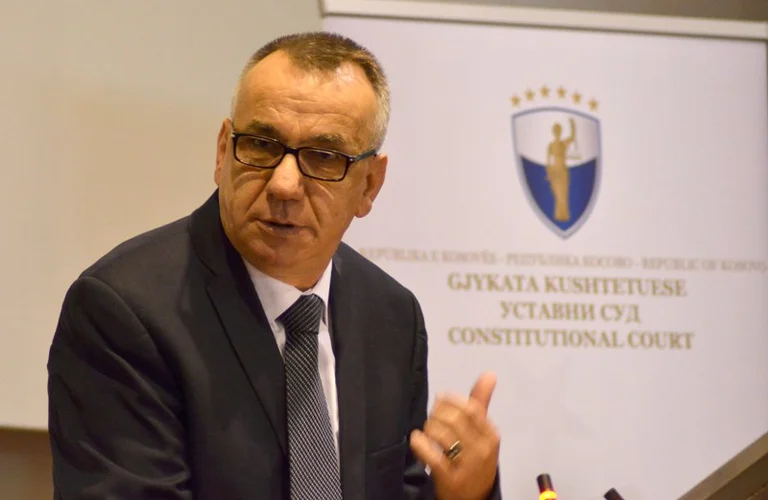
(a year ago)Former Constitutional Court chairman and international law professor warns that Kosovo is entering a deep institutional crisis and that incumbent Prime Minister Albin Kurti bears the main responsibility for blocking the Assembly and delaying implementation of the Ohrid Agreement, despite the formation of the Community of Serb municipalities [...]
As an extremely real and updated man, Hasan conveys all events and is convinced that the new legitimacy that students carry on protests across Serbia will be tested through Serbia's relationship with Europe, in particular in terms of Kosovo, and that even after the upcoming elections “Aleksandar Vuciq will remain a political key factor”.
How do you assess the fact that the Kosovo Assembly has not yet been constitutionalised months after the elections? You will agree that this is an extremely specific case because of such a long blockade.
HASANIA: Very bad. Kosovo is in a full institutional blockade and cannot function on either domestic or international plans. If this situation continues, we will face serious problems, especially in implementing the budget and reviewing it, which could lead to financial collapses.
What is the problem, is it a violation of the Constitution?
HASANIA: It's a behavior that is in complete conflict with the Kosovo Constitution. The constitution clearly stipulates that the party or coalition that has received the most votes proposes the Speaker of the Parliament, but that candidate should have the support of at least 61 MPs. In a pluralistic political system, the majority in parliament -- if not achieved directly in the elections -- is secured through compromise and coalitions with parties and other political acts. Mr. Kurti, however, sees compromise as treason. In reality, compromise is not defeat, but victory, because it represents the essence of political life in any democratic society.
Who is responsible for such a blockade, and why?
HASANIA: Mr. Kurti, no doubt. He does not have enough votes to elect his candidate for Kosovo's Parliament Speaker, but tries to have constitutional competence ʹ the right to propose the candidate to turn it into a constitutional right to automatically appoint that candidate. This, however, is not possible, something like that does not exist even in the Constitution of Kosovo, and there is no judicial or political logic.
How do you see the fact that it is constantly proposed the same candidate for the Speaker of the Assembly, even though there is no support?
HASANIA: To propose the same candidate for chairman of the Assembly more than ten times is unrealistic, both in political and human terms. It's hypocrisy, insolence, and total political responsibility.
How do you assess the action of opposition parties in this context?
HASANIA: A few weeks ago, Kurt offered the coalition to the Democratic League of Kosovo. He sees party chairman Lumir Abdixhiku as politically close to himself. However, Obadiah rejected that offer.
How did the Constitutional Court's decision, which has set a deadline for forming the Parliament, underlined that the largest party has the right to propose the candidate for Parliament's chairman, but not block the process?
HASANIA: Kosovo's Constitutional Court has made a decision that, instead of clarifying the situation, has complicated even more. Although it is clear to jurists, politicians lack the operational part, without which the decision remains indisputable. The constitutional court decisions are self-disputed and without state interference, so they must be correct. As is not the case here, parties have again sought constitutional recognition. In my opinion, the Court has had to predict sanctions, for example, as long as the decision to propose the Speaker of the Parliament is passed on to another party, or that MPs who prevent the process be decetified.
What constitutional and political responsibility does Kosovo President Vjosa Osmani have in this situation?
HASANIA: When it comes to this issue, the president's constitutional role is virtually insignificant. Besides, Mrs. Osmani has been on the political side of Mr. Kurti, and that is why she enjoys a very low level of trust in citizens. Basically, from the constitutional point of view, it has no concrete competence or responsibility in this situation.
Is it possible to consider announcing new elections?
HASANIA: New elections absolutely do not come into consideration at this stage. They can only be announced after the Kosovo Assembly is constitutionalised and the new government formed. Even then, the decision on extraordinary elections is made by political parties, while Vjosa Osmani's role is purely formal, by decree confirming the party's will.
There is criticism that Kurti's government is using the institutional crisis to postpone certain decisions, such as the formation of the Serb municipal community.
HASANIA: The main reason for blockades by Prime Minister Kurti is to avoid implementing the Ohrid Agreement, which he has accepted and envisions political-territorial autonomy for Serbs in Kosovo. He has the obligation to do so. To preserve the voter support, Kurti prevents the formation of the BKS, even though he knows that the statute agreed on with EU mediation has no alternative and in fact constitutes the new constitutional framework for the Serb community. This directly curbing Kosovo's European path, because in Ohrid it was agreed that progress in integration is conditional on the formation of the Community.
When we talk about forming BKS, the draft EU has prepared must be presented to the Constitutional Court by Pristina. How do you see this?
HASANIA: Kosovo's Constitutional Court has a limited role to assess the constitutionality of the BKS Statut, which envisions political-territorial autonomy for Serbs. Thereafter, all competencies are transferred to the arbitration commission, envisioned by the statute itself and accepted by Kurti. If the Court confirms constitutionality, The BKS will function as an autonomous entity independent of Kosovo's central institutions.
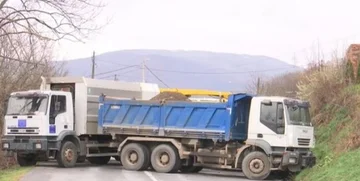
Tensions in Kosovo continue, and the most recent are related to the construction of bridges, which Serbs oppose.
HASANIA: There are two main reasons why Kurti plans to build two other bridges over the Iber River. The first is linked to local elections on the threshold; after showing serious inability to management, the only strategy to mobilise support is escalation of relations with Serbs in northern Kosovo and reliance on nationalist rhetoric. The second reason is KFOR's ban and Western partners to intervene on the main bridge, which Kurti tries to replace with symbolic building new bridges, without real need and without dialogue with the local community. These could only make sense as a result of an agreement and in a more stable political context. In this way, they have no practical function, but they serve only as scangraphers for the political campaign.
In this context, what is most important for Serbs in Kosovo, for their position and perspective?
HASANIA: Serbs in Kosovo should understand that their future is here, in sharing fate with other Kosovo citizens, and not in blind support to Belgrade and policies that serve the interests of power in Serbia. They are repeating the mistakes of Milosevic's time, in just another form.
The position of official Belgrade and all political actors is that there is no recognition of Kosovo. Messages often come from Brussels for the need for de facto recognition. What does this specifically mean in a legal and political sense?
HASANIA: I think that there is actually no such thing in Belgrade, nor will there be in the near future a political force that is willing to recognise Kosovo's independence, neither de jure nor de facto. Also, in Brussels there is no real political will for this to impose as a mandatory step. Therefore, implementation of existing agreements and normalising relations remains as the only real solution. Mr. Kurti himself in Ohrid gave up mutual recognition, so at this point the most reasonable approach is focusing on the concrete problems of the citizens of both states.
But are Kosovo and Serbia required that the agreement on normalisation of relations be a condition for the road to the EU?
HASANIA: Neither Kosovo nor Serbia can enter the EU without agreement on normalising relations, because the EU does not want unresolved conflicts permanently under its framework. A lasting solution is needed that enables cooperation and compliance with European values, even without formal recognition. The EU in the past has shown institutional creativity, as in the Cyprus case, and remains to be seen as approaching the situation where Serbia denies Kosovo's existence as a state. The example of Kosovo's membership in the Council of Europe shows a pragmatic approach: citizenship is recognised, but this is not set as a condition for relations with countries that do not recognise it.
How do you see the role of the US and the EU in the Kosovo and Serbia issue?
HASANIA: The role of the US remains key, while the EU continues to have strong influence through the Ohrid Agreement. So far there has been co-ordination between both sides of the Atlantic, but with Trump restored it remains unclear whether this will continue. However, I believe it can provide a new plan with emphasis on economic aspects and a new mechanism for implementing the BKS and other agreed agreements.
Do you attend protests in Serbia and how do you assess them?
HASANIA: The new legislation students bring will be tested through Serbia's stance on Europe and the West, especially regarding Kosovo. Serbian society still shows weakness and irrationality on this issue. Vuciq has backed Ukraine waiting for concessions on the Kosovo issue, which shows how much foreign policy is conditional on the status issue. This is a challenge for young political actors to expect if power change occurs. However, I believe Vuciq will remain the main political factor in the upcoming elections as well. /Periscope/