6 hours ago
German Embassy: Parliament failure is sending incorrect signals to NATO, EU partners
Periskopi(a year ago)
(a year ago)Germany has expressed concern over the political situation in Kosovo. The German Embassy in Pristina has said the deadlock with the Kosovo Parliament's non-compliance case is not only delaying progress in Kosovo's future aspirations, but also jeopardising progress and credibility for which Kosovo has worked for years. [...]
The German Embassy in Pristina has said the deadlock with the Kosovo Parliament's non-compliance case is not only delaying progress in Kosovo's future aspirations, but also jeopardising progress and credibility for which Kosovo has worked for years.
Furthermore, not moving ahead with the formation of a functional Assembly, this impasse directly prevents Kosovo from taking the next steps towards Euro-Atlantic integration, sending the wrong signal to NATO partners and the European Union”, said Christian Bottcher, deputy head of the mission in Kosovo.
Bottcher stressed that political leaders must take full responsibility to end this crisis.
In the coming weeks, they must agree to the constitutionally based constitution under the election of a mayor and vice president and offer a stable leadership based firmly on the Constitution. Kosovo citizens deserve elected officials who act decisively and in their best interest, instead of relying on the Constitutional Court to resolve a deadlock that only politics can break, he told Clankosova.tv.
He added that Kosovo President Vjosa Osmani can play a role in reaching a compromise.
“We also believe that Kosovo's president can play a key role in calling interparty talks and in guiding all sides to compromise. The presidential leadership in despassing and building consensus would help restore confidence and momentum in the democratic process”.
Germany remains steadfast in its support for Kosovo's democratic development.
We are willing to work with Kosovo's future government to advance its Euro-Atlantic ambitions.
From July 27th to August 8th, the Constitutional Court has imposed the extent of the suspension, banning MPs from taking any step towards the constitution.
This, since even after the 30-day deadline, was not achieved the formation of the ninth legislature.
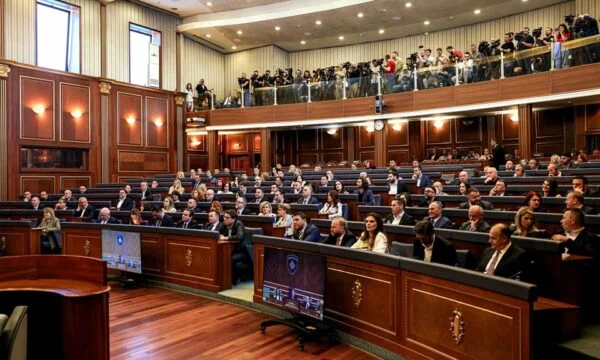
54 sessions have been held for the constitutionalisation of the Parliament, but none of them produced results.