6 hours ago
Font for Trump tariffs: We must protect Europe's interests more than ever
Periskopi(a year ago)
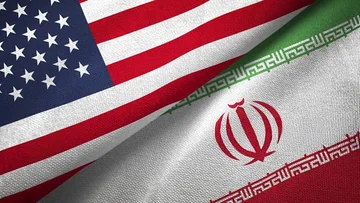
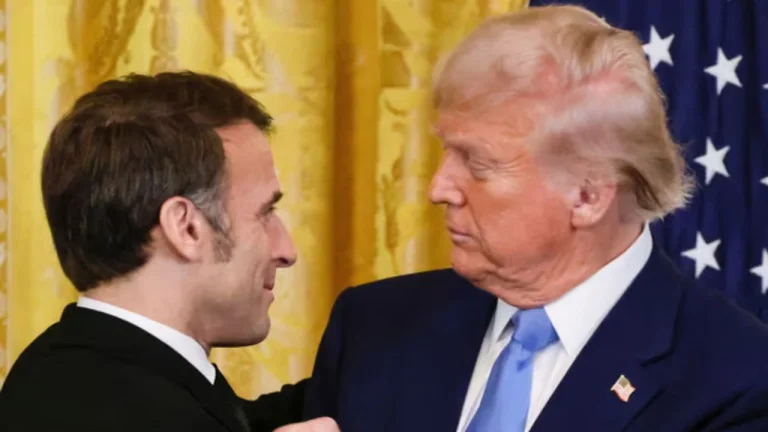
(a year ago)French President Emmanuel Macron has called on the EU of “to firmly defend European interests” after Donald Trump threatened to set 30% tariffs for almost all imports from the EU. He said the EU should be ready for a trade war and oppose the American president, who was only expected last week [...]
He said the EU should be ready for a trade fight and oppose the American president, who only last week was expected to approve in principle a 10% tax agreement with the European bloc.
“More than ever, it is up to the commission to affirm the union's determination to firmly defend European interests. In particular, this means accelerating the preparation of reliable countermass by mobilizing all available instruments unless any agreement is reached by August 1st”wrote Macro on social media.
Other European leaders called for calm, including Italy, the Netherlands, Germany and Ireland. But, reflecting the shock around the bloc due to Trump's threat, the influential Federation of German Industries (BDI) said Trump's announcement was “a wake-up call for industry on both sides of the Atlantic”.
Macro's call for commercial war readiness came in opposition to Berlin, which called for a <x0pramatic” response.
“The EU now needs, in the time remaining, to realistically negotiate a solution with the United States. A pragmatic result of these negotiations must soon be reached”In a statement, Germany's Economy Minister Catherine Reache said.
Giorgia Melon, Italy's prime minister who enjoys good relations with Trump, said in a statement he believed a fair “agreement could be reached”.
“would make no sense to cause a trade struggle between the two sides of the Atlantic”She said.
Dutch Prime Minister Dick Schooff said in the social media that the EU “should remain united and deployed” in its goal of reaching a mutually constructive “agreement with the US.
“There was no need for escalation of the”Ireland's deputy prime minister, Simon Harris, said. Trump previously accused Dublin of stealing American business by luring technology and pharmaceutical companies.
Ambassadors will meet in Brussels on Sunday to discuss tactics ahead of a planned summit of trade ministers Monday, where access divisions can be highlighted.
The threat of a 30% fee is seen as a negotiating tactic, but behind the scenes is rage, as many people see it as a dangerous transatlantic game at a time of major global instability.
The latest Trump Salvo is in line with its April claim for <x0-day liberation” that the EU was charging unfair obligations of 39% for American imports, a widely discredited analysis, with EU officials showing an average of about 2.5%.
Some Eurodeputs have warned that if they start accepting illegal “tariffs” as a new rate, Trump will simply be back for more.
“It is a matter of showing that the EU is not a victim, it is not paralyzed in itself or frightened”, Italian Eurodeput Brando Benifei, member of the international trade committee, said last week.
Germany's Automobile Industry Association warned of the prospect of increasing costs for car producers and suppliers, and said it was bad “that a threat exists for a further escalation of the trade conflict”.
Germany's car industry is already facing 25% increase in US exports tariffs, in addition to the previous 2.5%, while its steel industry is facing 50 percent penalties.
Understandably, the agreement in principle that was on the Trump table offered possible tariff relief to any US-based European factory manufacturer, which included Mercedes-Benz, BMW and Volkswagen, along with the Swedish brand Volvo.
Last week, Swedish Finance Minister “called the agreement very bad”, while at the same time said some economic pains were inevitable.
EU-US trade is worth 1.4 trillion euros a year, but only three countries -- Germany, Italy and Ireland -- with its large multinational pharmaceutical sector -- export more to the US than import.
Emanuele Orsini, president of the Italian industry Confindustria, said the EU should not scale the situation. Now we all need to stay calm and keep quiet”, he said.
But in the north of the country, the president of the Veneto Confindustria Raffaele Boscaini said there will have to be support for industries in case of higher tariffs.
“The EU and the Italian government will have to intervene with concrete measures to support our companies' competitiveness, investment and access to loans, bureaucratic and fiscal relief, as well as energy policy definition”, said Boscain, who is the head of marketing in Massi, the leading producer of Amarone wine, who would be hit hard by a 30% fee. /Periscope/