6 hours ago
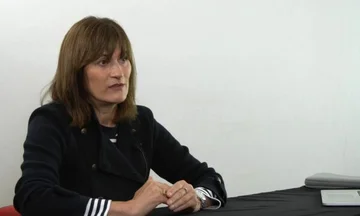
Two experts as witnesses to victims' attorney are testifying at The Hague
Periskopi(a year ago)
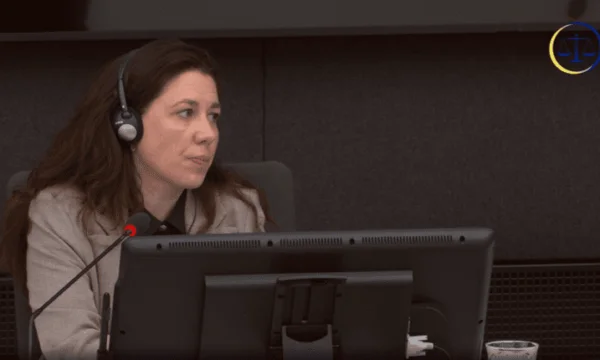
(a year ago)Two medical experts are witnessing at the Special Court. It's about Catherine Nicola-Black and Karin Dune-Prince. They are the only two witnesses to protect the victims. Legal expert Catherine Nicola-Black, who is invited as witness to the victims' defense in the trial of Hashim Thaci, Kadri Veselini, Rexhep Selimi and Jakup Krasniqi, indicated [...]
It's about Catherine Nicola-Black and Karin Dune-Prince.
They are the only two witnesses to protect the victims.
Legal expert Catherine Nicola-Black, who is invited as a witness to the victims' defense in the trial of Hashim Thaci, Kadri Veselini, Rexhep Selimi and Jakup Krasniqi, indicated that on the basis of her experience as psychiatrists, lack of justice and social and institutional support could have a negative impact on the mental health of the victims.
By clinical experience, I would say that one of the ways that the lack of justice or social or institutional support can have a negative impact on the deterioration of mental health is through what we call devaluation or the non-recognition of what the victim has been through. So if a person does not know someone's experiences or personal share, this could have a negative impact on trauma recovery or in the same way how a lack of justice can have an impact on mental health subjects”, Black said.
Black claims that a person's own confession is a therapeutic act.
In contrast, Karin Dune-Prince stated that according to studies, stopping is one of the most challenging human experiences. Black, however, said this is even more consistent with her clinical experience.
This matches my clinical experience. The people I've worked with, who have suffered torture during the time they've been detained, are among those who have serious and prolonged symptoms”, Black said.
She said that the effect caused by one person toward another has a deeper effect than any traumatic experience caused by any natural disaster. Duhone-Prince confirmed that.
“One of the elements that makes this experience traumatic in a unique way is the complete loss of control and total dependence on prison staff or persons to keep in place. That means not only the situation the person is found is traumatic, but also that prison personnel control the ability or ability of the person forbidden to use defence mechanisms”, Black said.
Referring to the report compiled by her and Duhne-Prinsen herself, Black said that the most widespread psychological consequences resulting from torture and inhuman treatment are; memories that resurface in an unwanted manner of traumatic events, avoiding/refusting from memories or avoiding the circumstances that could again awaken these memories, a high-management situation including sleep problems, rapid anger, difficulty in accepting positive emotions, fear, etc.