7 hours ago
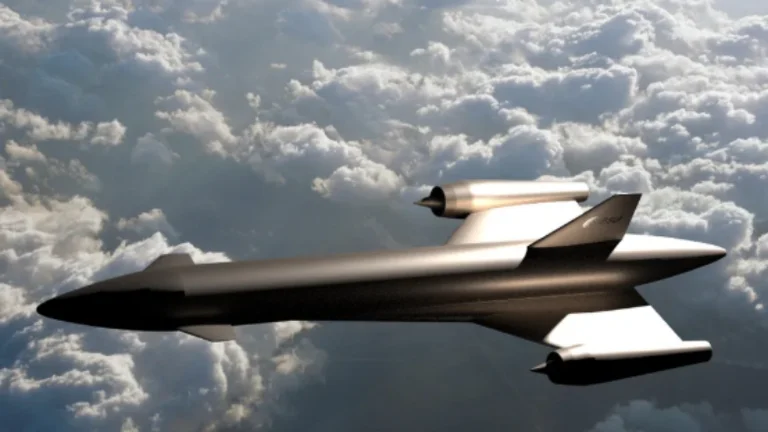
Europe to produce a hypersonic space plane
Periskopi(a year ago)
(a year ago)The European Space Agency (ESA) is funding the development of a hypersonic space plane that should fly by 2031 if everything goes according to plan. Much work is being done to develop the plane as part of the Invictus research programme, which is run by the consulting firm Frazer-Nash. Invictus will use developed technology [...]
Much work is being done to develop the plane as part of the Invictus research programme, which is run by the consulting firm Frazer-Nash.
Invictus will use technology developed by the British company Reacting Angels Ltd., whose purpose was to produce the great space aircraft Skylon, but was prevented from doing so by last year's bankruptcy.
A key part of Invictus technology is “prefunding” developed and tested by Reaction Engineering for its Synergetic Missile Engine Air-Breathing (SABRE).
Combining the aspects of jet and rocket drive, SABER was designed to extract oxygen from the air during the lowest levels of the Earth's atmosphere, thus reducing the need to maintain pressure while increasing efficiency.
A plane that flies at hypersonic speed, more than five times faster than sound speed, faces extremely high temperatures because of heat and air friction. Typical aircraft engines cannot operate under these conditions because air is very hot”, said representatives of the Frazer-Nash company.
For example, it solves this problem because it cools the air before it reaches the engine and thus enables conventional aircraft engines to reach hypersonic speed, writes space. com, broadcast Periscope
Invictus is not a major project, with a budget of 7 million pounds, but it can have a major impact on European space flights, according to the ESA.
hypersonic flight is not only the next aviation limit, it is the gateway towards a new paradigm of mobility, protection and access to space.
With Invictus, Europe is exploiting the possibility of leading to technologies that will redefine the way we move across the planet and go beyond it.
By mastering the reusable push, we are laying the foundation for vehicles that rise like airplanes and arrive in orbit as missiles, revolutionising land transport and orbital”, said Tommaso Ghidinin, director of the Mechanical Division in the ESA.
The plan requires that a consortium led by Frazer-Nash, which includes Spirits AeroSysts, Cranfield University and other partners, provide a concept and preliminary elements of the design of a full flight system within 12 months.
It will be functional from the beginning of 2031 and may have a range of goals and applications from economic growth to national security.
Otherwise, Invictus is not the only developing European space plane.
The French government and Dassault Aviation have announced plans for aircraft V ORTEX.
The U.S. government uses orbital X-37B orbital aircraft, while China has a similar vehicle called Shenlong.
Virginia Galactic also uses the suborbital space aircraft for tourism and research. /Periscope