6 hours ago
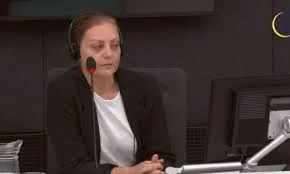
Duhone-Prince: We've analyzed 50 files of participating victims, random selection.
Periskopi(a year ago)
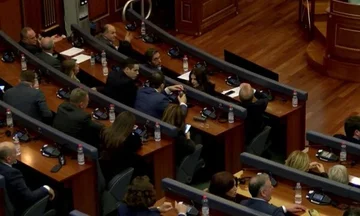
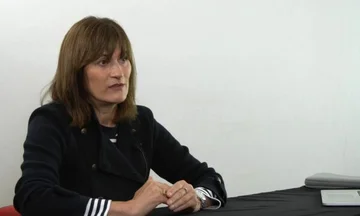
(a year ago)Forensic expert Karin Duhne-Prinsen, today in the courtroom in the case of former Kosovo Liberation Army leaders (UÇK), said that by a random selection they have analysed the files of 50 victims participating in the case. Duhone-Prinsen indicated that the separation of the victims had taken place in four categories that were: Group of direct victims, group [...]
Duhone-Prinsen indicated that the separation of the victims had taken place in four categories that were: The group of direct victims, the group of indirect victims, the group of indirect adult victims, indirect victims of children, reports “Justice Trust“.
We eventually selected 20 live victims and selected five live and indirect victims' files and the indirect victims selected 15 adult and 10 children. The selection process was complete casual and all the victims had a number and did not respond to them, but solved the” system, said Duse-Prince.
She added that part of the report points to the psychological consequences of inhuman treatment and torture.
Prior to that, the victim's defender, Simon Laws, generally asked what are the typical or possible psychological consequences in the short and long term of those who have suffered kidnapping, torture, or even the forced disappearance or forced murder of loved ones.
Parts of the report read in the courtroom that killing a loved one can lead to constant disorder, pain in the long term. In this regard, Black said it was the constant pain disorder.
It's when normal pain gets stuck. So, either stop or get stuck in the pain phase because there are different stages of pain, there's a difference in stages of pain. So this is called a pain disorder and that lasts in time and that is quite interfering with the functioning of one's life as to how normal a situation will be, she said.
Usually, a person with disorder, according to Black, not usually thinks of himself but only about it.
It seems that their identity is linked only to the disaster that happened to that person”, Black said.
In the aftermath of the indirect victims ' forced or forced disappearance, however, Black claimed that it causes them the suffering that reaches the threshold of torture.
In the expert report, this loss is said to be unclear, reasoning that indirect victims do not know what happened to the person in question.
Duhne-Prince also talked about the unresolved trauma, which said it's a trauma that hasn't been dealt with or that is still continuing and therefore part of the person.
Experts claimed that if the trauma is not addressed, it is inherited from one generation to the next. Thus, from parents to children and, in some cases, to grandchildren.
Later, Laws asked experts how much they correspond to the symptoms with the consequences and mechanisms described in the report.
“Results from the code of psychological finds that mentions the victims, were consistent with the results that exist thanks to literature”, said expert Prinsen.
Black added that it agrees with Prinsen's statement, adding that he has generally seen similar symptoms described in literature.
While discussing two other documents of the experts, I was transferred to private hearings, reasoning that they contained confidential information./Periscopi/