7 hours ago
Dehari as if his party insists: In the spirit of the 2014 Constitutional Court Act I have proposed secret voting
Periskopi(a year ago)
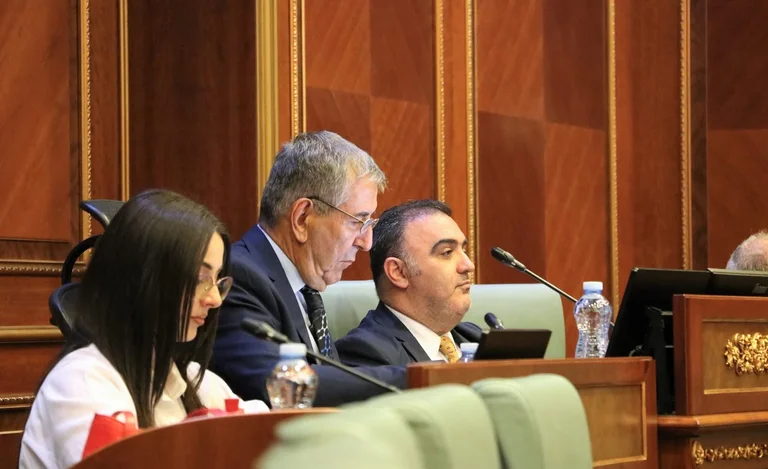
(a year ago)Avni Dehari has commented on the Constitutional Court's Act on Constitution of the Parliament, stressing that there is no constitutional requirement for open or secret voting at the constitutional session, Periscope reports. He has clarified that the 57th Article of the Parliament Rule does not apply to this session, and any procedureal motion is invalid. According to [...]
He has clarified that the 57th Article of the Parliament Rule does not apply to this session, and any procedureal motion is invalid.
According to him, MPs' refusal to vote on the commission for the secret vote is a rejection of the realisation of a right guaranteed by the Constitutional Court.
Total:
ACT THE JOYCHING WHOTEW E SE FOR CONSTITU ENVIRONMENT
The Article 178 points of the Act says neither the Constitution nor the settlement of the Parliament determines whether the manner of voting at the constitutional session should be open or secret, and that also for the constitutional hearing, procedure motions do not apply.
The 57th Article of the Parliament Rule is not for the constitutional session, but only for plenary sessions and only under certain circumstances, which are expressly referred to in the Order.
The Constitutional Court has confirmed that no procedure motion is valid at the constitutional hearing. Consequently, it would be a violation if MPs were asked whether you were for a secret vote or not.
Regarding Movement V proposal For chairman of the Assembly, there have been six unsuccessful open votes. As chairman of the constitutional court's Constitutional Court session in the spirit of 2014, I have proposed the secret vote aimed at the constitution.
Votes for, against or abstention for the commission for the secret vote mean expressing the will of MPs for the way they vote. Of course, one way of voting has no more value or weight than another.
The rejection of MPs to vote the commission is the refusal to carry out the secret vote -- that is, refusing to realise a right -- that guarantees the Constitutional Court's Act.