7 hours ago
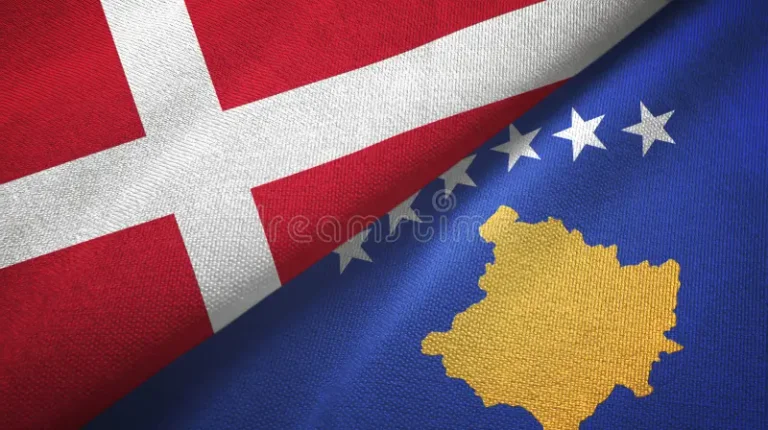
Danish presidency vows to work to find ways for Kosovo's narrowest integration with the EU
Periskopi(a year ago)
(a year ago)The Danish presidency of the EU Council has pledged to commit to “finding a” road to help Kosovo on its European integration path. However, Denmark specifically argued whether it will be taken more seriously than its predecessors with Kosovo's EU application, which was submitted in December 2022 [...]
From 1 July Denmark took over the presidency of the Council of the European Union at a time when the EU is facing a new international order and growing conflicts. Among all these issues to be taken, Kosovo's application to the European Union remains in the drawer.
Denmark's permanent representation of the EU in a response to the Journal Express said the Danish Presidency would push forward the enlargement process for countries aspiring to join the Union and for Kosovo “ ” pledged it would engage “to find” roads since, unlike other countries in the region, Kosovo has the problem of not recognising its citizenship from five member states.
The Danish EU presidency will work closely with the Commission and member states to advance the enlargement process based on credit and support for necessary reforms and political steps in aspiring countries. In the case of Kosovo, the Danish presidency will work to find ways forward, which can contribute to Kosovo's narrowest integration with the EU”.
Optimistic that Denmark will help the region has expressed itself EU Council President Antonio Costa.
“We can rely on the Danish Presidency to advance negotiations with Ukraine, and also with Moldova and the six Western Balkan countries”, Costa said at the Bosniak presidency ceremony from Denmark.
Kosovo's application submitted in mid-December 2022 has failed to pass even the first phase to be reviewed by the EU Council and then sent to the European Commission for opinion.
In the six-month rotation, since 2022, the EU Council Presidency led member states that were even more supportive of Kosovo, but none of them submitted the application to further it.
Kosovo was quick to submit the application in 2020, just half a month before Chechia finished the presidency, with the claim that how a friendly state would take steps for formal and basic procedures usually taken for such applications. However, that happened.
Kosovo's application had delivered Prime Minister Albin Kurti to the Czech Government building in Prague to this country's top diplomat.
Although the problems for handling this application were only known, Kurt had then downplayed them, expressing optimism that the five non-recognitional fears would cause obstacles to Kosovo's clear aspirations to become an EU member.
When asked about the obstacle five EU states may present that do not recognise Kosovo -- Romania, Greece, Spain, Slovakia and Cyprus Kurti -- said that when Kosovo signed a Stabilisation and Association Agreement with the bloc in 2015, the five states agreed.
“I do not believe that the minority of EU member states that still do not recognise our independence will be against our joining the European family”, Kurti said then, as REL reported.
A day earlier, Kosovo leaders then, President Osmani, Chief Parliamentary Konjufca and Prime Minister Kurti had considered the event historic.
During this period at the helm of the EU presidency after Czechia was Sweden from January to June 2023, then there was Spain from July to December 2023, which was not even proposed on this application. Spain was succeeded by Belgium from January to June 2024, then Hungary from July to December 2024, and Poland from January to June 2025 was ahead of Denmark.
Kosovo is the only state in the Western Balkans that does not have EU membership candidate status./Periscopi/