6 hours ago
How damaged are Iran's nuclear facilities?
Periskopi(a year ago)
(a year ago)According to experts, Iran's nuclear programme remains operational despite mass shelling. Tehran refuses inspections as Washington threatens new attacks. On June 28th, Rafael Grossi, director of the International Atomic Energy Agency (IAEA), said Iranians could resume enriching uranium “within months” or faster. He rejected US President Donald [...]
According to experts, Iran's nuclear programme remains operational despite mass shelling. Tehran refuses inspections as Washington threatens new attacks.
On June 28th, Rafael Grossi, director of the International Atomic Energy Agency (IAEA), said Iranians could resume enriching uranium “within months” or faster. He rejected US President Donald Trump, who had earlier said attacks on Iran's nuclear facilities had re-entered their nuclear programme for decades behind”.
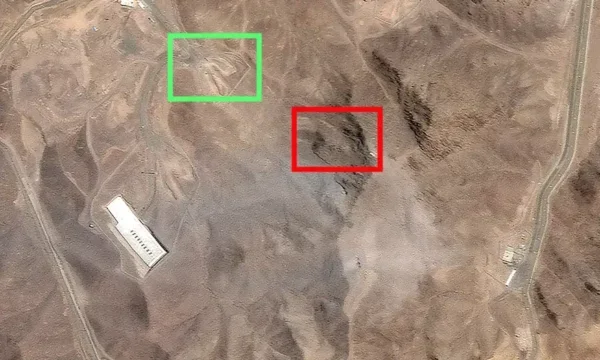
The US used a total of 14 GBU-57 bombs, each weighing 13,600kg, as well as 30 Tomahawk rockets on June 22nd against Iran. The targets were three main nuclear facilities in Fordo, Isfahan and Nataz. The bombs used were designed to penetrate deep into the earth with a high explosive load to destroy highly resistant underground structures and objects.
According to Jeffrey Lewis, a weapons control expert at the Midlebury Institute for International Studies, objects attacked were severely damaged. But he added that many of the objects remained intact.
I think a large part of the controversy stems from the fact that many of the objects were not hit”, Lewis told Deutsche Welle.
Especially noteworthy is the question of where the 60 - percent rich uranium now lies. “Most of that uranium was not in the Fordo” complex, he explained.
Many, he said, do not understand exactly how the nuclear programme is organised. “Uranium is enriched and stored in Fordo, but most of it is later transported to another location near Ishan. ”
He didn't want to talk much about injuries in Fordo. The U.S. Army uses an object model that allows predictions. This pattern can be accurate, but it can also be wrong. It will be very difficult to know exactly what happened at the Fordo complex until someone enters. ”
Hard Monitoring
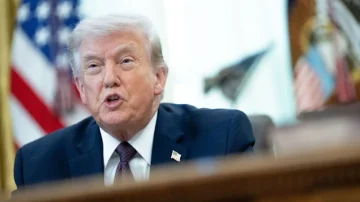
US President Donald Trump, on the other hand, has said he does not believe Iran was able to remove reserves from the premises before the attack. The “is very difficult and we did not give almost any warning”, the president said in an interview with Fox News last weekend.
State Secretary Marco Rubio has requested a visit from the International Atomic Energy Agency inspectors (IAEA) to get a clear view of the situation. The head of the IAEA, Rafael Gross, has asked Tehran to enter facilities damaged after the attack in order to inspect the reserves of rich uranium.
The Iranian government has so far refused. Parliament in Tehran also voted to suspend co-operation with the IAEA after the agency did not officially condemn Israeli and American attacks.
Iran's Atomic Energy Organisation will suspend co-operation with the IAEA until the security of our nuclear facilities is guaranteed”, Parliament Speaker Mohammed Bagher Ghalibach announced on state television on 26 June.
This has made monitoring Iran's nuclear programme much harder for IAEA, says political analyst Hamid Reza Azazi from the Science and Policy Foundation (SWP) in Berlin. Azazi recalls Iran began “to gradually reduce its commitments” after the US withdrew from the nuclear agreement in 2018.
Under the (JCPOA) nuclear agreement, Iran was obliged to report all its nuclear activities transparently to the IAEA. Since 2019, experts say, the view of the International Atomic Energy Agency for Iran's activities in this area has become increasingly unclear.
“They suffered much damage from the military attack, but they also realised that they could survive such an attack”, Lewis warns.
If the objects are intact: Trump threatens new attacks
Iran's supreme leader, Ajatolah Ali Khamenei, condemned the US attacks on nuclear facilities and called them largely ineffective: “they failed to achieve something significant”.
Iranian state media and politicians admit that damage has been done, but insist there have been no catastrophic consequences. US President Donald Trump said at a news conference in the White House on Friday that he would undoubtedly “attack Iran again if intelligence agencies conclude that the country is continuing to enrich uranium at disturbing levels. /Periscopi/