7 hours ago
Croatian Services: The escalation of tensions in Kosovo, continuing risk
Periskopi(a year ago)
(a year ago)Croatia's Security and Intelligence Agency (SOA) estimates that relations between Kosovo and Serbia remain unstable, and that, under these circumstances, escalation of tensions in Kosovo poses an ongoing danger. In its annual report, SOA sheds light not only on the security situation in Croatia but also on developments in the Western Balkans [...]
In its annual report, SOA sheds light not only on the security situation in Croatia but also on developments in the Western Balkans a region that, according to her, continues to face deep political and security challenges, closely related to unresolved interstate issues.
Although the EU and the US remain involved in stabilisation efforts, the report underlines that resolving these issues continues to be difficult, follows Periscope.
This climate of uncertainty, according to SOA, also directly affects the region's European integration process, which is moving at a slow pace.
Croatia sees continued threats in north
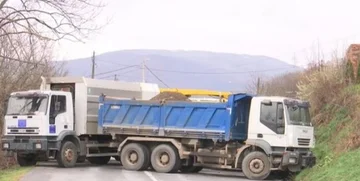
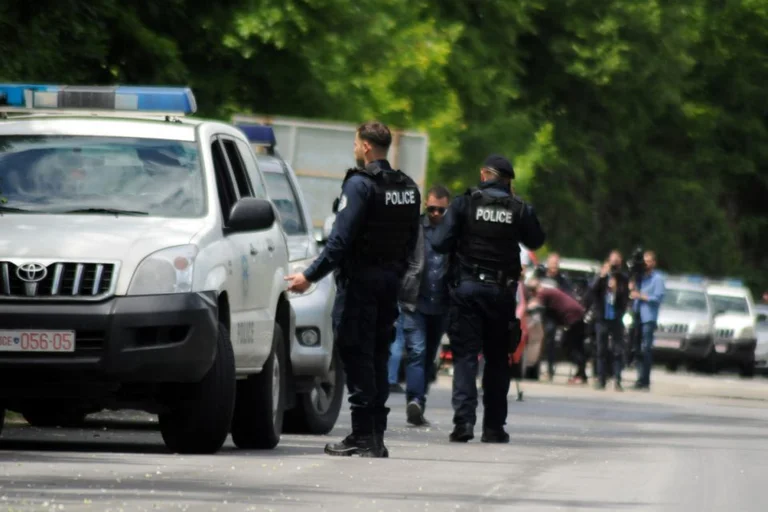
In its assessment of Kosovo, SOA emphasises the existence of groups aimed at destabilising the situation in the north of the country, where the majority of the population is Serb.
As an example, the report cites the armed attack of Serb formations on Kosovo Police in the village of Banjska on September 24th in 2023, in which a policeman was killed.
Pristina has accused Belgrade of this attack, while Serbian officials have denied any responsibility.
The report notes that it is still not clear how this paramilitary formation is organized and how it is armed with heavy weapons of military origin.
For Milan Radojcicin, who has claimed responsibility for organising the attack and has been participants in it, it is reportedly fled to Serbia, where it was questioned, but criminal proceedings were still expected against it.
The SOA report also cites efforts by Kosovo authorities to eliminate Serb parallel institutions in the north, aimed at strengthening state sovereignty and limiting Belgrade's influence in the area.
“under such circumstances, escalation of tensions in Kosovo remains an ongoing danger. So the role of the security guarantor continues to play by the military presence of the international forces”, SOA concludes.
Serbia's Strategic Balance
For Kosovo's northern neighbour, Serbia, SOA emphasises the continuation of the balance policy between the West, Russia and China.
This strategy includes promoting the concept of the Serbian “world”, which aims at uniting Serbs in neighbouring countries especially in Bosnia and Herzegovina, Montenegro and Kosovo under the unified political umbrella of official Belgrade.
At the domestic level, SOA notes that Serbia has experienced several waves of antigovernmental protests, organised mainly by students, who require social democratisation, depoliticisation of state institutions, strengthening media freedom and fighting corruption.
The report points out that in such a complex situation, with growing social polarization media near the governing structures reinforces a nature that identifies foreign and domestic enemies.
According to the report, it creates an atmosphere of national threat and is used to discredit student protests.
In this context, the Republic of Croatia is cited as a “permanent anti-Serbian”, the SOA points out.
Other Challenges
The Croatian agency notes that political instability continues in Bosnia and Herzegovina, caused by disagreements between entities and communities for constitutional regulation and foreign policy.
The main conflict lies between the leadership of Republika Srpska and the High Representative over jurisdiction.
SOA estimates that the leadership of the Republika Srpska openly supports the dissolution of Bosnia and Herzegovina and requires political support from Russia that will continue to create serious political and security challenges.
In Montenegro, according to the report, the socio-political division between the pro-European and Serbian options, which is simultaneously prorus and anti-Western, continues as well.
Radical Serbian parties are part of the current ruling coalition, and although the Montenegrin government aims to demonstrate European commitment, the influence of Serbian nationalist and anti-Western policies on the option could impede European integration and negatively affect relations with the EU, the SOA report estimates.
He also mentions the Serbian Orthodox Church, which in addition to its religious role, says it has a powerful national and regional political influence.
Church leaders promote the concept of the Serbian “world”, particularly including Bosnia and Herzegovina, Montenegro and Kosovo as part of this space, the report notes.
The same warns also that the Western Balkan criminal organisations, particularly the Serb-Montenegrin ones, are very active in trafficking cocaine from South America to Europe.
Russia's destabilising Role
In part of the report, SOA also highlights Russia's continued and destabilising influence in the Western Balkans.
Moscow, according to the report, uses a range of tools especially traditional ties with Serbia to preserve and expand its influence in the region.
The agency also notes the active presence of Russian intelligence services in Serbia, which, according to SOA, included the shelter of agents expelled from Western countries.
The report stresses that Russian hybrid vehicles operate from Serbian territory and specifically mentions RT and Sputnik.
These “media serve to spread pros and anti-Western narrators to the Western Balkans”, the report notes.
“
For Croatia itself, SOA estimates it is a safe and stable <x0 democracy in a challenging security environment”.
It stresses that rapid global changes, technological developments and the aftermath of the war in Ukraine have affected the deterioration of security in Europe.
But Croatia, currently, does not face serious threats to national security or constitutional democratic order, claims SOA./REL/