8 hours ago
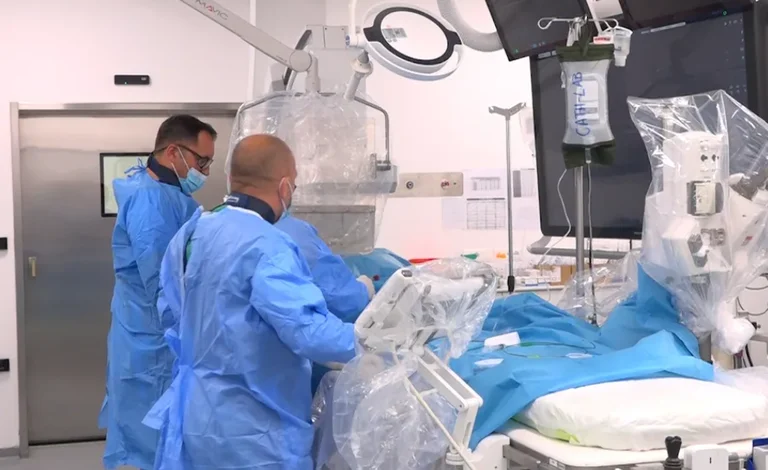
Coronarography is conducted at Prizren Hospital, and stations are made
Periskopi(a year ago)
(a year ago)At Prizren's General Hospital, patients from all over Kosovo have the opportunity to perform choreography and stationing. However, some of the citizens are not informed of this possibility and address the University Clinical Centre of Kosovo (QKUK) in Pristina to conduct these interventions. Because of the lack of academics invasive [...]
Because of the lack of invasive cardiologists at General Hospital “Prim. Dr. Daut Mustafa”, in Prizren, every day a cardiologist along with someone from the medical team travel from QKUK to Pristina to realise interventions in this hospital.
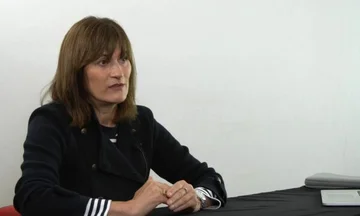
Among QKUK cardiologists offering services in Prizren is Artan Ahmetaj, who shows that they treat up to six invasive patients every day.
Ahmetaj points out that at the weekend, 24-hour custody is often organised, enabling patients to receive immediate treatment without having to go to Pristina.
The “Since the project has been LuxDev's have been experts from Slovenia who have led the project in the beginning how it will be realised. We only started with two times a week, with 24-hour custody. Where 5 to 6 were called as an electronic case and all cases of c have been emergency within 24 hours have been carried out. They've been coming every day for six months. And there are usually 1 to 2 doctors from the University Clinical Center who are experienced in Invasive Cardiology and who perform cases every day from 5 to 6 cases and acute cases during their time here. Also, on weekends most of the time, 24-hour custody is organised, for which all patients who need invasive cardiac emergency do not need to go to KKUK”, Ahmetaj says.
Apart from choreography, cardiologist Ahmetaj shows which interventions are conducted in Prizren.
The “here is carried out all the interventions that are conducted even in the catheterisation room in Pristina... these are choreography, stationing, balling, these are the procedures that are conducted”, says the cardiologist.
Ahmetaj says patients should not hesitate to go to Prizren for intervention because the procedure is carried out by the same KKUK personnel and better conditions than in Pristina.
He stresses that the goal is to lower the waiting list, which is managed by QKUK, and through it patients are distributed to both centres.
We don't rarely have patients' hesitations to go to Prizren. The goal is that the same intervention is conducted by the same personnel, and there is no need for as big expectations as it is held in Pristina. The goal is to reduce the waiting list... the waiting list, which is managed by QKUK, the same list is managed from there and patients are divided into Pristina and Prizren... There's no need for hesitation. On the contrary, the work environment is easier here. For both doctors and patients and other supportive nurses and staff. Here is a modern hall and conditions are much better than in Pristina”, Ahmetaj shows.
Ahmetaj points to the reason why more than a year of catheterisation hall in Prizren is supported by QKUK.
The reason why this catheterisation hall was one year is supported by the flooring hall at QKUK is because there is still no trained staff in Prizren that more personally solves all the cases that are carried out here”, Ahmetaj says.
Ahmetaj says that since June 2024, when work began at Invasive Cardiology in Prizren, first two doctors, a nurse and a hall technician have come twice a week, while since January services are offered daily.
But there are citizens who are not informed of such services.