7 hours ago
CNN: The earth is as far away from the sun as it can be. Then why is it so hot?
Periskopi(a year ago)
(a year ago)The peak of summer is nearing for us living in the Northern Hemisphere, but as we prepare for more sun and scorching temperatures, our planet is turning to a faraway point from the sun. At 3:55 a.m. on Thursday at the time of the birth of the United States (ET), our planet arrived at what is called aphelion.
The peak of summer is nearing for us living in the Northern Hemisphere, but as we prepare for more sun and scorching temperatures, our planet is turning to a faraway point from the sun.
At 3:55 p.m. on Thursday at the time of the birth of the United States (ET), our planet reached what is called the most distant aphelion in its orbit around the sun, approximately 3 million miles away from when it is closer.
That happens every year in early July, which may sound strange. If we're further from the sun, shouldn't it be cooler?
People tend to link proximity to heat, so it seems logical to think that seasons are caused by changes in earth's distance from the sun. But the planet's distance has little to do with it, writes CNN.
The real reason for the seasonal changes in temperatures lies in the fact that the Earth is tilted.
Our planet rotates with an angle of about 23.5 degrees Fahrenheit [23.5 ° C] that means that different parts of the globe receive more (or less) sunlight depending on the year period. In July the Northern Hemisphere is tilted toward the sun, bringing longer days and higher angles of the sun leading to more direct sunlight - all producing summer heat.
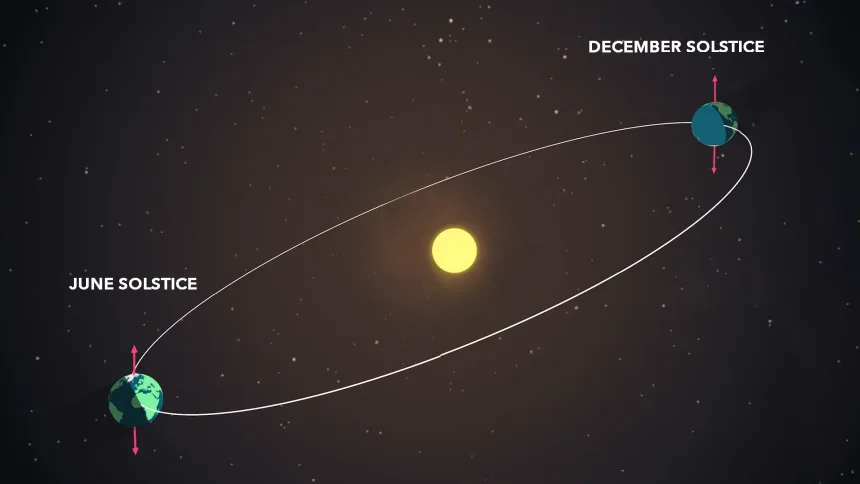
By contrast, the shape of earth's orbit plays only a small role. Although it is a bit elliptic and not entirely circular, the difference between the nearest and the most distant point from the sun is relatively small.
Currently, the Earth is about 3.1 million miles away from the sun than it is in early January, when it reaches the perihelion, its closest point. Compared to the average distance of 93 million miles, this is only about 3.3% change.
Since sunlight spreads as it travels, a relatively small change in distance also brings about 7% to the number of solar energy reached the planet. This is very little compared to the effect Earth's anim has.
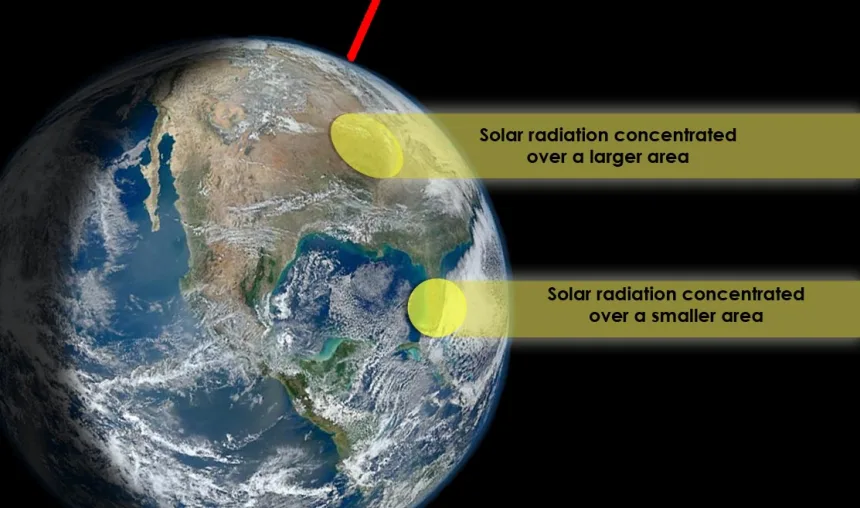
How big is the difference? Consider some examples.
In cities like Houston, New Orleans, and Phoenix near 30 degrees north, the amount of solar energy that reaches earth's atmosphere during the summer is more than double what those cities take in winter.
Farther north, about 40 degrees, seasonal swing is even more dramatic. Cities like New York, Denver and Columbus see that solar energy rises from about 145 watts per square metre in winter to 430 in summer to almost 300%.
So while it is true that the earth is getting less energy from the sun at present, this detail is barely recorded in comparison with the power of the planet's animation. A small angle in Earth's rotation does much more to shape our seasons than a few million miles away.
In the end, it's not how close we are to the sun that makes summer feel like wine. It's how we're tilted to it./Periscopi/