8 hours ago
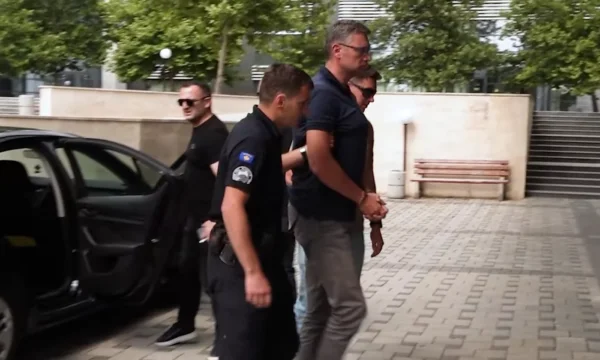
Even Appeals leaves Igor Popovic in custody under suspicion of inciting hatred and failure between Serbs and Albanians
Periskopi(10 months ago)
(10 months ago)The Appeals Court has rejected alleged defender Igor Popovic's complaint, lawyer Milos Deleviq, giving power to the Constitutional Court's decision in Pristina, with which Popovic has been appointed 30 days of detention for inciting division and failure to give a speech against the court. KLA. Igor Popovic, assistant director of the so-called [...]
Igor Popovic, assistant director of the so-called “Office for Kosovo” in Serbia's Government, was arrested on 19 July at the Brnjak border point under suspicion of inciting division and non-compliance, reports the “Justice bet “, broadcasts Periscope.
According to Apel's decision, the first degree has acted directly when it has appointed detention, as there is doubt that Popovovic has committed the criminal act he suspected of.
The appeal in the decision emphasizes that video is seen and heard as Popovic gives a speech in the region of Rahovec, through which enough suspicion arises based that he committed criminal work.
Always according to the decision, Popovic has additional Serbia and if the same is protected in freedom, it would be elusive by Kosovo institutions for the fact that the Republic of Serbia does not co-operate with the Republic of Kosovo.
The appeal has given the first degree in terms of the decision on the detention assignment, with the argument that no measure of detention against Popovic can be justified.
The “Justice Trust” had reported on the Prosecution's report to Popovici, allegedly in his speeches, had publicly fostered hatred and reluctance between Serbs and Albanians.
According to the prosecution, there is doubt that the defendant, deliberately and knowingly, on July 18, 2025, about 12:00 in Rahovec, had directed an indefinable mass of persons knowing that his speech is conveyed by the media, with his speech has promoted and publicly spread hatred and incompatibility between Serbs and Albanians with the content of dealt with the public order.