9 hours ago
30 years of genocide: Bosnians honour Srebrenica victims amid still open wounds
Periskopi(a year ago)
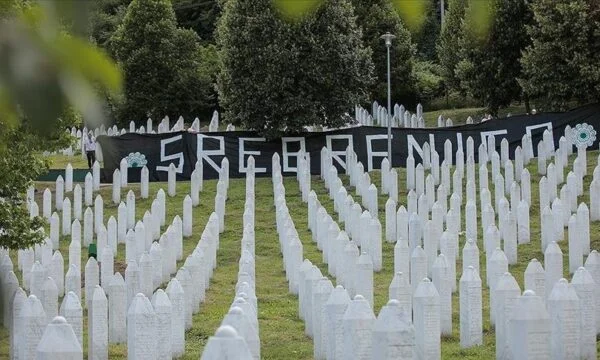
(a year ago)Thousands of Bosniaks have gathered at the cemetery near Srebrenica on Friday to commemorate the 30th anniversary of the 1995 massacre, where more than 8,000 Bosnian Muslim men and boys were executed by Bosnian Serb forces on 11-12 July 1995. This commemoration marks one of the most serious crimes in Europe since World War II, [...]
This commemoration marks one of the most serious crimes in Europe since World War II, where about 1,000 victims remain undiscovered, while many families have chosen to bury only a few bones, to give relatives a decent resort.
The main responsibilities of the massacre, General Ratko Mladic and Serbian political leader Radovan Karadzic, are known to have been convicted of genocide by the UN Tributal in The Hague.
Reuters reports that as part of this year's commemoration, about 7,000 people took part in the March of Peace, a three-day 100km trip across the opposite road that Bosnian men pursued to escape death.
Two international courts have ruled that events in Srebrenica constitute genocide, but Serb leaders in Bosnia and Serbia still oppose that term, the number of victims and the official version of events. We also remember that this denial continues to fuel political divisions and prevents Bosnia's integration into the European Union.
Last year, the UN General Assembly declared July 11th as the International Reflection Day and the Srebrenica Genocide Memorial, promoting the organisation of official memorials in many parts of the world.
This can never be forgotten. Who can say that this was not genocide? Only someone without a soul,” says Sabahet to Reuters, one of the victims of the massacre.
We remember that, the Srebrenica massacre, internationally known as the genocide act, occurred in an area that had been declared the safe <x0) zone by the UN and was protected by a Dutch contingent of 370 peacekeeping troops who failed to prevent the massacre.
Although the US and NATO later reacted with air strikes to further curb conflict escalation, the 1999 Human Rights Watch report criticised the international forces' delays and failures, questioning the effectiveness of Western humanitarian defence.