6 hours ago
WP: A long fight with Iran is not possible without US assistance. Defense is costing Israel about $285m a night.
Periskopi(a year ago)
(a year ago)The intensity of Iran's attacks seems to be dropping as it drains its reserves. Meanwhile, Israel is consuming its supplies with expensive missile interceptors. The Washington Post has examined how long war can last with this intensity. Since Friday, the same dramatic scene has been repeated more than [...]
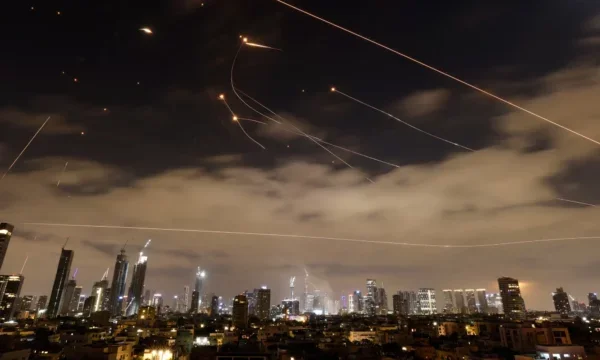
Since Friday, the same dramatic scene has been repeated more than six times over Israel's sky: a hail of Iranian ballistic missiles comes quickly. A wave of Israelite defense interceptors rises to bring down most but not all missiles.
A key question is how long each side can continue. The answer can directly affect the duration of the conflict.
Israeli intelligence officials estimate Iran had about 2,000 rockets of up to 1,200 miles to hit Israel, but a significant portion was immediately destroyed by Israeli secret operatives in Iran and by the air strikes Israel launched early Friday, opening the conflict.
Since then, the Israeli Army says Iran has launched about 400 missiles from the remaining reserves, and Israeli attacks have eliminated 120 or a third of Iranian missile launchers. Furthermore, Israel announced Monday that it has achieved air advantage over Tehran faster than anticipated, meaning it could further limit the Iranian forces' ability to launch missiles.
The intensity of Iranian attacks seems to be dropping significantly. After firing over 150 rockets on the first night of the conflict Friday, Iran launched only 10 rockets Tuesday afternoon.
“Iran must make a very difficult estimate, because there is a limited amount of rockets and at current pace, cannot replenish real-time reserves”, said Fabian Hinz, military analyst at the International Institute for Strategic Studies. He stressed that even those 150 Friday rockets were less than 200 Iran issued to Israel in October, in retaliation for the killing of Hamas and Hezbollah leaders.
Israeli analysts warn, however, that more than half of Iran's arsenal remains intact, and an unknown amount of rockets may be hidden in underground depots.
Meanwhile, protection has become very expensive for Israel. Israel's financial newspaper The Marker reported that anti-missile protection costs Israel up to 1 billion shekel (about $225m) per night.
As a result, observers say that a long struggle between Israel and Iran may not be possible at least not with this intensity, writes The Washington Post, states the newspaper Express.
Without new supplies from the United States or greater involvement of American forces, some estimates suggest that Israel can maintain its anti-missile protection for only 10 to 12 more days if Iran continues at the same pace. Earlier this week, it may be that Israel's systems will be able to catch only a smaller percentage of the missiles because of the need to save its own ammunition. “They will have to choose what they want to capture”, said a source informed on US and Israeli intelligence assessments. “System already overloaded”.
Tal Inbar, an Israeli missile expert linked to the Alliance for Anti-missile Protection in Virginia, recalled that in 2014, Israel sought a ceasefire with Hamas several days before ending with air interceptors. He said that the amount of stock of interceptors is a very sensitive issue in Israel, but “could be a factor in a” ceasefire once again.
Israel uses a multiple air defence system, including Iron Dome for low-level missiles; Davidés Sling and Arrow for ballistic missiles; and expensive Patriot and THAAD systems provided by the US.
Inbar said the problem for Israel is that much depends on the Arrow system, which is launching missiles that cost $3m each to cope with Iranian heavy missiles. Iron Dome, although cheap and mass-made, is as useless to advanced Iranian missiles as “to shoot with a 9m” pistol against a rocket flying in outer atmosphere layers with several times the speed of sound.
On Friday evening, Israeli air defence failed to prevent Iranian missiles that almost hit Israel's Defence Forces headquarters, hitting central Tel Aviv. On Sunday evening, an Iranian missile halted the operation of a large oil refinery near Haifa.
On Tuesday morning, videos posted on social networks verified by The Washington Post showed four strikes of Iranian missiles near Israeli intelligence headquarters north of Tel Aviv. None of the four missiles hit Mossad headquarters, but one fell within Camp Moshe Dayan, a country located in Israeli military intelligence headquarters and the 8,200-strong Israeli electronic intelligence unit.
Iranian state media reported that the Islamic Revolutionary Guard had killed Israeli intelligence and military officials, but those claims were not confirmed. The IDF did not respond immediately to the demand for comment.
By Tuesday, the Israeli government said only 35 of the 400 Iranian missiles had imposed a success rate for intercepting over 90 percent. 24 people have been killed and more than 600 injured, according to the government.
Iranian authorities said 224 people had been killed in Israeli attacks by Sunday, according to the latest data. There was no distinction between military and civilian victims. In some cases Israeli missiles and drones have hit inhabited buildings to kill Iranian military officials and nuclear scientists in their homes. On Monday, Israel struck the headquarters of Iran's state broadcaster after Defence Minister Israel Katz promised that <x0-seconds of Iranian propaganda” would be “captured”. After the attack, Israeli Defence Forces said they had hit a “military communication centre” Iranian, but gave no evidence of military presence in the hit country.
Jim Lamson, a former intelligenceanalyst specialising in Iranian ammunition and now senior researcher at the James Martin Centre for Nonproliferation Studies at the Midlebury Institute, said Iran's missile capabilities would continue to decline, as Israel is now targeting their production facilities.
“assuming their regime does not change, or if they do not agree to give up the missiles as part of a ceasefire, they will face a major problem of rebuilding their forces with ballistic missiles”, Lamson said. “This will be a major consequence from how much Israel manages to damage and destroy their production capacities for the” missile.
Bislimi comes out of an interview with the Special Prosecutor in the case with Faton Pecin “is quietly exchanged” before journalists
Read more