6 hours ago
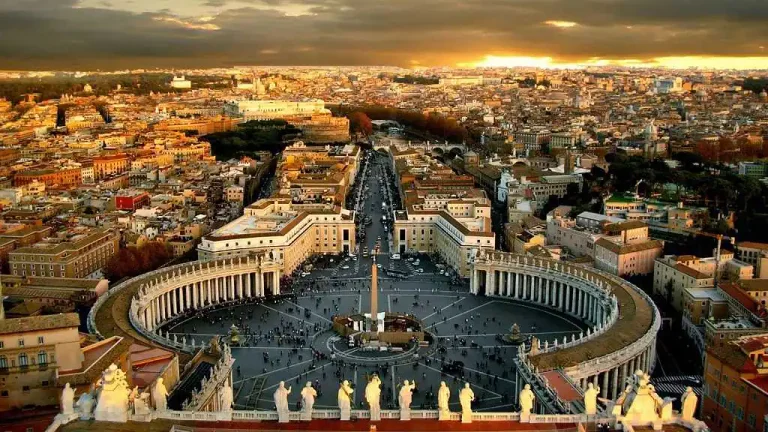
Why does the Vatican not recognise the state of Kosovo?
Periskopi(a year ago)
(a year ago)Luigi Bianko's appointment as apostolic in Slovenia and apostolic delegate to Kosovo has been joyfully welcomed by Diocesa Prizren ão Pristina, said by the Kosovo Archbishop. This appointment was made by Pope Leon XIV on May 20, just 12 days after he took the wheel of the Holy See at the Vatican after [...]
Luigi Bianko's appointment as apostolic in Slovenia and apostolic delegate to Kosovo has been joyfully welcomed by Diocesa Prizren ão Pristina, said by the Kosovo Archbishop. This appointment was made by Pope Leoni XIV on May 20, just 12 days after he took the wheel of the Holy See at the Vatican following the death of Pope Francis on April 25th of this year. Don Shan Zefi, visual of the Kosovo Archbishop, says the appointment of the new apostolic delegate for Kosovo occurred in a short time by the new pope and that this is a good signal for the country.
“... because even this pope, since the beginning of his potential, immediately handles the Kosovo issue. Therefore, he has also appointed this delegate to Kosovo, which is headquartered at Ljubljana”, says Don Chan Zefi for Radio Free Europe. But Louis Biankos' role will not be entirely the same in Slovenia and Kosovo.
Apostolic Nunc is the Vatican's highest diplomatic representative in a designated state like ambassadors of other states, as well as the Pope's representative near the local Catholic Church. Meanwhile, according to the clarifications the Vatican has previously given, the mission of apostolic delegate “is not of a diplomatic nature, but is responding to the requirement to adequately meet the shepherding needs of Catholic believers”.
The Vatican, for the first time, appointed apostolic delegate to Kosovo in February 2011. He was appointed by Pope Benedict XVI. The reason why the Vatican does not appoint sanc for Kosovo, but only apostolic delegate, is because the Holy See has not formally recognised Kosovo as a state.
Kosovo declared independence on February 17th 2008 and, according to data from the Kosovo Ministry of Foreign Affairs and Diaspora, has so far recognised 119 states. Free Europe Radio has been directed to the Holy See to take a stance regarding the possible review of the formal recognition of Kosovo's independence, as well as to understand the main obstacles or considerations affecting the process. Until this article's publication, there is no answer.
Kosovo's complex non-recognition by the Vatican of Kosovo's non-recognition by the Holy See is seen as complex issues by Kosovo diplomats and former diplomats, as well as the Idyvia of Kosovo.
Vehbi Miftari, chief of the Special Mission of the Republic of Kosovo at the Holy See, says reports between Kosovo and Vatican have entered a new and dynamic phase. According to him, the intensifying of political relations, the decree of the Kosovo Permanent Mission in the Vatican (in 2023), deepening cultural reports and the joint commitment to promoting cultural values and human freedoms testify to recognition of Kosovo's democratic reality and the further approach to relations between the two sides.
However, it also speaks of obstacles to Kosovo's formal recognition by the Holy See. “Serbia is equally important for the Holy See”, Miftar tells Radio Free Europe.
Don Shan Zefi, the vikar of the Kosovo Archbishop, emphasises that the Holy See carefully conveys dialogue on normalising relations between Kosovo and Serbia, which has started since 2011 with EU mediation but has not yet been closed. The sooner his end is seen, the sooner the Holy See will recognise Kosovo. That's my personal opinion. Yes, because this process of mutual recognition has begun between Kosovo and Serbia, so it may even be expected or hesitated [from the Holy See] until a peace agreement between the two states is clearly realised, notes Don Shan Zefi.
It is also among those who estimate that among the main obstacles to recognising Kosovo by the Holy See is ecumenism, or interethnic dialogue for reconciliation between the Christian churches: Catholic, Orthodox and Protestant. The separation of the Catholic and Orthodox Church took place about ten centuries ago, while the Protestant Church was separated from that Catholic Church in the 16th century. Ecumenism finally took off in the second half of the 20th century and continues today.
The Russian Orthodox Church and the Serbian Orthodox Church oppose Kosovo's independence. In this context, Don Shan Zefi estimates that the Holy See takes into account all world politics and may have its own reserves for recognising Kosovo as a state. “Of course, on the part of Orthodoxy [Christian Orthodox world] there are remarks that Kosovo is not recognised or is still early to be recognized. It is expected, in diplomatic terms, that Serbia will recognise Kosovo, have relations with Kosovo, and then intervene”, says Don Shan Zefi.
Similar sentiments are shared by publicist Angel Koliqi, who has lived for two decades in Italy since 1990 and for several years was a Radio Vatican journalist. He says the Vatican recognises Kosovo's reality and evidence of this is the continued communication that the Holy See has with the country's institutional leaders. Koliqi expresses conviction that the current lack of formal legal recognition for Kosovo relates to avoiding consequences in the Vatican's ecumenical dialogue.
The interethnic dialogue for Christian unification is under way, and with this recognition [of Kosovo by the Vatican], Serbian and Russian Orthodox would be enraged and everything would fail”, Koliqi points out in a written response to Radio Free Europe. Ecumenical dialogue is viewed as one of the causes of Kosovo's non-recognition by the Vatican and Albert Prenkaj, former ambassador to Rome from 2008 to 2012, and former political director of the Kosovo Ministry of Foreign Affairs in 2013,2022.
He says that in the first communications between Vatican and Kosovo, the latter has been told that the Vatican recognises only countries that are members of the United Nations. Kosovo is not a member of the UN yet. Meanwhile, the Serbian Orthodox Church or Belgrade's Patricka is always a problem on the way. So, we know what the position of Belgrade's Patrickana is, but Serbia's state also faces Kosovo”, Prenkaj points out.
Serbia rejects Kosovo's independence and considers it part of it, even under its Constitution. In this context, the Serbian state has had and continues to have the backing of the Russian Federation. However, according to Prenkaj, Kosovo has repeatedly insisted on receiving recognition from the Holy See, presenting its arguments.
The first argument, according to him, is the political one: that Kosovo is a new reality and its citizenship is in favour of lasting security and peace in the Balkans. The second argument is that Kosovo has proclaimed the state on the principle of self-rule, according to International Law.
The third argument, says Prenkaj, is that the states that have accepted Kosovo have done so on the basis of two first arguments and, in this context, Kosovo also requires recognition by the Vatican. How do Kosovo institutions view reports with the Vatican?
Kosovo's “Republic and the Holy See have very good reports, which have consistently intensified”, says in a written response to Radio Europe Free of the Office of Kosovo President Vjosa Osmani. From this office, they say, thanks to the commitment of President Osmani and the care of Pope Francescu, now late, as well as the Secretary of State of the Holy See, “relations have gone by deepening”. As a result of this commitment, in January 2023, Kosovo and the Vatican have agreed to establish relations at an even higher level, and the Kosovo Special Mission in the Vatican has been decreed by Osmani.
The Miftari, who heads Kosovo's Special Mission to the Holy See, says that since the establishment of this mission, Kosovo has been continually present at the Vatican, “creating a trust and partnership report with the Holy See, impacting co-operation to extend not only to the political level, but also to the cultural and social”.A. Are there any signals of eventual recognition from the Vatican?
From the Kosovo presidency, Osmani continues its commitment to deepening further relations “to recognition of Kosovo by the Vatican and establishing full diplomatic relations”. But they have not commented whether there are any concrete signals for Kosovo's eventual recognition by the Vatican for a short time.
However, from Kosovo's Special Mission to the Holy See is estimated that “continued approach” between Kosovo and the Vatican contributes to the intention to receive formal recognition from the Vatican. “The deepening of political relations and cultural and social co-operation, the permanent presence of Kosovo in the Holy See through its mission at the Vatican, the care that the Vatican state has shown towards political and demographic reality in Kosovo, open and deep dialogue and the will of Kosovo institutions to address reports with the Vatican as foreign policy priority still contribute to this target”, says Miftar for Radio Free Europe.
How did communication with the Vatican begin? The first contacts of Kosovo's political leaders with the Vatican began in the first part of the 1990s.
The then leader of the Democratic League of Kosovo and later Kosovo President Ibrahim Rugova met Pope John Paul II in 1993. It was the first time the Holy See expected a political leader from Kosovo to private audience with the Pope. Rugova was known as the leader of the peaceful resistance of Kosovo Albanians in the years '90s, when Serbia's then regime, led by Slobodan Milosevic, marred Kosovo's autonomy under the former Yugoslavia, installing power violently.
Rugova's meetings with Pope John Paul II took place even during the war period in Kosovo in 1999 but also after. In April 2005, Pope John Paul II dies, while in January 2006, Ibrahim Rugova, then president of Kosovo, dies.
In February 2008, Pope John Paul II's successor, Pope Benedict XVI, received then Kosovo President Fatmir Sejdiu to the private audience. The meeting took place two weeks before Kosovo declared its independence on February 17th 2008. Former Kosovo Ambassador to Italy Albert Prenkaj says that on the day that Kosovo declared independence, Federico Lombardi, then the spokesman for the Holy See, through a statement of opinion, had hinted that the Vatican knew the new reality and that it invited political leaders of Kosovo and Serbia “to display discretion and restraint”, so that “creates a promise for a future with respect, reconciliation and”.
This is understood at the time on the part of Kosovo as a comprehensive recognition by the Vatican, that he recognises a new reality, but in the spirit of the system of values of the Holy Vatican See, encourages dialogue [between Kosovo and Serbia]”, Prenkaj points out to Radio Free Europe. Don Shan Zefi estimates, however, the time when former President Rugova had contacts with Pope John Paul II marks the best period of communication between Kosovo and Vatican.
There was a great sympathy for us. Since the Pope John Paul II, that sympathy has faded. It's not the power we had at the time, with Pope John Paul II, because then, all of us who were here, as Albanians in Kosovo, have really moved and seen that a door has always been open”, says the vikar of the Kosovo Archbishop. He emphasises that Kosovo Bishopial authorities continue to demand from the Holy See to recognise Kosovo formally as a state. However, according to him, commitment to all factors from Kosovo, in particular institutional ones, is needed in this goal.
The Kosovo Catholic Church, which was within Skopje and Prizren's Catholic Diocese prior to the 1999 war, was divided by the jurisdiction of this diocese in 2000, becoming Prizren's Apostolic Administration. As of May 2019, it was promoted to the rank of the new Diocese of Prizren and Pristina. What should be done?
We invite his holiness to come to Kosovo”, says Don Chan Zefi, referring to Pope Leoni XIV. As he emphasises, Kosovo institutions, along with the Kosovo Archbishop, must advance a demand for the pope's visit to Kosovo. He estimates that the current pope is both a lawyer and will better understand the right of the state of Kosovo.
There is no discussion, because even this pope -- especially this pope now -- as the lawyer -- will understand that Kosovo needs the formalisation of legal recognition, because in the informal sense, the Holy See has recognised Kosovo”, the vikarar of the Kosovo Archbishop points out. Former diplomat Prenkaj agrees that an invitation from Kosovo institutions for Pope Leon for a so-called subx2 shepherding server “ ” in the country would be appropriate action.
But, Kosovo should in this case meet three conditions: for the state to agree, that the country's largest religious community (in concrete case, the Islamic Community of Kosovo) will provide a ʹpo·poʹ, as well as no objections from any other religious community. The current BIK leader, Naim Ternava, had met Pope Francisescu in 2014, during his visit to Albania. He had thanked the Pope for his and Vatican contributions to Kosovo.
Prenkaj estimates that only the first condition could be problematic, to seek reconciliation for “the pope's various shepherding <x1-> evental state, because the Vatican still does not recognise Kosovo as a state. I think the communications of the Holy See are special from state to state, and I think this rule will be exceeded. I believe that on a future shepherding visit [of Pope Leon], but it should be insisted on the part of Kosovo institutions, as well as religions that are in Kosovo”, Prenkaj estimates.
According to him, Kosovo should aim for formal recognition by the Vatican even through an agreement signed with the Holy See. The context is the international agreement between the Holy See and another country, with which legal reports between the Catholic Church and the State in which it operates.
He says that for the idea of an agreement, Kosovo and the Holy See have been negotiating since 20172018. The idea of signing an agreement between Kosovo and the Holy See as a condition for gaining recognition, Don Shan Zefi also mentions.
Maybe there should be an agreement here, because we as a community, like the Catholic Church, still don't have our legal subjectivity. So there's still going to be. It means, no laws for religious communities have been adopted, no knowledge of the positions of religious communities. There is much to be clarified earlier, for the Vatican to recognise Kosovo”, notes Don Shan Zefi. He and Prenkaj express the opinion that Kosovo's eventual recognition by the Holy See would greatly facilitate the process of getting recognitions from the five EU countries that have not yet recognised Kosovo (Spanja, Slovakia, Greece, Cyprus, Romania). Also, according to them, this recognition would stimulate and pave the way for recognition by most Latin American countries that have not yet recognised Kosovo.
Earlier, the possibility of a visit to Kosovo had been warned by late Pope Francescu, who for health reasons failed to accomplish it. Visiting Kosovo was made by institutional leaders even earlier, both Pope Francis and Pope Benedict XVI.
So far, no pope has visited Kosovo. / REL/ Periscopi/