7 hours ago
Ukrainian newspaper: Confrontation with the US has plunged Kosovo into political crisis, new elections can deepen
Periskopi(a year ago)
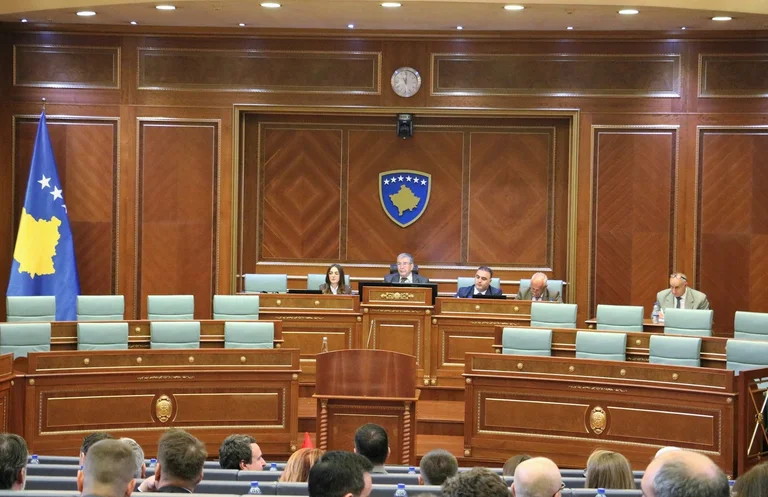
(a year ago)Parliamentary elections in the Republic of Kosovo were held on 9 February. But on June 2nd, another 25th attempt to form a new government failed. This is how the Ukrainian newspaper European Pravda begins with more writing dedicated to the situation in Kosovo. For four months now, MPs gather every 48 hours for new sessions, but [...]
Parliamentary elections in the Republic of Kosovo were held on 9 February. But on June 2nd, another 25th attempt to form a new government failed. That's how the Ukrainian newspaper starts. European Pravda to write about the situation in Kosovo.
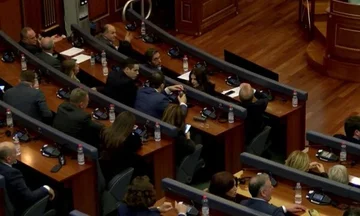
For four months now, MPs gather every 48 hours for new sessions, but have not yet managed to agree to elect either the Speaker of the Parliament or a new government.
As a result, Europe's newest state is in a deep political crisis, with no clear breakthrough.
The recent parliamentary elections brought victory for the Vetevendosje party, led by current Prime Minister Albin Kurti. But that's where the good news ends, writes Ukrainian newspapers.
His party performed weaker than in previous elections, winning only 48 seats less than last time.
This is clearly insufficient to form a majority in the 120-member Kosovo Assembly. The formation of a coalition has proved extremely difficult.
The main reason for the current crisis is that the opposition wants Kurt out of power, but cannot form a government itself.
How did we get here? First, it is noteworthy that Kurti and his party represent a new generation of Kosovo politicians. One that replaced those who had fought for and gained Kosovo's independence and its recognition by the main Western powers.
However, the price of that recognition was granting major concessions to the Serb minority, made under Western pressure. For example, the West's desire to resolve “the Serbian minority issue led to the existence of parallel structures of governance in municipalities inhabited by ethnic Serbs (mainly north of the country).
Kurti took a much more radical approach, which is unacceptable to the opposition. In an effort to fully bring Kosovo's north under Pristina control, the prime minister escalated tensions with the EU and even the United States to unprecedented levels.
As a result, the EU imposed sanctions on Kosovo (even though soft), while Serbia did not face anyone. The opposition fears that, in the face of increased security risks, bad relations with the West could result in extremely costly for Kosovo.
At the same time, the opposition cannot form a government, as 10 parliamentary seats are guaranteed for the Serb minority. Most of these are held by the Serbian List party, directly linked to Serbia's President Aleksandar Vuciq, who is interested in deepening Kosovo's political instability.
President Vjosa Osmani has no rush to disperse parliament and announce new elections, as it is not clear whether extraordinary elections would do anything but further deepen the crisis.
The political crisis is making Kosovo's already difficult situation worse: a large part of the population lives in poverty, and the country is facing corruption, organised crime and drug trafficking, writes European Prague.
These challenges can be overcome only with the help of the European Union.
However, the main obstacle on Kosovo's road towards EU integration remains the normalisation of relations with Serbia through the resumption of negotiations. The talks were frozen after the attack by Serb terrorists in the village of Banjska in Kosovo in 2023.
Among the challenges facing Kosovo's new elected deputies is another important figure, Richard Green, former US special residence for talks on normalising Kosovo-Serbia relations.
Grenelli remains close to President Donald Trump, has friendly ties with Serbian President Vuciq and is openly critical of the Kosovo government./Periscopi/