6 hours ago
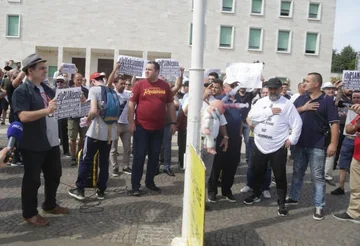
Students in Serbia warn civil disobedience unless elections are announced
Periskopi(a year ago)
(a year ago)If the government of Serbia does not announce early parliamentary elections by the evening of June 28th, “citizens will be willing to take all existing civil disobedience measures”. So warned Serbian protest students, ahead of the rally warned in Belgrade, on the 28th June day of the celebration of Vidovdan, which in [...]
So warned Serbian protest students, ahead of the rally warned in Belgrade, on the 28 June day of the celebration of Vidovdan, which in history relates to the Battle of Kosovo on 1389.
The students' second request is to interrupt the protest in downtown Belgrade, where opponents of protest students, who call themselves “studens who want to learn”, have set up camps now and three months.
A group of student protesters, since late November last year, has blocked most state universities in Serbia, expressing dissatisfaction with the socio-political situation in this country following the accident at the Novi Sad Railway Station.
From the collapse of a concrete shelter there, 16 people have lost their lives.
Since May, the student's main requirement in the blockade is to call early elections so that the new government can work towards meeting their previous requirements.
These include publishing full documentation for the reconstruction of the Novi Sad Rail Station, identifying and prosecuting those who have attacked protesters during protests across Serbia, the release of activists arrested in protests, and the interruption of criminal procedures against them, as well as the increase in the budget for universities.
On the other hand, “students who want to learn” have set up camps in front of the presidency of Serbia since early March, urging authorities to allow them to return to universities.
They have been visited several times by Serbian President Aleksandar Vuciq himself, and supported by Serbs from Kosovo, including members of the Serbian List.
Ultimatum of students in blockade
Students in the blockade published in social media an open letter to the Government of Serbia, through which they asked him to submit a proposal to the president to disperse Parliament, aimed at calling early parliamentary elections.
They said the mandate Government received from Parliament -- “ -- does not reflect the current political situation in the country”.
The “regime has shown that there is no longer the capacity to lead the country through the largest sociopolitical crisis in recent decades”, students praised.
They also asked the Government to call on the Ministry of Internal Affairs to stop the reported subx0> collection of” to the location of the “students camp that want to learn” by 9:00 on Saturday.
What is expected on June 28th?
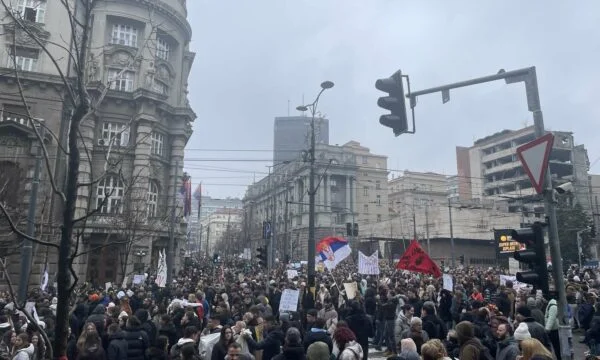
The protest students stated in an open letter that the rally will be held in Belgrade on 28 June and that they expect a large number of disgruntled citizens to participate.
They said they cannot predict further steps of citizens after the official end of the rally.
They decided to call on “for the last time” for their requests to be met, with the aim of setting off the peak of civic and student discontent”.
The last major protest, organised by these students, was held on March 15th, when in late evening hours, after several minor incidents, it was declared completed so that the situation would not escalate.
The informal Public Rally Archives organisation, which estimates the size of the gatherings in Serbia, estimated that between 275,000 and 325,000 people participated in Belgrade on March 15th, noting that the number may have been even higher.
On the other hand, the <x0rs who want to learn, in early June, after Vuchiqi's call postponed the hunger strike until June 28th, if the state does not resolve the situation regarding the faculty blockades.
Government, Opposition for Early Elections
Most opposition parties backed the students' demand for early elections, while Vuciq said he is guided by the needs of the country and the people, and that assessments and decisions would be made in line with the circumstances.
The Serbian government, led by Prime Minister Milos Vuchev, fell at the end of January of this year, while the new government, led by Djuro Macut, was elected in mid-April.
During the presentation before Parliament, Macut said Serbia is tired of divisions and blockades, that it needs to be worked on harmonising society, that harmony can be built through dialogue, tolerance, work and construction of a value system, and that its priority will be normal functioning of schools and faculties.
However, protest students believe that the current government, led by the Serbian Progressive Party ʹ founded by Vuciqi, has no capacity to lead the country, that recent months' protests “have delegated Government” and that, for that reason, they call for early parliamentary elections.
Because of the level of distrust of institutions, according to them, alternative solutions to this crisis do not have”. REL