6 hours ago
Salaries under construction, tourism increasing in Albania
Periskopi(a year ago)
(a year ago)The labour market in Albania is experiencing high dynamism, both due to wages and demand for workers in sectors such as construction and trade and tourism. Even this year, among the highest-speed wage growth sectors are construction, trade, hotels and restaurants. Compared to the first quarter of 2024, the salary [...]
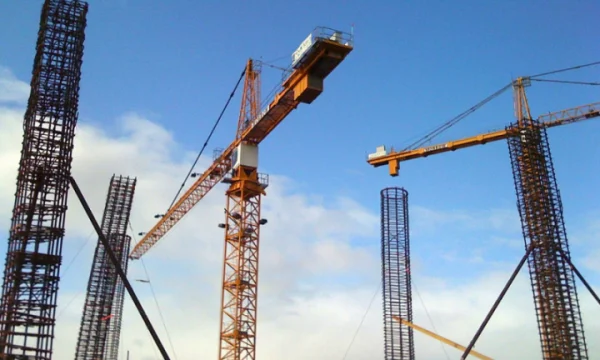
The labour market in Albania is experiencing high dynamism, both due to wages and demand for workers in sectors such as construction and trade and tourism. Even this year, among the highest-speed wage growth sectors are construction, trade, hotels and restaurants. Compared to the first quarter of 2024, the construction salary of 58.706 in the first quarter of 2024 amounted to 68,221, with an increase of 16.2%, the highest of all activities. Also, the trade and accommodation sector has scored an increase of 15.3%, climbing from 58.506 in January-March 2024 to 67,485 leks.
The increase comes at a time when the two sectors have an increasingly high demand for labour power, driven by expanding the construction sector and increasing tourist activity in the country. However, despite growing demand, wages in these sectors remain below the national average, reflecting a gap between market needs and financial rewards for employees. In the first quarter of 2025 average construction salaries was 17 % lower than the average. While wages in business, hotels and restaurants were 18 % lower than the national average.
INSTAT's latest data on the first quarter of 2025 show that the average gross monthly salary in Albania has reached $82,210, increasing by 11.6% compared to the same period in 2024 (73,641m). This growth is part of a trend in all economic sectors, however, the inequality between them remains huge, writes Monitor, broadcast Periscopi.
At the top of the list are financial and security activities, with an average salary of $142,435, followed by information and communications $11,465, as well as public administration and social services of 98,505. These areas not only offer high wages but have also maintained a growth rate throughout 2017 and early 2025 to 10-12%.
Beyond the overall wage increase, data points to an outstanding inequality among sectors. Agriculture, for example, remains the lowest wage sector, just 44.598 dollars per month, despite a large part of the active economic population still engaged in this area. Furthermore, construction sectors and industry have lower wages than the national average. The salary increase was present in all sectors, reflecting pressures from the lack of labour force in some sectors and competition and from wage increases in the public sector. / Periscope