6 hours ago
Picula: Serbia's dangerous world, important for Brussels to point its finger at such ideas
Periskopi(a year ago)
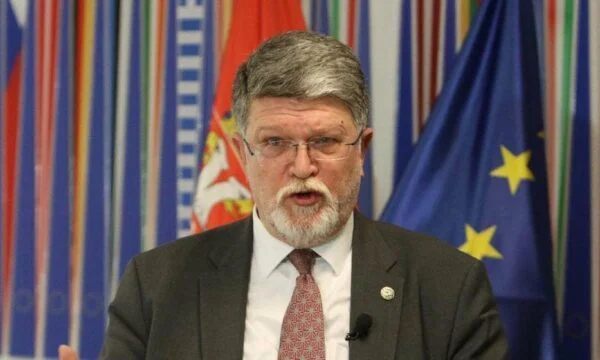
(a year ago)European Parliament rapporteur (PE) for Serbia, Tonino Picula, said the idea of a Serbian “bot <x1) is dangerous and that the Western Balkan region belongs to the EU and not to imaginary projects under Serbia's umbrella. “Any project aimed at changing borders at the expense of neighbours is dangerous. Now I don't think [...]
European Parliament rapporteur (PE) for Serbia, Tonino Picula, said the idea of a Serbian “bot <x1) is dangerous and that the Western Balkan region belongs to the EU and not to imaginary projects under Serbia's umbrella.
Any project aimed at changing borders at the expense of neighbours is dangerous. Now I don't think that the Serbian leadership is sufficient to repeat the mistakes Slobodan Milosevic made 30 years ago, but nevertheless, we should be vigilant and send a clear message not only to the Serbian people, but also to the people of the EU, that their future should not be in the Western Balkans. Serbian “Bota” It is important that Brussels direct its finger towards such ideas, prevents and clearly describes politically as very dangerous”, the Croatian Eurodepute stressed, Danas reported, citing the BGNES news agency.
He added today that it is very important that European Union institutions carefully review what is happening in Serbia and that the Serbian president's response to mass demonstrations in Serbia over the past six months “is not something to welcome”.
It is very important that European institutions carefully consider what is happening in Serbia. Currently, Serbia and (President) Aleksandar Vuciq are making aggression in terms of democratic standards, especially in the past six months, when we have seen massive protests in the streets of Serbian cities. Vuciqi's response is not something to greet in Serbia's standard and reggressive terms”.
He stressed that for the EU, the Western Balkans are not only neighbouring countries and that Serbia is the most important in the region because of its size, population and influence in neighbouring countries mainly Bosnia and Herzegovina, Montenegro and Kosovo.
Unfortunately, the situation has not improved in recent years. Each candidate country is facing disagreements and internal problems,”, he added.
He stressed the necessity of standardising the EU's approach to Serbia, because it is also a community of values.
The real question is why the European Parliament is the only EU institution that is so critically examining the situation there (in Serbia). Others, like the European Commission and in part the European Council, have a different approach. Why? It would be better to ask the directors of those institutions. We should equalise and standardise our approach to Serbia, because the EU is not only a community that shares important characteristics, such as a common market and a common currency. See the Serbian leadership following these aspects, they are more interested in European funds”, Picaula noted./Periscopi/