6 hours ago
Peace Between Russia and Ukraine - Far Away From Seeming
Periskopi(a year ago)
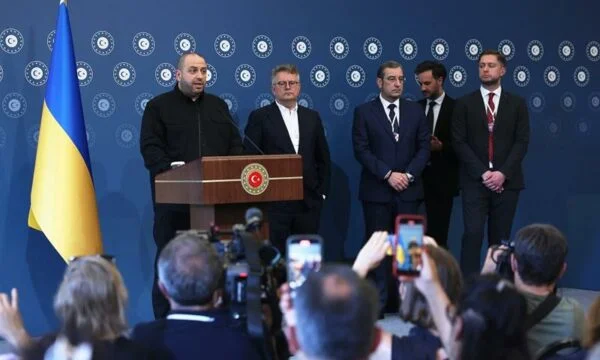
(a year ago)Even before the Ukrainian and Russian negotiators met at the conference hall at Istanbul's famous Ciraban Palace on June 2nd, there was little optimism about great progress towards peace. After just about an hour of negotiations, it was clear that this too was highly optimistic. The next day, the former president [...] confirmed this.
Even before the Ukrainian and Russian negotiators met at the conference hall at Istanbul's famous Ciraban Palace on June 2nd, there was little optimism about great progress towards peace.
After just about an hour of negotiations, it was clear that this too was highly optimistic.
The next day, former Russian President Dmitry Medvedev confirmed that.
Istanbul's “Talks are not to reach a compromise peace under another person's own level, but to ensure our quick victory and the complete destruction of the neo-Nazi regime”, wrote on the telegram Medvedev, which is now senior official at the Russian Security Council.
The second round of negotiations to end Europe's biggest land war since World War II ended with less results than the first round, reports REL, broadcast Periscope.
The first talks last month marked the first confrontation between Kiev and Moscow since the first weeks after the launch of Ukraine's full Russian occupation in February 2022.
Ukraine sent a group of high-level officials; Russia sent a delegation led by former Culture Minister Vladimir Medinsky.
The fact that they agreed to exchange up to 1,000 prisoners of war was considered successful.
Peace Proposals
On the eve of the June 2nd talks, the two sides were expected to exchange their specific proposals for the framework of a peace agreement.
Ukraine, which said it had delivered its plan in advance to the Kremlin, requested, among other things, a 30-day unconditional ceasefire, the exchange of all prisoners of war, as well as the return of Ukrainian children who, according to Kiev, have been kidnapped by Russia.
As before, Ukraine sent its defence minister, Rustem Umerov, to talks.
Russia refused to share its plan in advance, which was seen as a bad sign.
Even the leadership of the Russian delegation back from Medinsky was seen as a black omen.
“would be wrong to expect any immediate progress in negotiations between Russia and Ukraine in Istanbul”, said Kremlin spokesman Dmitry Peskov on 3 June.
When Russian document was eventually published at state news agency T The ASS, he confirmed the observers' greatest fear of conditions Moscow sets for peace.
The Russian proposal requires, among other things, international recognition of the Ukrainian Crimean Peninsula, which Moscow annexed in 2014 as well as of four Ukrainian regions that are partially occupied by Russian forces.
The text, even refers to regions collectively like “Novorossiya” or the new “Russia” which is a historical term used during the Russian Empire to describe lands that are currently Ukrainian.
The Russian text calls on Ukraine to withdraw its troops from Russia's alleged territories within 30 days of the ceasefire.
He also urges Ukraine to give up NATO membership, to privatise its armed forces, as well as to halve foreign military assistance.
Speaking of the meaning of this memorandum would only matter if we believed that the Russian delegation, in all, has some sincere purpose regarding these negotiations... that he will also conclude this fight”, says Kiril Martynov, editor-in-chief of the Russian newspaper in exile “Novaya newspaper Europe”, for Radio Free Europe Current Time Channel.
But everything we've seen so far is related to the fact that the Russian side is convinced that it's winning the war, that it just has to wait a little bit longer...”, according to him.
In the battlefield, Russia is increasing the pace of its operations, while full offensive is expected soon.
Russia is at the top, with more soldiers and more weapons available, and its forces are advancing in some countries.
Ukrainian officials have warned that the northeastern Sumi region could be a priority in any future offensive.
Kiev has also delivered a clear message on the eve of the talks, undertaking a surprise raid on several Russian air bases, where dozens of strategic bombers, used for missile attacks on Ukraine, have been deployed.
Although Ukraine has been praised for its creativity, especially in its struggle with fear, it continues to have difficulty securing enough soldiers on the front line.
White House's Wild Card
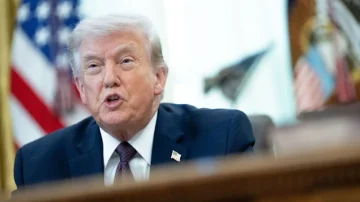
The next unpredictable factor is the White House. President Donald Trump has expressed impatience at the pace of the negotiations and has threatened that the US could completely withdraw from this process.
But Trump and his advisers have also expressed disappointment with Russian President Vladimir Putin, who is trying to normalise relations with the US after a decade of clashes.
After a telephone conversation with Putin this week, Trump said he has warned Russia will respond after Ukrainian attacks with fears within Russian territory.
Republican Trumpet Allies in the Senate, with the support of the Democrats, are advancing a legislation that would impose new major Moscow sanctions.
American officials have said that this initiative is under way in silent co-ordination with the White House, even though Republican Senator Lindsay Graham, and that Democrat Richard Blumenthal, have been expressed about their positions during a European tour that included a stop in Ukraine last week.
What I learned on this trip was that he is preparing for more war”, Graham said, referring to Putin in an interview for the Associated Press news agency.
Blumenthal described the proposed sanctions in legislation as <x0-destructive” and said they would place Russia's economy “on a trade island”.
The “is a critical moment for Putin and the world, because Russia is launching a new offensive”, he said. /Periscope