7 hours ago
Who owns the world's largest gold reserves?
Periskopi(a year ago)
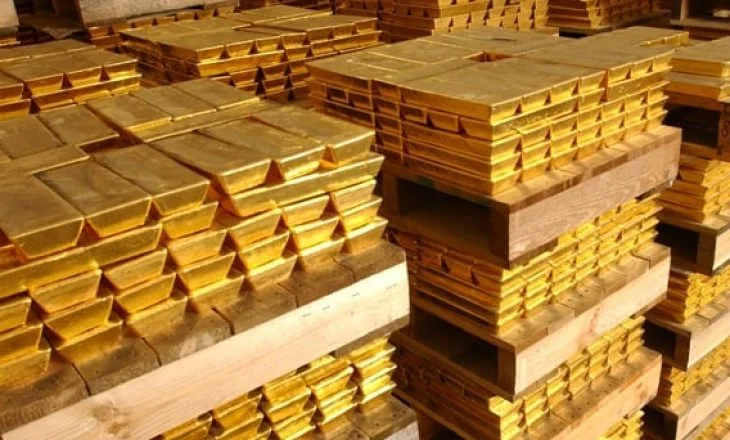
(a year ago)Gold prices have reached unprecedented levels in two thousand an ounce [12 m] in two years, with gold trading on a record level of more than three thousand and nine hundredtytytytytyty two dollars per ounce (thirty one gm) since May seven, an increase of over eighty percent from last year. The increase, driven by growing geopolitical tensions and uncertainty [...]
The increase, driven by increased geopolitical tensions and global economic uncertainty, has pushed the value of a gold standard shutter (four hundred ounces or twelve pounds and four hundred grams, over a million dollars for the first time, says Kosova Prees.
BestBrockers reviewed the central gold banks' demand last year and the start of this year, using data from the World Gold Council to identify the biggest buyers and holders.
The report emphasises a growing dyvergence in central bank reserves strategies: smaller economies are focusing their reserves on gold as a protection against currency instability, while larger economies continue to dominate the absolute volume.
The gold “Prices started growing last year, as both central banks and investors demanded safer assets amid growing geopolitical tensions and economic uncertainty”, BestBrockers noted.
The increase helped to exceed three thousand and four hundred dollars per ounce by June, making it the second largest spare asset in the world, exceeding the euro.
Among the most gold - gold sites in government reserves, Bolivia tops the list. As early as December two thousand five feet [1 m], it kept twenty-two tons and a half or ninety-six percent of its total reserves, worth two billion and three hundred million euros.
Notes that Bolivia has not bought or sold gold since two thousand times”, the report says.
Venezuela is the second, with a hundred hundredtyty-one tons, representing about ninety percent of its reserves, or sixteen billion and nine hundred and fifty million euros. Portugal, with about three hundred and forty-eight tons, holds about eighty-five percent of its gold reserves estimated at 40 billion and two hundred and four hundred million euros in April of two thousand feet. This reflects a long preference for gold as a stable guard of value.
In absolute terms, the United States remains the global dominant holder of eight thousand and one hundred and a half of us, worth nine hundred and sixty-six million dollars, or eight hundred and fifty-five billion euros.
Gold makes up about 70 percent of the total reserves of the United States. Germany follows with three thousand and three hundred and fifty-one tonnes worth four hundred billion and a hundred million euros, or three hundred and two billion and four hundred million euros, representing seventy percent of its reserves. China, despite carrying two thousand and two hundred and forty and a half tons, holds only six points eight percent of its gold reserves. These are estimated at two hundred and a billion euros, reflecting a strategy that gives priority to diversification in foreign currency and other assets.
The eurozone countries, including the European Central Bank, held ten thousand and seven hundred and sixty-sixpest to and a half in April, or sixty-seven points one percent of their reserves.
The official global gold reserves were thirty-six thousand twenty-four tons, making up twenty-two points two percent of the global reserves. In Europe, Poland led gold purchases in the first quarter of the year two thousand twenty-five, buying forty-four tons, already more than half the total of our 80s in two thousandths.
The United Kingdom, in contrast, carries three hundred tons, or only seventeen points, of gold reserves. The world's 40th order of gold possessions underlining a strategy focused more on financial assets and foreign coins than on gold. /Periscope/