7 hours ago
Owada in Kosovo, Vetevendosje 15 years ago, was very pleased with the Court, which sealed independence
Periskopi(a year ago)
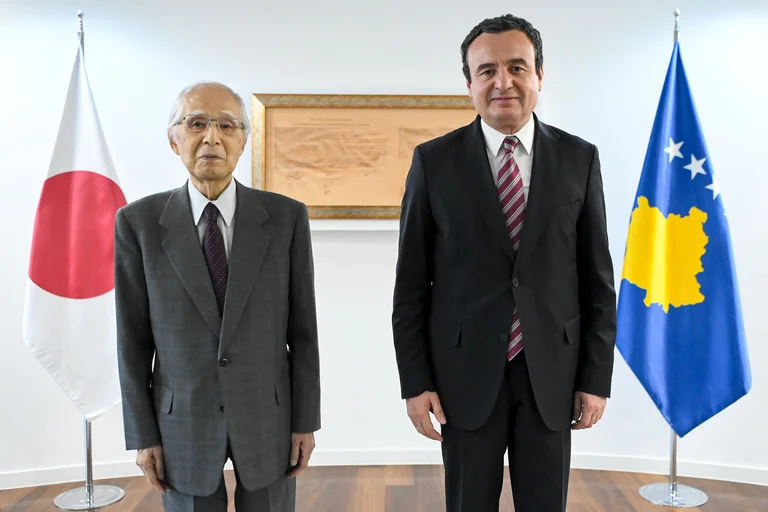
(a year ago)Japanese Professor Hisashi Owada, who headed the International Court of Justice at the time when Serbia sought to test the legality of Kosovo's independence, is standing in Pristina these days. Pristina University yesterday awarded the top title to “Doctor Honris Causa” for its contribution, while today it was expected in the prime minister by [...]
At the meeting, Prime Minister Kurti singled out Professor Owada's key role in the UN Consultative Opinion on July 22nd 2010, in which it was concluded that Kosovo's declaration of independence on February 17, 2008, does not constitute a violation of international law”, ZKM said today after the meeting.
However, at the time when the JND decision that sealed Kosovo's independence came out, Albin Kurti's party was rather satisfied and had neither praised this court.
In 2010, there was pessimism in the analysis that Vetevendosje had published on this decision. Those who interpreted Kosovo's “as the basis of Kosovo's independence legitimacy” were eligible, according to Vetevendosje.
“As for the first point [Kosovo's declaration of independence has not violated international law], almost all analysts, politicians and officials have interpreted it as the basis of the legality of Kosovo's independence. It'd be nice to be like this, but that's unfortunately not true”, said the 2010 analysis.
The court has only explained that there are no positive standards of international law that sanction declaring independence or preventing it. The signing that Kosovo's” pillar of independence has not violated international law” does not imply the conclusion that this declaration is in line with international law, because international law in general does not foresee the legitimate procedures of creating states. However, such an attitude is positive in the sense of conception of the State as a real fact. But Kosovo politicians conceive of the state only as a proclamation, so this jeopardises Kosovo's territorial integrity and sovereignty”.
For the second point that Vetevendosje had then issued, Kosovo's declaration of independence did not violate UN Security Council Resolution 1244, Kurti's party this time gave the criticism to major Security Council states.
The second party has also been expected, since Kosovo's own supervised independence under Ahtisaari's recommendation has been announced, referring to UN Resolution 1244. That happened after Ahtisaari's recommendation sponsors ( The United States, Great Britain, France, Germany, Italy, etc.) failed to issue another resolution on Kosovo during the summer of 2007, due to Russian veto use of the Security Council. So because they failed to change it, they declared independence supervised inside Resolution 1244, reasoning that this proclamation itself did not violate R1244”.
Similarly, Vetevendosje said that this JND opinion would to some extent reconfigure Serbia's approach to Kosovo.
Serbia will not focus as much on the re-opening of Kosovo's status now, though it will not recognise it, but on the internal division of Kosovo, as in Bosnia”.
Today Professor Owada, at the meeting with Kurt, said the JND's opinion was an expression of his conscience and sense of justice, adding that it was natural for the Court to decide for the right side. /Express/