6 hours ago
Nuclear and chemical reactions: What happens if bombs hit uranium deposits in Iran?
Periskopi(a year ago)
(a year ago)As was true of Russia's aggression against Ukraine and involvement, in that case, civil nuclear power plants in Zaporizia and Chernobyl ghost plant, the rapid escalation of attacks and military options in Iran has rekindled an alarm that we thought was buried deep in our conscious fears of [the] war....
What would happen if Israeli bombs hit the very storehouses of enriched uranium (as we shall see at different levels)? Is there really a possibility that there will be a phenomenon in the separation of atoms and therefore a nuclear explosion?
The scenario becomes even more unclear in the case of using GBU-57, the so-called <x0-bunker” bomb, which should be supplied by American military forces and therefore required American President Donald Trump's approval for at least indirect involvement.
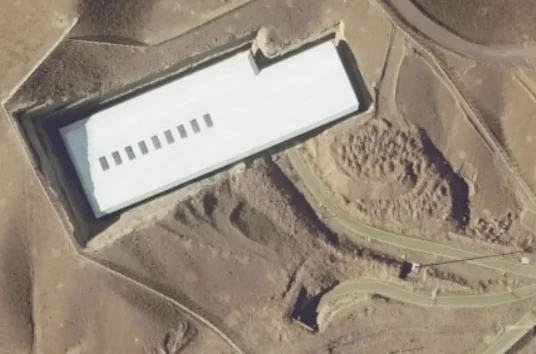
As in previous cases, there is no “literature” or documented cases that can be taken as accurate reference, so we need to walk on hypothesis. Iran's oldest uranium enrichment site is Natanz's, 220km southeast of Tehran, protected by an antiaircraft battery. Natanz is the largest object in Iran, and there are <x2... and there are” most centrifuges for uranium enrichment (appreciated about 10,000). The word “is included” is among the nails because the presence of this object has been discovered for many years and because most of these centrifuges enrich uranium to 5%, considered a proper level for civilian purposes, that is, for use in power generation plants like those in Ukraine.
Natanzi has already been hit in the early days of Israel's attacks, so we already know from AIEA led by Rafael Gross that there has been no emergency from the point of view of possible radiation. Moreover, Gross's number two is an Italian, Massimo Apparo, considered one of the largest experts in the world for Iranian nuclear file.
It is possible that the attacks may have damaged centrifuges that are highly sensitive to the quakes (especially if they were in operation at the moment), so bombs can cause “to reach” and damage them even in the distance. Even the lack of energy after the attack may have damaged these enrichment plants.
But come to the most important question: If a fire is started on uranium, is there a danger of a nuclear reaction?
Anyone who lived during the 1986 Chernobyl explosion cannot forget that both elements were present on that occasion - the instability of the uranium core and the explosion that later released radioucleide into the atmosphere, leaving the winds to be mercy. This was the notorious “atomic”, even more dangerous because it can move.
In reality, technically a <x0m> atomic bomb”, as often explained in detail the beloved writer for the secret services, but also for fugitives, Frederick Forsyth (feeled recently), is a group of components. And this is perhaps the most delicate aspect of Prime Minister Benjamin Netanyah's accusation: Was Iran working on a bomb? Not only should rich uranium but also a detonator (not easy to build), as well as rockets and rockets suitable for launch. While it cannot be denied that a black market can be created or recreated with Russia under major conditions of economic uncertainty and nuclear storage that are no longer funded by the US (for years in the past) have paid for the safety of former nuclear weapons - BRSS, to avoid radiological danger and to prevent illegal markets.
Thus, some specific conditions - all at once - must be created for a reaction to nuclear division. The greatest danger in a case like that of Natanz bombing is more chemical reaction than the one releasing radio nucleide.
Uranium itself is not toxic to health. It is found in nature, and all depends on exposure. The most dangerous is the chemical reaction with gold used during the enrichment process and that turns uranium into a gas - mobile and aggressive. Here again, gold in small quantities is also found in the teeth ' pasta because it is useful for teeth. But over a certain dose, it can be deadly if absorbed and very aggressive about the skin.
There may be, then, local effects about the target object.
Second place for uranium enrichment (was recently discovered that Iran could have another third) is Fordo's, 100km southwest of Tehran. There, according to AIEA, are less centrifuges, but more powerful. The enrichment of uranium reaches 60%, very close to the 90% level considered suitable for military use. That is why AIEA published a report expressing clear concern that Iran was working, at least in perspective, for nuclear weapons. Otherwise, there would be no reason for these centrifuges. Although, as mentioned earlier, having the real capacity to produce an atom bomb and launch it is another matter.
This is the object that the Israeli arsenal cannot achieve without American special bombs.
In 2023 an alarm was issued after Russian forces hit a weapons depot with impoverished uranium in Ukraine. Even then, the fear of a toxic cloud was talked about, but the measuring station in Trieste (then consistent with the winds coming from Ukraine) reported nothing.
One last question remains: what would happen if the GBU-57 bombs hit repeatedly and in depth (this is the way of attack) the facility in Fordo?
We don't really have precedents. To give an answer, we need to know exactly the amount of uranium stored in that Iranian object. The hypothetosis is that the amount is not enough to cause great concern. But the ultimate answer is in the hands of American and Israeli intelligence. /Periscopi/