8 hours ago
Kupchan: After global failures, Trump can turn to Kosovo, Serbia
Periskopi(a year ago)
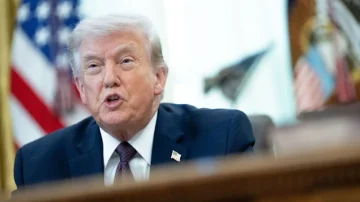
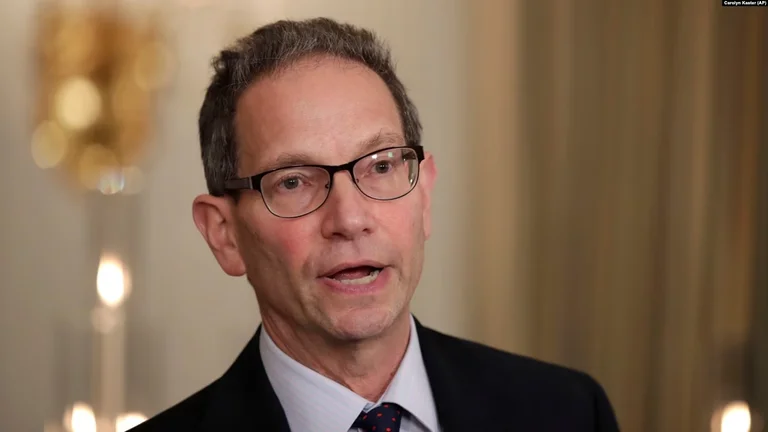
(a year ago)Charles Kupchan, of the US Council for Foreign Relations, says the recent statement by US President Donald Trump, for Kosovo and Serbia, should be seen in the context of a leader trying to restore public opinion attention on his role as excellent “negotiator”. According to him, Trump's promises to be [...]
According to him, Trump's promises to end the war in Ukraine and the conflict in the Middle East have not been reflected in reality, as wars continue with intensity and key actors show no signs of willingness to compromise.
This, since many results in the Middle East and diplomacy with Ukraine and Russia are not being achieved, he can turn his attention to Kosovo and Serbia and try to achieve a” victory, says Kupchan in the interview given to Radio Free Europe, broadcasts Periscope.
Kupchan, former director of European affairs at the US National Security Council, also says Kosovo's incumbent Prime Minister Albin Kurti, “may have exceeded the use of the nationalist charter”.
He suggests a more pragmatic approach, which, as he says, would help Kosovo advance its interests.
Radio Free Europe: President Trump said late that he has stopped a war between Kosovo and Serbia during the first presidential mandate and has promised that “will fix this again”. According to you, how accurate is this statement, and what effect did US diplomatic efforts have on the ground in 2020?
Charles Kupchan: I think the posting of Trump should be seen in the context of a president who feels that his claims are excellent negotiators are being questioned.
He has said he will end the war in Ukraine for 24 hours and stop the war in the Middle East while the war in Ukraine continues intensively, [Russian president Vladimir] Putin gives no sign that he is willing to negotiate with confidence, while Israel not only continues its fight against Hamas in Gaza, but has also opened a new front with Iran.
So I think Trump was trying to recall public opinion of his previous achievements. But even in this case, where he mentioned Kosovo and Serbia, he, largely, confused the facts, because Kosovo and Serbia were not at war, they were not at war since 1999.
Did the Trump administration succeed, with [the envoy for Kosovo-Serbia dialogue, Richard] Green, in advancing an economic co-operation agreement between Kosovo and Serbia? Yeah. Did they manage to broker an agreement for Kosovo to establish diplomatic relations with Israel? Yeah.
These are not trivial. But the idea that Trump somehow avoided or ended war is simply incorrect.
Kosovo and Serbia <x0 most manageable”
Radio Free Europe: Taking into account what you just said, that Trump, so far, has not achieved any success in resolving the Russia-Ukraine conflict and now faces tensions between Israel and Iran.
Charles KupchanYeah, I don't think that's being disfellowshipped at all. Trump, now, has a lot of work to do. There is a great war in Ukraine, the great war in the Middle East, there are 17 or 18 different sides of the trade and tariff negotiations that continue, and its political situation within the country is complicated, especially on immigration issues and deportations.
We also saw violence on the streets of Los Angeles and attacks on lawmakers in Minnesota. So, I don't think Trump or his team have much capacity now on other issues.
That said, since it is not achieving much results in the Middle East and diplomacy with Ukraine and Russia, it can turn attention to Kosovo and Serbia and try to achieve any victory.
Is this a good time? Probably not. Because the political situation is unstable both in Belgrade and Pristina.
For now, nobody is in position to make difficult compromises, but I think that in due time, Trump can return to negotiate an agreement and encourage Serbia and Kosovo to move forward with the agreement the European Union brokered.
Radio Free Europe: What would his re-agement look like in the dispute between Kosovo and Serbia?
Charles Kupchan: Reagement [will be reflected] with the appointment of Richard Greenell or any other special representative, who, or who would roll up the sleeves and go to the region, would meet with the leaders there and try to push both countries towards implementing the Agreement [directing normal relations].
In recent years, implementation has almost completely stalled. For this reason, I think a new commitment from the US will be needed and new US pressure, in co-operation with the EU, to resume dialogue.
“Kurt may have exceeded it with the nationalist card”
Radio Free Europe: Kosovo's incumbent Prime Minister, Albin Kurti, has responded to Trump's statement saying normalisation of relations is possible, but only if the US and others increase pressure on Serbia to implement the agreements reached in 2023. Do you think Washington should change its approach and exert more direct pressure on Belgrade?
Charles Kupchan: I think the US and the EU should put a lot of pressure on both sides. One of the least positive developments for Kosovo in recent years, in my opinion, is that Prime Minister Kurti may have exceeded the use of the nationalist charter. He has taken several steps [for the extension of authority] in the north, he has been reluctant to take steps to establish the Association of Serb majority municipalities, has taken other actions that, in some respects, have made Pristina appear the problem, not Belgrade.
Therefore, we have seen sanctions from the European Union and strong criticism from Washington during the Biden administration.
I think dialogue is in a hurry and considerable pressure will be needed on both sides to push it forward.
Radio Free Europe: Kurti previously submitted three requirements for normalisation of relations: the handover of Milan Radojici from Serbia, the formal signing of the Base Agreement with the Implementation Annex, and the withdrawal of December 2023's letter rejecting Kosovo's territorial integrity. How realistic and effective do you consider these demands?
Charles Kupchan: I think dialogue should move forward in phases, step by step. The EU acted directly when mediating the agreement without immediately asking Serbia to recognise Kosovo as an independent state.
I think we know that, in the end, this issue will end with the recognition of Kosovo as an independent state from Serbia, but, in advance, each party must take the necessary steps to show good will and move towards normalising relations between them.
Serbia's government knows that, in the end, it will not enter the European Union without recognising Kosovo. Therefore, the question now is how to create a new political ground, giving leaders in Pristina and in Belgrade the courage and support needed to make difficult decisions even if they are not popular in public opinion.
Radio Free Europe: Kurti, too, has said the US remains the irreplaceable “partner of Kosovo” in defence, diplomacy and development. Do you think Kosovo can continue to rely on powerful American support, at a time when global repositions are taking place and Trump's foreign policy is more transactional?
Charles Kupchan: In the United States, there is great trust in Kosovo since NATO's 1999 intervention and efforts that have since been made to help Kosovo develop as a successful democracy.
Do I think during Trump's presidency we'll see less focus on Europe and more on Indo-Peacekeeping? Yeah, probably. I think Trump has made it clear that he wants Europe to spend more on defence and take more responsibility for solving the challenges in its neighbourhood.
Do I expect Trump to withdraw completely from Europe? Do I think after four years there will be no more American troops in Europe? No, I don't think so. I think what we're going to see is going to be a rebalance of presence, but not withdrawal.
And, in this direction, I think Kosovo should expect good policies and a positive commitment from Washington. Therefore, it is in the interest of Kosovo and Prime Minister Kurti to pursue more supportive policies for the dialogue process.
“The Ohrid Agreement is good ) need to compromise”
Radio Free Europe: Given your long experience in European affairs, what would a real plan for sustainable normalisation of relations between Kosovo and Serbia look like?
Charles Kupchan: I think the Ohrid Agreement, mediated by the EU, is good. Now, in my opinion, more is involved in implementation than in the direction the process will take.
In general, when you see prolonged conflicts like this, where both sides are embedded in their positions, the road ahead is small and gradual, showing good will.
Each side should make compromises and concessions that signal to the other side that it wants to co-operate and advance towards turning enemies into friends.
Therefore, I think the next step should include a detailed work plan with concrete steps. What will Kosovo do? What will Serbia do? When will they do it? What steps will be taken to lead Pristina and Belgrade towards a better agreement, which will eventually enable normalisation of relations and recognition of Kosovo as an independent state...
Radio Free Europe: What can the U.S. do to get parties back to the negotiating table?
Charles KupchanUnder one, the U.S. has to appear. He must engage. It should be for its diplomats in the region to be active and work on the issue.
Under two, I think we need a proper combination of carrots and sticks. Sticks to say: If you delay by actions, if you do provocative things, you will pay the price. Carotas to say that light at the end of the tunnel shines brightly, and that light shows that if you make difficult decisions and make necessary compromises, you will end up fully integrated into European and Atlantic institutions.
Radio Europe and FreeAnd one question, even in matters within... Kosovo has not yet formed its institutions since after the February elections. What advice would you give to Kosovo politicians?
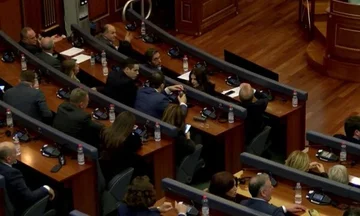
Charles Kupchan: As far as I understand, the main obstacle now concerns the Speaker of the Parliament, with a certain person. Although the Assembly has gathered several times, it has failed to make a decision. And, you know, the special component of democracy is compromise, it's dialogue that makes democracy work.
So I would encourage Kurt and his political allies, as well as the opposition, to admit that they cannot continue without government, because the situation is serious. Sit down together and find a compromise to form the government and resume work in Pristina.