6 hours ago
Kosovo without Parliament, millions of euros pending
Periskopi(a year ago)
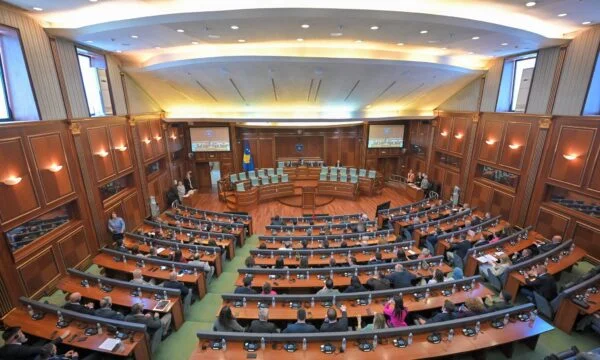
(a year ago)Kosovo risks falling behind in the European Union's million-euro race, while its neighbours have only begun to benefit, Periscopi broadcast. The political blockade after the recent parliamentary elections is costing the country millions of euros from the EU Growth Plan for the Western Balkans. This 6 billion-euro package has been approved in [...]
The political blockade after the recent parliamentary elections is costing the country millions of euros from the EU Growth Plan for the Western Balkans.
This 6 billion-euro package was approved in the latter part of 2023.
The plans have been for their distribution to begin at the end of last year, but it has been delayed for several months.
On 21 June, Serbia has become the last country after northern Macedonia, Albania and Montenegro, which has announced it has accepted the first means from the EU, worth 51.66m euros.
Bosnia and Herzegovina has not yet handed over the required Reform Agency to European authorities.
In Kosovo, the problem is another: it does not have the constitution to ratify the agreement needed for the benefit of funds.
Such agreements have the character of international agreements, so they should also be ratified in the Assembly with two-thirds of the vote.
Despite dozens of efforts, MPs have not managed until June 25th to constitutionalise the Assembly.
Observers suggest they set aside internal disputes to take advantage of an opportunity that could directly affect the country's European path but also its economic development.
Why is this important today? Because, if Kosovo has start-inquency, more recent than other countries, that would make you a step back”, Demush Shasha, from the Kosovo Institute for European Policy, says.
From the Development Plan, covering the period from 2024 to 2027, Kosovo can benefit over 880m euros.
Over 250 million would be separated as free cash, while the rest in the form of convenient loans.
The 7% share as pre-finance, which has already been split to the four Balkan countries, for Kosovo is estimated to be around 61m euros.
These tools are aimed at linking the six economies in question with that of the EU, the organisation where they all aim to membership.
However, they have been warned that if, within 1-2 years, the required reforms are not carried out from private sector development to green transition and digitisation then the previous amount will be distributed to other countries.
Is there a deadline for ratification of the agreement?
Radio Free Europe asked the European Union whether there are any deadlines until Kosovo must ratify the relevant agreement to get pre-finance means, but, until the publication of this article, received no answers.
Sources within the outgoing Kosovo government told REL that such a deadline does not exist.
So does Shasha. According to him, pre-finance is not directly jeopardised by delays in ratification, but the delay in this first step could bring chain consequences, affecting the long-standing fulfillment of conditions set by the EU for 2025 and the next two years.
These conditions include progress in reforms and a constructive dialogue with Serbia for normalising relations.
The “all of this could delay Kosovo to the period 2025-2027, as well as put it in a situation where it cannot spend its means (from the Development Plan). The funds Kosovo cannot afford to spend will be shared to other countries”, Shasha says, calling on EU growth Plan documents.
He adds that these delays also send wrong signals of Kosovo's readiness to advance towards the EU.
“It is not good for the international or European prestige of Kosovo to behave, to be seen and perceived in this form as a regional actor in the integration process that is failing to maintain the step with other countries in the region”, Shasha tells Radio Free Europe.
Among six Western Balkan states, Kosovo is the only one who does not have candidate status for EU membership.
Economic Effects
But economics expert Safet Gerjaliu says delays in the exploitation of resources from the Development Plan are also economic losses.
According to him, Kosovo desperately needs investment both in the public sector and in private.
He says some of these investments could be addressed through EU funds.
Any delay in their security, Gerjaliu says, is harmful, especially at a time when the world faces high inflation and rising costs.
“Projects that today cost, to get 50 million (euro), next year will be far higher at”, he says of Radio Free Europe.
Gerjaliu recalls that Kosovo continues to be under EU punitive measures imposed in 2023 following tensions in the country's north and that the current inability to take advantage of EU funds only makes the situation worse.
“Exploitation of these tools would have a clear message for Kosovo's opponents, that Europe is with us, we are on the path of integration and claim and think that one day we will be equal to the European family”, Gerjaliu says.
Calls to overcome the political stalemate, Kosovo has also made foreign officials, including EU foreign policy chief Kaya Kallas.
While deputies of the largest party -- the Vetevendosje Movement -- and other parties remain rigid in attitudes, millions of other euros remain also blocked.
On June 23rd, incumbent Finance Minister Hekuran Murati wrote on Facebook that there are 90m euros adopted by the World Bank for Kosovo, which await ratification by the Assembly since May last year.
Even on this issue, the party so far in power and those in the opposition exchanged charges against each other. / REL