6 hours ago
What is known about Israel's attacks on Iran's nuclear plants and military commanders?
Periskopi(a year ago)
(a year ago)What is known about Israel's attacks on Iran's nuclear plants and military commanders? Israel launched attacks across Iran on Friday, saying they targeted “the” nuclear programme of Iran. The attacks killed Hosseyin Salami, chief of Iran's Islamic Revolutionary Guard, a powerful branch of the armed forces [...]
What is known about Israel's attacks on Iran's nuclear plants and military commanders?
Israel launched attacks across Iran on Friday, saying they targeted “the” nuclear programme of Iran.
The attacks killed Hosseyin Salami, the head of Iran's Islamic Revolutionary Guard, a powerful branch of the country's armed forces, other top military figures and several nuclear scientists.
Civilians, including children, were also among those killed, Iranian state media reported. BBC is unable to verify these reports independently.
The Israeli Army said Iran started about 100 fears towards Israel on Friday morning, which Israeli Defence Forces (IDF) said were being captured.
A state of emergency has been declared in Israel.
When and where did the attacks take place?
Blasts were reported in Iran's capital, Tehran, about 3:30 a.m. by local time.
Iranian state television said that residential areas in Tehran were hit, with explosions heard even in the northeast of the capital.
In Israel, residents were awakened by the sirens of air strikes almost simultaneously and received emergency alarms.
The Israeli Army said it had hit <x0-seconds military targets, including nuclear targets in various areas of Iran”.
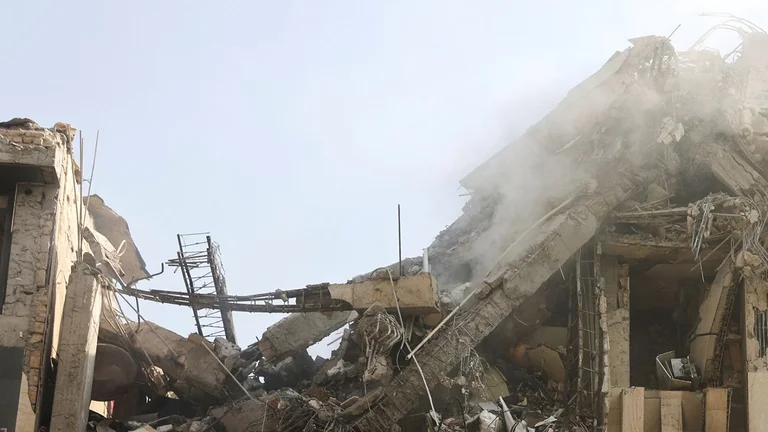
Hours after the initial attacks, an explosion was reported at the Natanz nuclear facility, located some 225 km south of the capital, according to Iranian state media.
The IDF later confirmed that it had hit the country and said its attack has resulted in considerable damage.
The International Atomic Energy Agency (IAEA), the global nuclear overseer, said it was informed by Iranian authorities that there was no increase in radiation levels in the Natanz facility.
The head of the IAEA, Rafael Gross, said nuclear plants “should never be attacked” and such attacks have serious “implications for security, defence and nuclear protection, as well as regional and international security”.
In a statement to board members, he called on “all sides to exercise maximum restraint to avoid further escalation”, saying that “any military action that jeopardises the safety of nuclear facilities risks serious consequences for Iran's people, the region and the wider”.