7 hours ago
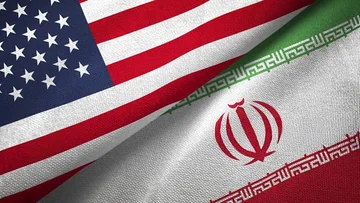
Israel-Iran Conflict, State: Another surge in energy prices in Kosovo would be shock to economy
Periskopi(a year ago)
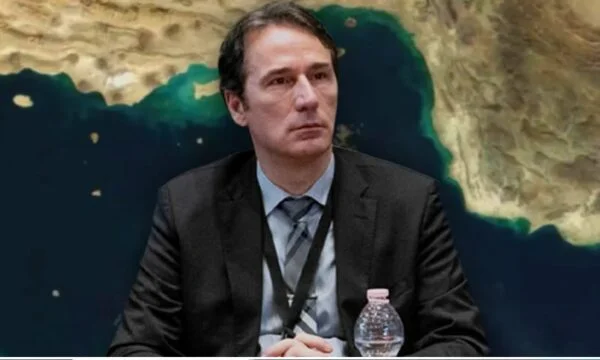
(a year ago)Security expert Adrian Steun talking about developments in the Middle East has said the nature of the global crisis is such that no one remains immune to its consequences, but not all are affected equally. Kosovo is generally vulnerable moderately, but comparatively more than other countries [...]
Security expert Adrian Steun talking about developments in the Middle East has said the nature of the global crisis is such that no one remains immune to its consequences, but not all are affected equally.
Kosovo is generally moderately vulnerable, but comparatively more than other Western Balkan countries”, he says, citing economic, political and security reasons.
Adrian Steun, from the International Centre against Terrorism, stresses that Kosovo is particularly sensitive to the economic consequences this crisis could cause.
He explains that the situation would be significantly worse if Iran decided to close the Hormuz Strait, where about 20 percent of global oil and natural gas consumption exceeds.
For a country like Kosovo, which has already experienced a significant increase in the price of electricity by 16% this year, the further “achievement would be a shock to the economy”, Stein tells Radio Free Europe.
He underlines that, with an economy strongly based on imports and remittances, which make up about 13% of the Bruto Interior Production, any shock in the global economy would translate quickly into pressure on Kosovo families.
“Also, the fact that Kosovo has a considerable trade deficit, which in December 2024 increased by 17.5% compared to a year ago, exposes it even more to a global crisis, which would increase not only the price of energy but also of food and consumer goods, which the country mainly imports”, Steun says.
The Washington-based expert warns that economic consequences cannot be cut off from political and security challenges.
In times of crisis, when the attention of strategic partners is widespread, he says Kosovo risks coming out of the radar of its most important allies.
On the same line, Stetun adds that actors with unfriendly intentions towards the Western Balkans, especially those who traditionally oppose the membership of the countries of the region in the EU and NATO, could exploit the amul of global crises to destabilise the region.
According to him, these threats target two weak points -- Bosnia and Herzegovina and Kosovo -- instrumentalising divisions and interethnic tensions in these two countries.
Free Europe Radio contacted Kosovo's incumbent Government to ask whether concrete measures have been taken to protect the economy and energy sector from a possible global crisis, but received no response.
In this challenging context, experts underline the urgent need for strengthening institutions and for deepening regional and international co-operation.
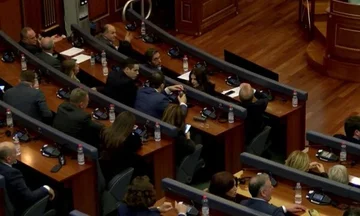
Staten stresses that the fact that Kosovo -- even more than four months after the elections -- does not have a constitutional assembly and functional government -- severely weakens its capacity to meet security challenges.
He calls it a self-inducing “x1> due to lack of political will.
This represents the most harmful disarming of leadership in Kosovo, disarming from political accountability and practical thinking for compromise solutions. If there is no quick awareness, this crisis risks causing costly and long-term consequences for the country”, Steun says./Periscopi/