11 minutes ago
How did Iran's missiles defeat Israel's expensive air defence?
Periskopi(a year ago)
(a year ago)The last three days have seen a dramatic escalation in the Middle East, while Iran launched a massive missile attack on Israel in retaliation for Israeli attacks on Iranian soil. Tehran launched a hail of rockets (about 200 according to Israel) in successive waves. The Israeli Protection Forces activated their defence systems and [...]
The last three days have seen a dramatic escalation in the Middle East, while Iran launched a massive missile attack on Israel in retaliation for Israeli attacks on Iranian soil.
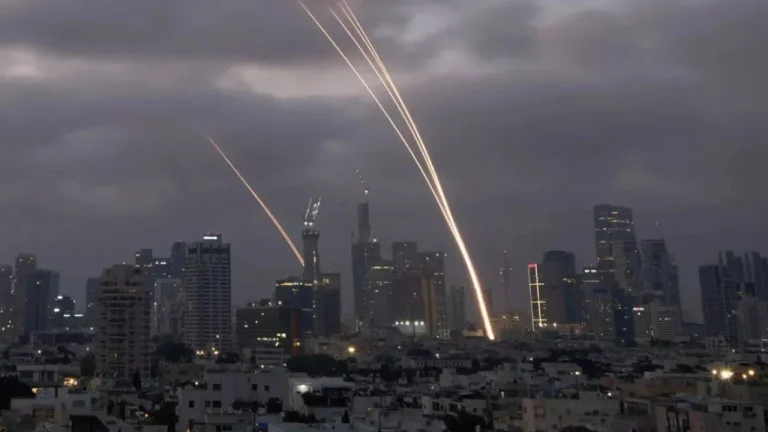
Tehran launched a hail of rockets (about 200 according to Israel) in successive waves. The Israeli Protection Forces activated their defence systems, and many of the entry missiles were seized. However, a considerable number of rockets managed to pass: according to Reuters, more than 50 Iranian missiles penetrated the Iron Cup and hit Tel Aviv, causing explosions, injuries and even damage to high buildings.
The Iranian attack was based on advanced high-ray ballistic missiles. Ballistic missiles fly too high and return to Earth at supersonic speed, which makes them much harder to catch by missile defence. International media reports point out that Tehran used the new ballistic missile “personic”) Fattah-1 (discovered in 2023), as well as the advanced Kheibar Shekan missile.
Fattah-1 can maneuver during the re-entry, characteristics that make it difficult to catch. These missiles also have considerable precision and powerful explosive warheads, capable of causing large-scale damage to military targets. It is noted that the attack was suddenly launched almost exclusively with ballistic missiles without the presence of slower fears or floating missiles, reducing Israeli air defence response time to minimum.
Israeli Air Defense and Its Limitations
Israel has a very expensive air defence network. Its main pillars are: (a) The Iron Cup to counter missiles and short-range missiles, (b) David Sling System for medium-range ballistic and tactical missiles, and (c) the Arrow-2/3 missiles to capture long-range ballistic threats. The Iron Cup has demonstrated excellent anti-missile performance from Gaza (with a 90% success rate against threats directed at populated areas). However, it is designed for targets of relatively low speed, and low orbit is not intended to catch missiles that come with multiples of voice speed from the upper atmosphere. More advanced systems, such as David's Sling and especially Arrow-3, expand protection against ballistic missiles, but these too have limited interruptions and have never been tested in such a massive attack on hypersonic targets. Israeli military officials have repeatedly stressed that no shield is completely impervious even the Iron Cup, of recent technology, is described as <x0).
As Iranian attack of “supplied” defence
Iran's success in penetrated the expensive Israeli air defense owes as much to its missile capabilities as to the strategy of saturation. Recent technology ballistic missiles operated outside “zarfit” that Iron Dome can effectively afford by forcing it to operate beyond its borders. At the same time, the simultaneous launch of dozens of missiles created an overload in Israeli protection - even with high degrees of success for rockets - a huge volume of attacks ensures that some will escape. Analysts stress that we are at a turning point where offensive ballistics, under certain conditions, can overcome even the most sophisticated defence systems. In this case, out of approximately 200 rockets released, several dozen (possibly 40-50) managed to hit Israeli territory an unprecedented percentage that shocks the sense of absolute security offered by Iron Dome. Israel will probably have to further strengthen its defence technologies (e.g. More Arrow or new laser tools) to confront these new threats. At the same time, however, it is clear that Israeli air defence, although preventing most of the incoming missiles, cannot guarantee 100% protection from something that has been widely demonstrated by the events of the last days.