7 hours ago
Iran's leadership from the bunker: What does it mean for the future of the State?
Periskopi(a year ago)
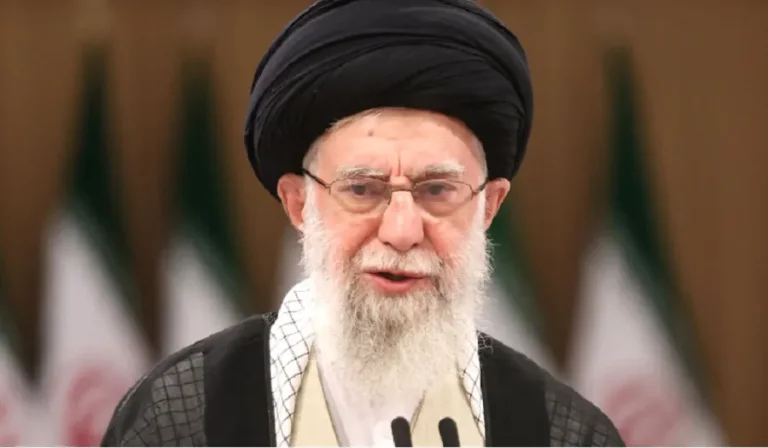
(a year ago)The lack of supreme leader, ajatolah Ali Khamenei, from the public's eye during the Israeli-Iran War may be a determining moment for his leadership and the future of the Islamic Republic. While the Israeli prime minister, Benjamin Netanyahu, was present in public at all times, making daily statements and showing determination, Khamene, commander of [...]
While Israeli Prime Minister Benjamin Netanyahu was present at the public all the time, making daily statements and showing determination kh Khamenei, Iran's general commander, was almost never seen by the public, as he published only two video messages during the conflict. One of them reportedly has been recorded in a bunker.
As the third video was shown after the ceasefire, the debate over the impact of his conduct during the war has deepened between experts and Iranian public opinion.
He hid to survive.
Khamene's removal from the public scene is not limited to his leadership style. It has been directly prompted by reports that it was at the top of Israel's list of elimination.
Israeli Defence Minister Israel Katz has publicly confirmed that Israel actively aimed at killing Iran's supreme leader during the conflict, but couldn't kill him because he was “deeply buried below ground”, which implied that Israel “had no operational option” to carry out an assassination against him.
The threat was so serious that Khamene reportedly suspended all electronic communication and relied only on his most trusted helpers. The New York Times reported that he had even assigned who would take his post in case he was killed.
Guidance Under Attack?
This level of threat and the way Khamene reacted significantly influenced his perception of his leadership.
“Ajatol Khamane was responsible both for bringing this catastrophe over his regime, as well as for its survival at a moment of danger”, Free Europe Radio Director Ali Vaez of Iran's International Crisis Group programme told the International Group.
The initial Israeli attack eliminated a series of Iran's military commanders and exposed the serious structural “weaknesses within Iran's leadership and security device”, Vaez said.
These obstacles, also reinforced by damage to Iran's missile arsenal, nuclear programme and regional collaborators, have brought the strategic doctrine of the Islamic Republic into chaos.
While Khamene has survived the conflict, both physically and politically, his legacy is devastating to the state”, Vaez argued.
However, some see shades in the way Khamene managed the crisis.
Raz Zimmt, director for Iran at the Shiit Bost Institute for National Security Studies, headquartered at Tel Aviv (INSS), noted that despite the initial shock and loss of top commanders, Khamane soon managed to appoint the successor é a organisational achievement that “is not at all easy”, separately in view of the extent of these losses.
Despite the surprise, despite the shock, which certainly increased its prejudice, I think he actually managed to appoint offspring in less than 24 hours”, Zimmet told Radio Free Europe.
According to him, this ability to maintain control in the face of chaos has temporarily protected Khamene from directly challenging his authority.
The “will be even more difficult to question his authority in the near future, primarily because he is surrounded by commanders with less experience”.
Strengthening the Role of Revolutionary Guard
However, this episode has strengthened the role of the Islamic Revolutionary Guard Corps more.
Vaez stressed that any shock that has been caused to the Islamic Republic from abroad... has historically contributed to the expansion of the Revolutionary Guard's role within the” system.
Revolutionary Guard has emerged from this crisis as the backbone of the political electorate, quickly filling gaps in command and positioning itself as Iran's irreplaceable institution for survival.
Zimmt agreed, arguing that “I see no one else who can replace the Revolutionary Guard as the main element within the Iranian elite that can provide security and support the existence of the” regime.
However, strategic war costs will likely raise difficult questions in the coming months, which concern “Iran's inability to maintain preventative capacity against Israel and the US”.
But he added that “I think that as long as [Khamenei] is there, and as long as he has no reason to retire, the Revolutionary Guard will support him... and then prepare for the day his successor comes”.
Changing the Balance of Power
You can find news, interviews, analysis, infographics, videos and other content regarding the conflict between Israel and Iran, the Gaza war, and other regional tensions.
The two experts agreed that although a coup is unlikely to happen in short term, the impact of the Revolutionary Guard is expected to increase more and more, separately, after Khamene's delayed age raises questions about his successor.
Vaez warned that Revolutionary Guard “is slowly approaching towards reviewing religious leadership more as a burden than as an asset”.
Meanwhile, Zimmt said he sees no signal of an imminent change in Iranian strategic direction, neither under Khamene nor under his successor, something that, according to him, fits the Revolutionary Guard very well.
So since there is little likely to be immediate challenges to Khamene's rule, the central role of the Revolutionary Guard has only increased because of the war with Israel, which has sparked questions and clashes of powers that will shape the future of the Islamic Republic. /Radio Europe Free/