6 hours ago
Iran threatens to close down what is the Strait of Hormuz, and why is it important for global trade?
Periskopi(a year ago)
(a year ago)President Donald Trump's decision to bomb three Iranian nuclear plants has deepened fears of an expanding conflict in the Middle East. Joining Israel in the largest Western military action against the Islamic Republic since the 1979 revolution, the world is now preparing for Iran's response. One way [...]
Joining Israel in the largest Western military action against the Islamic Republic since the 1979 revolution, the world is now preparing for Iran's response.
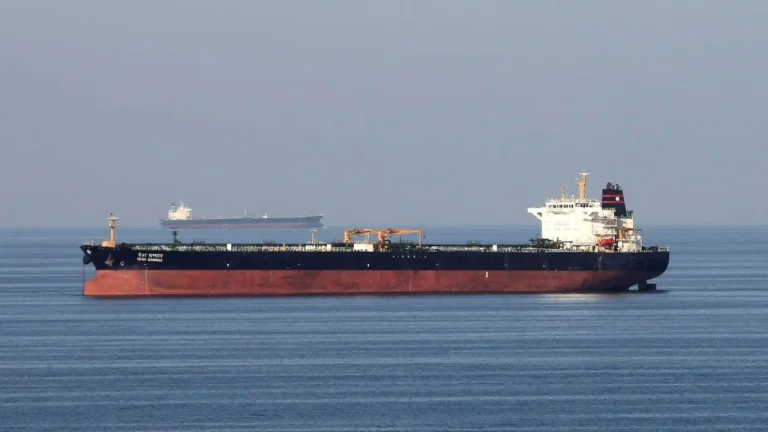
One way Iran can retaliate, analysts say, is to close the Strait of Hormuz, a life trade route through which it daily passes over a fifth of the world's oil supply, 20 million barrels and most of its liquid gas.
Iran in the past has threatened to close the strait, which would limit trade and influence global oil prices, but has never met the threat.
What's the Hormuz Strait?
Among the world's most important oil transport points, the Hormuz Strait is geostrategically important for the United States and wider, as the force of the global economy depends largely on oil flow.
The storm lies between Oman and Iran, and connects the Gulf north to Oman Bay in the south and the Arabian Sea beyond. It is 33 miles [33 km] wide at its narrowest point, with its lane of shipping only 3km wide.
Why is it so important?
About a fifth of the world's total oil consumption passes through the strait. Between the beginning of 2022 and last month, it has spent approximately 17.8 million to 20.8 million barrels of crude oil every day, according to data from the analytical firm Vortexa.
Members of the OPEC, Saudi Arabia, Iran, the United Arab Emirates, Kuwait and Iraq export most of their crude oil through the strait, mainly to Asia. The United States Fifth Fleet, based in Bahrain, is in charge of protecting commercial ships in the area.
What would happen if it closed?
The closure of the strait would create a direct cost to Trump, as it would cause an increase in the price of oil with an almost immediate inflationary effect in the US and around the globe.
But it would also be an act of economic self - injury. Iranian oil uses the same port, and the closure of Hormuz risks bringing Arab Gulf states to war, which have been very critical of the Israeli attack, to protect their interests.
In particular, closing the strait would significantly damage China. The second largest economy in the world buys almost 90% of Iran's oil exports, which are subject to international sanctions.
U.S. Secretary of State Marco Rubio has called on China to help prevent the closure of the Hormuz Strait from Iran, telling Fox Nea: “I encourage the Chinese government in Beijing to call, because they depend heavily on Hormuz Strait for their oil. If they do, it will be another terrible mistake. It's economic suicide for them if they do it”.
What did Iran say about Hormuz Strait?
Iranian Press TV television reported at the weekend that the Iranian parliament approved a move to close the Strait of Hormuz, but ultimately the decision will be made by Iran's top leader.
On Sunday, Iran's Foreign Minister, Seyed Abbas Arghchi, implied that it would be an endless revenge when he said Trump's decision to bomb Iran “would have eternal consequences”.
In his first comments since the US joined Israel's war against his country, Iran's Supreme Leader, Ajothallah Ali Khamenei, said Israel has made a serious “mistake” and “must be punished”, but made no specific reference to the Strait of Hormuz, reports The Guardian broadcasting Periscopi.