6 hours ago
The first images of the “
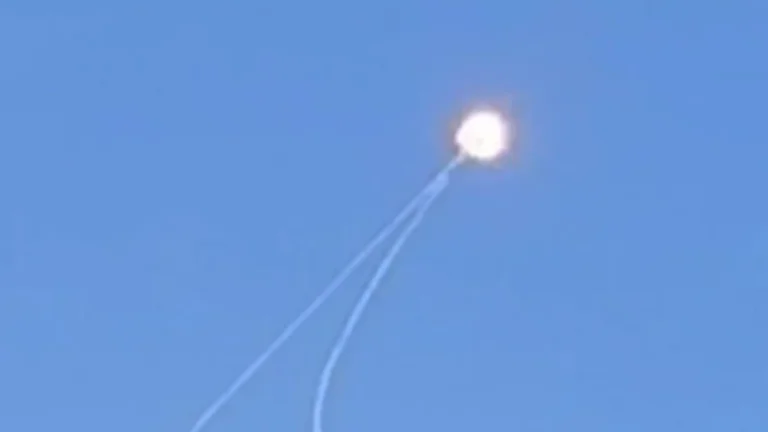
Periskopi(a year ago)
(a year ago)On Tel Aviv this morning, the first recorded for the first time when two Israeli interceptive missiles from the Iron Dome system destroyed an Iranian ballistic missile. This is the first time the Dome has been documented to destroy ballistic missiles, and not just short-range missiles. However, the effectiveness of this protective system [...]
This is the first time the Dome has been documented to destroy ballistic missiles, and not just short-range missiles.
However, the effectiveness of this protective system is in decline.
According to a senior Israeli intelligence official, in the past 24 hours, Iron Dome interviewed only 65% of the missiles issued by Iran, while the previous day the interception rate was about 90%.
<x0ran still owns highly advanced rockets and actively uses them”, states a former senior Israeli intelligence official.
A source close to military facilities warns that the new Iranian missiles have significantly cut the timing of Israeli air defence response, Telegrafi conveys.
Until yesterday, we had 10 to 11 minutes from warning to firing rockets. This morning it was reduced to only 6-7 minutes. This shows that these missiles are much faster than previous”, one of the officials said.
It is known that in addition to speed, Iranian missiles now possess sophisticated navigation systems, which enable them to hit targets precisely.
Despite major losses in Iran's military leadership during a surprise Israeli attack last week, it is believed Iran still has enough supplies to continue the attack.
Over Tel Aviv this morning, a pair of Israel Iron Dome Tamir Smash interceptors into an Iranian Baltic mystic, docking it down. Pic.twitter. com/Bc4f3 R1gbR
) OSINTtechnical (@Osinttechnical) June 20, 2025
What is Iron Dome or Iron Cup?
The Iron Cup is an Israeli-American air defence system that has been in operation since 2011.
The system consists of radar and launching units and aims to catch short-range missiles.
According to official data, its effectiveness in apprehending threats is between 90 and 97%.
If the missile is determined that it will not strike a populated or strategically important area, the system does not capture it.
The tower currently has ten batteries, each containing three to four launchers, each launcher holds 20 Tamir missiles.
The price of a Tamir rocket ranges between $40 and $100, while the price of a battery is about $100 million.
The U.S. has so far invested more than 2.9 billion in the development of the system.