6 hours ago
Hasan for political deadlock: The VV is solely to blame, secret voting is contrary to Constitution
Periskopi(a year ago)
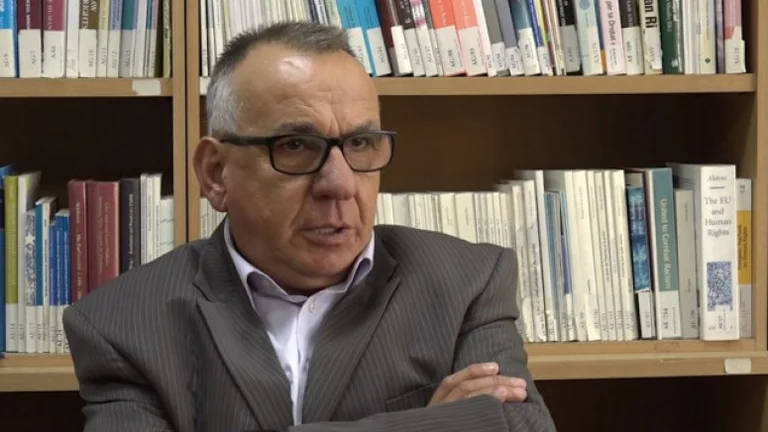
(a year ago)When four months are being filled by the February 9th parliamentary elections, Kosovo has still not been constitutionalising its institutions. After MPs have sworn in, one of the only two points passed by the agenda, the stalemate has remained in the election of the new head of parliament. For the former head of Kosovo Constitutional Court, Enver Hasani, [...]
“Must act as it did in the past, seek coalition and compromise among political parties”, he answered the journalist's questions. Tvclean. al, broadcast Periscope.
According to Hasani, the winning election party -- that is, the Vetevendosje Movement has the main task and sole blame for this stalemate. When it has become known that the party with more MPs cannot form the executive itself, according to Hasani, it must build alliances.
The relatively winning party of elections -- the Vetevendosje Movement -- has the main task and sole blame for this stagnation. It should lead in search of political alliances for the formation of the Assembly and Government. Let me just say that, in no European country, there's never been any trouble or problem about the institution of the legislative body and the representative. Problems and cramps are born with regard to executive formation. That's because the process of institution is solemn and expresses the dignity of the MP and the legislative body and the representative. When the party with more MPs leads the political process and requires a coalition, then, if it cannot form the executive itself, it must build the” alliance, Hasani said.
The Vetevendosje movement has called for the election of the new head parliament to be voted in secret. But other parties have refused to approve the establishment of such a commission. They view it as a legal offense. The Alliance for the Future of Kosovo has even sent the issue for assessment to the Constitutional Court.
Hasan, as the former head of the most important institution of justice in Kosovo, said the “Constitutional” should not allow the secret vote at this moment.
No. Never. It would be contrary to the Kosovo Constitution and the rule of the Assembly, the latter as the only sublegal act rated with the Constitution of Kosovo”, he said.
Hasan says an act of 2014, when he was at the helm of the Constitutional Court, has elaborately on the way the Assembly was constitutionalised. He said there could be no change in the agenda. For Hasan, what Kurt is doing is the typical Byzantine “”.
The chairman to go to the Parliament, in agreement with the legislature's parliamentary parties that need to be constitutionalised, set up the agenda and the framework for the constitution, which starts with the Certificate of mandates and ends with the election of mayors and deputy speakers. The constitutional gathering is conducted by the oldest MP, assisted by the youngest MP. No debate. There can be no change in the script. As a result, no changes in the agenda. This procedure is defined on April 8th, it is clear as tears and is envisioned with documents above. Such is true in each European constitutional system, the easy scenario in which dignity and pride are demonstrated because of the institution of the legislative body and national representative. What Kurt is doing and insisting is typical Byzantine policy, with the aim of causing confusion and chaos, which is ultimately subjecting political opponents. It is hard to realise, because this approach of Kurti has touched and affected human dignity, MP pride and the image of the legislative body and representatives of the Republic of Kosovo”, Hasani stressed.
He said the consequences for the country are high behind this stalemate, given that no laws can be adopted or different social, economic and foreign policies defined. The Parliament's non-compliance, according to Hasan, shows Kosovo's inability to maintain a sovereign and independent state that has been built with much effort.
“The consequences are huge. For one thing, the Assembly cannot pass laws and define social, economic-financial policies and the foreign policy sphere. The country does not have a central legitimate mechanism to appear in the international arena with full competence and legitimacy. The Parliament's modernisation leaves the country without the next vital institution that takes responsibility for the world. Then come the budgetary issues and every other area. The non-compliance of the Parliament also shows Kosovo's inability to maintain a sovereign and independent state, which has been built with great effort, blood and sacrifice of all generations. In short: Without the constitution of the Parliament, the country remains as the memberless man a great and unforgivable anomalies, which history will attribute exclusively to Mr. Kurt. Neither of the other parties, nor all together, have the capacity nor legitimacy, nor primary responsibility for the Assembly's institution. This always belongs to the party that has more MPs. It's that simple!
As for the question of whether there is a legal deadline in the Constitution under which the Assembly should be held after the elections, Hasani said there is no one.
Referring again to the 2014 act, he said the case was greatly weighed and that “would not be constitutional for the Constitutional Court to set a deadline for the constitutional framework of an body that makes up the first and most important link of manifesting the sovereignty of the people and representing the national political will”.
Besides, the guiding idea has been, and it remains that the constitutionalisation of the Assembly is a formal, solemn, and self-understanding act, which requires no procedural complications or political delay. This fundamental step should be taken by the party with more MPs, as the bearer of initial political legitimacy, setting an example of institutional responsibility and respect for constitutional rule”, he told Tvklan.al.
Another Failure for Constitution
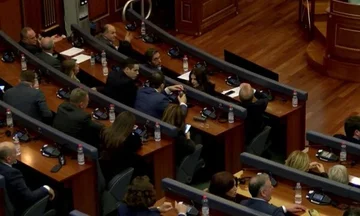
While preparing this article, the Kosovo Assembly held a new session, but with old history. The 26th session in a row failed again.
Despite calls for institutional unblockment, political parties have not yet reached consensus on the election of the Speaker of the Parliament.
For several successive sessions, no proposal has been passed to form a commission that will oversee the secret vote for the prime minister.
The winning election party, Vetevendosje Movement, has continued to propose Albulen Haxhiun for the post of chief parliament, but has not secured sufficient support from other parties.
This lingering situation has caused concern in public opinion and among institutions, with constant calls for institutional unblocking and reaching a political consensus to continue with forming government and other state structures. /Periscope