6 hours ago
Gruda: No grounds for secret vote, today's parliamentary practice is open vote
Periskopi(a year ago)
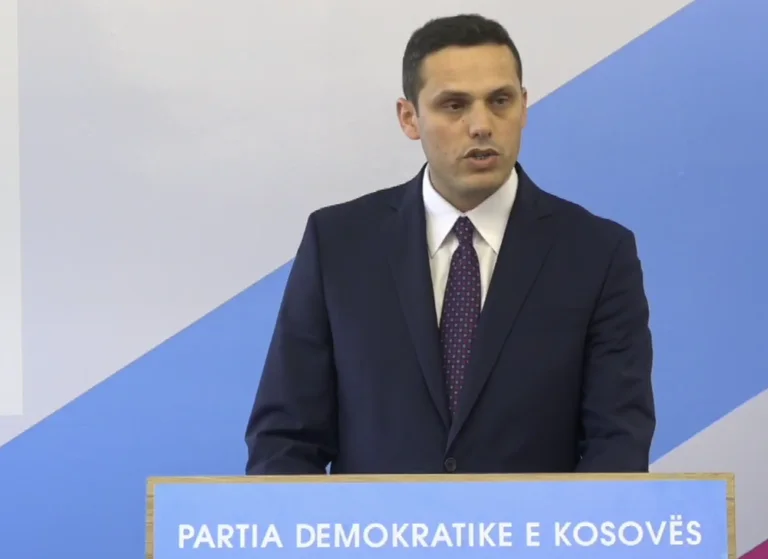
(a year ago)Democratic Party of Kosovo MP Progress Gruda once again reminded his parliamentary colleagues of the VV ranks of constitutional court's final judgment. With clear tones and without ecuivok, Gruda explained that the constitutional session's agenda is permanently defined [...]
Democratic Party of Kosovo MP Progress Gruda once again reminded his parliamentary colleagues of the VV ranks of constitutional court's final judgment.
With clear and unequivocal tones, Gruda explained that the constitutional session's agenda is permanently defined in the Labour Order. Gruda stopped at paragraph 155 of the trial, where, according to him, the Court has clarified that the constitutional session's agenda is clearly defined at Article 8 of the Parliament's Work Rule and cannot remove any points or expectations without a procedure.
“Dje, the finance minister showed a agenda for the Constitutional Court judges' vote with a secret vote, comparing it with the constitutional session's agenda. But that was the plenary session where the agenda could be changed. At the constitutional session, this is not possible without the procedure motion,” declared Gruda in “Prevising”. He stressed that in paragraph 178, the Constitutional Court has clearly found that the 57th Article of the Order, which regulates procedural motions, is not applicable to the constitutional session.
Any request to change the agenda must be based on any article. But when you're in a Constitutive session, there's no way to make it happen. The court has made it clear: the agenda is written and should only be read,” he said.
Gruda added that the Constitutional Court has also confirmed that the Assembly should function in accordance with the Constitution, the rule of work and the until-day parliamentary practice, where open voting is the norm.
The parliamentary amount of thustation is an open vote. This includes the conclusion of the Court: There is no basis for secret voting in this case,” closed Gruda.
The Constitutional Court, in paragraph 155 of its act, has clearly stated that the constitutional session agenda is clearly defined in the Parliament's Work Rule at Article 8. For me, changing the agenda should happen what we call the motion. In this case, there must be a procedure motion. Yesterday, the minister of finance had taken over a agenda that elected judges of the Constitutional Court by secret vote, said: Look where we chose him. The order of the day is of plenary sessions, it can be done as long as you want.
This is the only order of day you can't take any points, no expectations, because it's written in regulations. To remove even one wait, a procedure motion must occur. That procedure motion, the Court said in paragraph 178, is defined in the Parliament's Work in Article 57. But the court has said: Article 57, which speaks of procedural motions, is not applicable to the constitutional hearing. We're in a constant session. So any action you do in the Parliament, when Avni Dehari “Comes to vote with the hidden vote”, it must say: “Your colleagues, based on the article so...” Which mother? If 57 says, the Court says you don't need this article, that he's for the plenary hearings. Here's your agenda, sir, and you just read it. And he says: "No matter what a meeting is held before the constitution is established, he says it is formal because the agenda is written in regulations. The conclusion of the Court was this: The Kosovo Assembly must be resolved according to the Constitution, Adjusts and the practice of parliamentary results. Honestly. Today's parliamentary practice is open voting. So it's pretty clear”, Gruda said./Periscopi/