8 hours ago
Disable political crisis pending Constitutional Court decision
Periskopi(a year ago)
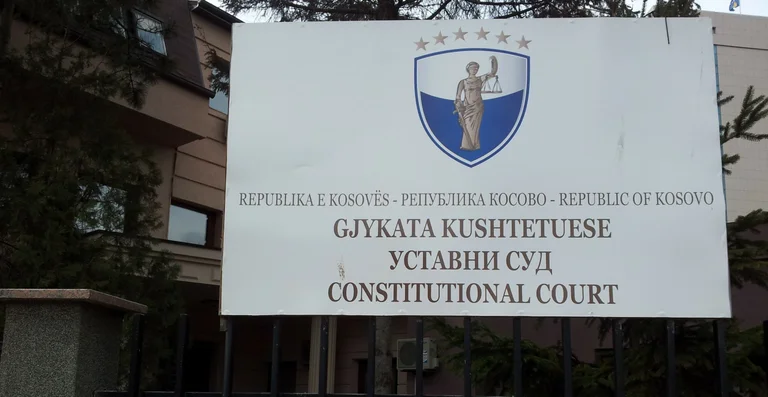
(a year ago)Eyes and ears are directed by the Constitutional Court for resolving the political crisis in Kosovo. The country's top judicial institution is seen as light at the end of the tunnel to pave the way for the Assembly's institution, following the February 9th parliamentary elections. Political parties claim they are awaiting constitutional decision-making over [...]
Political parties claim they are awaiting decision-making by the Constitution regarding the constitutionality assessment of the decision for the Speaker of the Parliament's secret vote.
After 24 consecutive failures to elect the troops of the Parliament in civil society, they say that a judicial act as swift as possible by the Constitutional Court on this issue could pave the way for the constitution to be formed and the formation of the new government.
However, at the Constitutional Court, they say they are still reviewing the subject, which has been delivered by ten AAK deputies, PDK and LDK on 12 May.
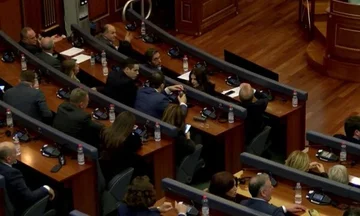
The Assembly, four months after the elections, has not been constitutionalised. The Vetevendosje Movement, like the first party in the election, has failed to secure the 61 votes needed to elect Albulen Haxhiun to head of the Parliament.
As of 1 May, the Vetevendosje Movement insists that its candidate for speaker of the Parliament's vote, Albulen Haxhiu, should take place by secret vote, as the same has failed to be elected to this position by a six-time vote.
Coalition MP Vetevendosje-Guxo-Alternative Movement, Life Statovci, tells Kosovo that the secret vote for the prime minister would only strengthen democracy.
So it is urgent that the constitutional decision be made soon.
Some political parties have made a deal that destructuring and unable to establish institutions have political strategies. These parties have taken these positions from above, which means that some persons have imposed their authority within them and are pressuring MPs, even some members of minorities, not to follow their own free will as deputies, but to submit to their destructive strategy. To get out of this situation, the secret vote would strengthen Parliament's democracy and the freedom of MP”, it says in a written response to Kosova Preress.
Statovci argues that it is important that as soon as we have an explanation from the Constitution for this situation, we move forward following the refusal to co-operate that has brought the blockade.
“The Assembly has 120 deputies and they must answer only to voters and the Constitution, not to the resentments of close leaders and interest groups”, it says.
Optimist that the Constitutional Court can lead the blockade in the Assembly is also the MP PDK, Ferat Shala, who adds that as a party they will respect any decision she will make.
We expect the Constitutional Court, in an optimum term, to clarify all the issues we have raised in the motion submitted as political subjects. We would like the Constitutional Court and I believe that it will take place to give a clear and complete orientation to the violations that have occurred and are taking place at the repeated Kosovo Assembly hearings. In whatever circumstances, we, like the PDK and as deputies, have not disputed and contested the decisions of the”, Shala points out.
Meanwhile, the Constitutional Court has announced for Kosova Prees that it is under way to review the AAK's request.
This query is currently under consideration. All interest parties and public opinion will be announced over time for the decision-making of the Court. In terms of higher demand, the Court, within the set term, has accepted comments from (i) predeceivers of demand; (ii) Abelard Tahiri, deputy of the Democratic Party of Kosovo; and (ii) Saranda Bogujevci, deputy of the Vetevendosje” Movement, says in a written response of Constitutional Court Secretary General Veton Dula.
At the Kosovo Democratic Institute (KDI), sceptical of a swift court decision regarding the situation in the Assembly.
Researchers Volnet Bugakku says that the court has 60 days' time to submit the demand and that, in addition to comments, it is also expected to address the Venice Commission's assessment.
The Constitutional Court, the moment it accepts the request in question, according to the Labour Order, has deadlines for within sixty days to issue an act on the case in question. Since more than two weeks have passed since the application was submitted so far, I do not expect the court in a very fast term to issue the verdict. In addition to accepting comments, the Court will also review and address the Venice Commission's assessments. I believe they will request opinion from this Commission on the matter of the secret voting procedure during a constitutional session. The court can consult and review the parliamentary practices of the states of the European Union and can make similar decisions based on other Constitutional Courts, he says.
Kosovo's Assembly has failed to be constitutionalised 24 times in a row, while the current stalemate has remained in forming the Commission for the secret vote to the chief parliament. /Periscope/