6 hours ago
Court Massacre Case Not Even the Indictees
Periskopi(a year ago)
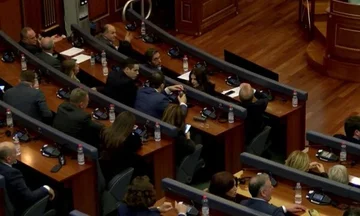
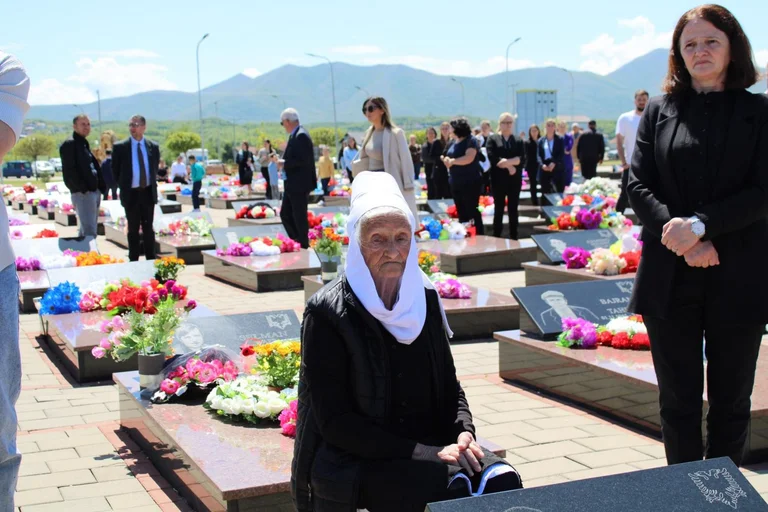
(a year ago)The initial hearing in the case of the massacre in Meja and other villages in the Gjakova region is held on Monday, 16 June, at the Constitutional Court in Pristina. This crime occurred in April 1999, when 370 Kosovo Albanians were killed, whose troops were later found in eight mass cemeteryes in [...]
This crime occurred in April 1999, when 370 Kosovo Albanians were killed, whose troops were later found in eight mass graveyards in Batajnica, Serbia.
The Actakuz, established in December 2023 and completed in April 2024, includes 53 people, among whom the prime suspect is Momir Stojanovic, former head of the Security Department at Pristina Corps Command, who has also been director of Serbia's Military and Security Agency, reports the REL, broadcast. Periscope.
Among the accused are Franco Simatovic “Frenki”, commander of the Special Operations Unit (JSO), formed by Serbia's State Security Service in the early 1990s; Sreten Chamovic, former head of security; Verolub Zivkovic, former chief of staff of Pristina Corps; Illija Todorov, former commander of the 63rd Presitutic Brigade, and Dragan Zivanovic, former commander of the 52nd Arterial Brigade.
JSO's role in Kosovo war
At the beginning of the last decade of the 20th century, Serbia's State Security Service later known as the Security and Information Agency BIA founded the Special Operations Unit (JSO).
At the time, this service was run by Jovica Stanisich one of the closest associates of then Yugoslav President Slobodan Milosevic.
His right hand was Franco Simatovic, known as “Frenki”, founder of JSO and responsible for co-ordinating paramilitary units on war fronts in Croatia and Bosnia and Herzegovina.
In May 2023, The Court in The Hague eventually sentenced Stanisic and Simatovic to 15 years in prison for supporting and encouraging war crimes in Bosnia and Herzegovina in 1992.
They were convicted of crimes in Bijeljina, Doboj, Zvornik, Trnovo, Sanski Most and Bosanski Shamac.
The Special Operations Unit, by that name, also participated in the Kosovo war during 1998-1999.
In an interview for the international organisation, Human Rights Watch, a Serbian policeman who had served for six months in Kosovo in 1998, described JSO members, also known as “Frenquets”, as extremely brutal.
The Franks kill everyone. Believe me, you don't want to see”, he stated in an interview included in HRW's book “By order: War crimes in Kosovo”, which was published in Serbian in 2003 by Samizdat B92.
Among those accused of crimes in Meja and other villages around Gjakova are other State Security Service officials of Serbia and the Ministry of Internal Affairs, who are charged with planning and implementation of the operation “Bad river”, during which 370 Albanian civilians were killed.
They are accused of murder, physical and sexual violence, torture, robbery and ethnic expulsion of Albanians.
The trial in Pristina is held in the absence of indictees, as they are not available to Kosovo judicial authorities.
Prosecutor Drita Hajdari, now retired, has stated earlier that the Meya case was inherited from the European Union's Mission for Rule of Law in Kosovo (EULEX), which in 2013 opened investigations into 18 persons.
It has indicated that, after taking the course at the end of 2018, local prosecutors have continued and expanded investigations into 35 other people, bringing the total number of indictees in the case to 53.
In the EULEX report on monitoring the rule of law published in November 2017, it is said that the indictment for crimes in Meja is a case of high priority and that it includes a complicated legal doctrine of command responsibility.
For the first time, it also deals with the extermination of entire villages which further enhances its complexity”, says the report.
Followed: Indictees in Serbia Protected by Criminal Responsibility
Natasa has persecuted, founder of the Fund for Humanitarian Law in Serbia, says crime in Meja has never been clarified enough to bring justice to victims and contribute to the establishment of justice after the war in Kosovo.
She adds that most of the bodies of those killed in Meja and the surrounding villages near Gjakova have been exhumed from mass graves at the Batajnica police complex, but that another 15 people are still missing.
Speaking to Radio Free Europe, Persecuted says that numerous evidence has been presented before The Hague tribunal, which has enabled judicial authorities in Serbia to initiate procedures and prosecute the biggest crime in Kosovo so that those responsible can be punished.
But that, as she says, never happened.
The Fund for Humanitarian Law, Ka persecuted, initiated the case of Momir Stojanovic, the leading crimes suspect in Meja, in 2015, and later, according to her, the prosecutor of the court. EULEX has issued an international arrest warrant for him that year.
She says the Humanitarian Law Fund has asked Serbia's War Crimes Prosecution to initiate investigations, but that the response has been “misleading” ) that Momir Stojanovic “doesn't figure in the witness documentation”.
“Crime is terrible, crime is the greatest [in Kosovo]. Only the top representatives of the Pristina Corps of the Third Army have been held responsible for that crime, but there is a very long list of those belonging to that rank of officers, with important positions... and no one has been held accountable for”.
All are in Serbia, some of them are retired, but all are in Serbia, protected by criminal responsibility, because there is no political will to punish, especially those crimes in Meja, Koranica and other villages near the border with Albania”, says Ka exactly.
Judgment in Lack
The lack of judgment in Kosovo was enabled by changing the Code of Criminal Procedure in 2022, but only on condition that the prosecution and court have exhausted all means to ensure the prosecution's presence.
However, the Criminal Procedure Code stipulates that persons tried in absentia, because authorities have failed to ensure their presence, are entitled to an unconditional retrial when arrested.
According to the Fund for Humanitarian Law in Kosovo, since the law's entry into force for insufficient judgments by February 2025, fifteen counts have been filed in absentia against 73 members of Serbian forces who allegedly committed war crimes in Kosovo.
The first lack of justice was handed down in December 2024 in the case of Cedomir Aksic, who was sentenced to 15 years in prison for war crimes against the civilian population committed between January and May 1999 on the territory of the Kosovo Development municipality.
“Failed trials do not bring justice”
Persecuted estimates that <x0 when politics replaces the law, then we have judgments in the absence of”.
For those who are not available, for those in Serbia, further life will be such that they will not be able to move anywhere, outside Serbia, because they will be arrested. As far as justice is concerned, the question arises whether Kosovo's judiciary will be able to prove crimes against all the accused, if the trial looks like a forum where only the victims' confessions will be heard, without any communication with Serbia's constitutional authorities”, says Katrus.
She adds that judgments in absentia do not bring justice unless there is institutional co-operation between Kosovo and Serbia.
According to her, the European Union must find a solution to this co-operation within the framework of dialogue for normalising relations between Kosovo and Serbia, “in order to establish documented and high-quality charges that could lead to effective results in practice”.
On the contrary, he points out, crimes in the absence will not bring major changes, except that Kosovo and Serbia will protect their citizens convicted of war crimes.
Bekim Blakaj, from the Fund for Humanitarian Law in Kosovo, has earlier told Radio Free Europe that war crimes judgments in absentia “go against European standards for fair judgments”, because the accused are unable to defend themselves.
In the missing court processes in Kosovo, the accused are represented by lawyers appointed by official duties.
For us, this is not a fair trial”, Blakaj said, adding that decisions in absence are “false justice “for victims or members of their families, who may initially feel relieved but, over time, will remain disappointed, as convicts will continue to be free.
During the Kosovo war from 1998 to 1999, over 13,000 civilians have been killed, while thousands of others have disappeared.
About 1,600 people, mostly Albanians, are still on the run. / REL/