6 hours ago
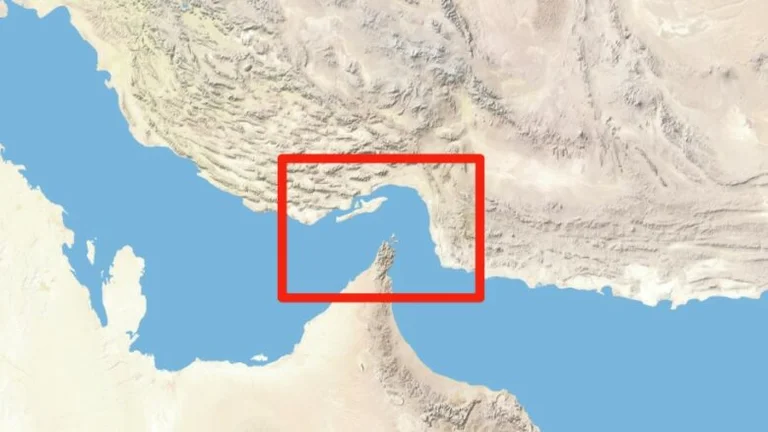
Which countries would be most affected by Iran's closure of the Hormuz Strait?
Periskopi(a year ago)
(a year ago)About 84 percent of oil running through the Strait of Hormuz is destined for Asia, leaving the economies of China, India, South Korea and others vulnerable if Iran blocks the important trade route due to US attacks on its nuclear plants. Some 14.2 million barrels [...]
Some 14.2 million barrels of crude oil and 5.9 million barrels of other oil products pass through the straits a day representing about 20 percent of global production in the first quarter, according to the American Energy Information Administration (EIA).
And crude oil from Saudi Arabia, the United Arab Emirates, Iraq, Kuwait, Qatar and Iran almost exclusively passes through the corridors, writes the foreign media, follows Telegrafi.
The following are the main Asian countries where oil exported through the strait:
China
More than half of the oil imported from East Asia passes through the Strait of Hormuz, experts estimate.
China is one of the biggest buyers, importing 5.4 million barrels of crude oil a day through Hormuz in the first quarter of this year, according to ElA, broadcasts the telegraph.
Saudi Arabia is China's second largest supplier of crude oil, accounting for 15 percent of its total oil imports of 1.6 million barrels a day.
China also buys more than 90 percent of Iran's oil exports, according to the Kpler analysis firm.
It imported 1.3 million barrels of Iranian crude oil a day in April from a five-month high in March.
India
India is very dependent on the Strait of Hormuz, importing 2.1 million barrels of crude oil per day across the corridor in the first quarter, EIA data shows.
About 53 percent of India's imported oil at the beginning of 2025 came from Middle Eastern suppliers, particularly Iraq and Saudi Arabia, local media reported.
Careful over a growing conflict in the Middle East, New Delhi has increased Russian oil imports over the past three years.
“We have been monitoring closely the developing geopolitical situation in the Middle East since the last two weeks”, India's Oil and Natural Gas Minister Hardeep Singh Puri said on Sunday.
“We have compiled our supplies in recent years and a large volume of our supplies does not now come through the Strait of Hormuz”, he wrote on X, adding “We will take all necessary steps to ensure the stability of fuel supplies to our citizens”.
South Korea
About 68 percent of South Korea's crude oil imports pass through the Strait of Hormuz HINA 1.7 million barrels a day this year, according to the EIA.
South Korea is particularly dependent on its main supplier, Saudi Arabia, which last year represented a third of its oil imports.
Seoul's Ministry of Trade and Energy said that “has had no interruptions so far in South Korea's gross oil and LNG imports”, but “given the possibility of a supply crisis”, officials “were planning for possible disruptions in the Strait of Hormuz”.
“The government and the industry's interested parties are prepared for emergencies by preserving a strategic oil reserve equivalent to about 200 days of supply”, the ministry said in a statement.
Japan
EIA says Japan imports 1.6 million barrels of crude oil per day through the Strait of Hormuz.
Japanese customs data showed that 95 percent of crude oil imports last year came from the Middle East.
And the country's energy transport companies are preparing for a possible strait blockade.
We're currently taking steps to cut back as much time as possible from our ships in the Persian Gulf”, he said of AFP, marine transport giant Mitsui OSK.
Other
About 2 million barrels of crude oil passed through the Strait of Hormuz daily in the first quarter were destined for other parts of Asia especially Thailand and the Philippines dealt with Europe (0.5 million barrels) and the United States (0.4 million barrels).
Limited Alternatives
Asian countries can diversify their oil suppliers, but it is difficult to replace large volumes coming from the Middle East.
In the short term, the global-growing <x0-ventors of oil, the available OPEC+ reserve capacity, and American production can offer some amortisation”, experts at the MUPG Bank said.
“However, a complete closure of the Hormuz Strait would still affect the access of a large part of this reserve production capacity concentrated in the Bay [Arab]”, they said.
Saudi Arabia and the United Arab Emirates have infrastructure to bypass the strait, potentially easing disruptions, but their transit capacity remains very limited about 2.6 million barrels a day.
And the Goreh-Jask pipeline, built by Iran to export through Oman Bay, which has been inactive since last year, has a maximum capacity of only 300,000 barrels a day, according to EIA. /Periscope/