6 hours ago
Who was Bujar Bukoshi (1947)
Periskopi(a year ago)
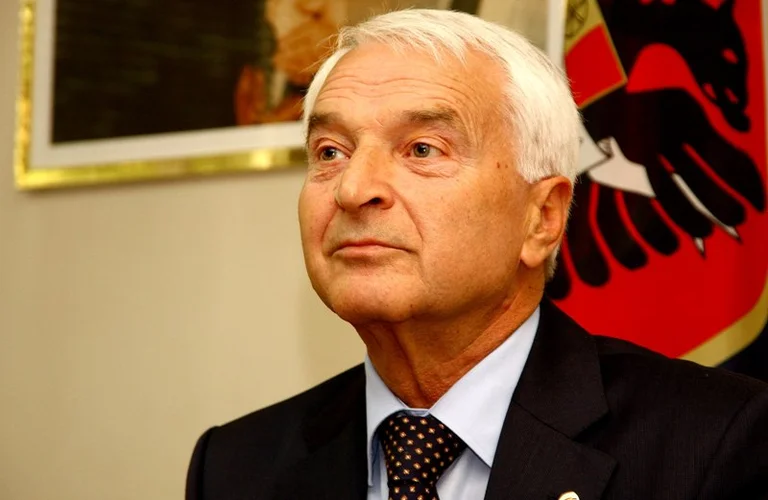
(a year ago)He died at the age of 78, former Kosovo Prime Minister Bujar Bukoshi. He was long suffering from serious illness. Bukoshi has left his wife behind, Dr. Zana Bukoshi, the girls Ora, Shota, Nita and the Dardan and Taulant grandchildren. Below, Bujar Bukoshi's biography: Dr. Bujar Bukoshi (1947]
He was long suffering from serious illness.
Bukoshi has left his wife behind, Dr. Zana Bukoshi, the girls Ora, Shota, Nita and the Dardan and Taulant grandchildren.
Below, a biographer of Bujar Bukoshi from his family:
Dr. Bujar Bukoshi (1947 - 2025)
Dr. Bujar Bukoshi was a Kosovo Albanian doctor and politician. Born in 1947 in Suhareka. The primary school was conducted in Suhareka, the school in Prizren in 1964. Medical studies were conducted at Belgrade University in January 1971. It was specialised by urology in Pristina and Belgrade in 1977. As a stockist of DAAD (German Ministry for Academy Exchange) was at professional work as a physician at the Kemperhoff Hospital Urological Clinic in Koblenz, Germany. In 1984 the Berlin Senate for Family and Social Affairs's grant was selected by the Berlin Senate in 1984, and by 1984-1985 worked as a doctor at the Steglitz University Clinical Clinic of Freieät Berlin (The Free University of Western Berlin), where it took research and in 1985 protected the doctorate on a topic of urological oncology (“Cstestestestemicism under the treatment of the bladder and its complications<1x>).
He then went on to work as a urology surgeon and a doctor for surgery at the University of Pristina Medical School and committed himself to the professional and cultural exchange of young doctors between Kosovo and Germany.
Along with intellectuals, let us ask Kosovars, Dr. Bujar Bukoshi founded the Human Rights and Freedoms Council (KMLDNJ) and the Democratic League of Kosovo (LDK), at the helm of which Dr. Ibrahim Rugova. In the same year, Dr. Bukoshi was elected secretary-general of the LDK and in co-operation with human rights protection organisations, such as. International Helsinki Federation for Human Rights and Amnesty International was committed to publicisation and to expose systemic and increasingly serious reactions of the Serbian regime to Albanians in Kosovo before Western opinion.
Because of his political stand and human rights activities, the Serbian police in 1990 entered the hall where he was operating, interrupted, and expelled him from the hall by not allowing them to get closer to the grounds of the clinic buildings, even to visit the patient.
When Serbian nationalist President Milosevic with an unconstitutional act annulled Kosovo's autonomy in 1991, the Kosovo Parliament, which was forced by Serb forces to break down, declared the Republic of Kosovo and appointed Dr. Prime Bukoshi. With this, Dr. Bukoshi had to flee his homeland with his family.
After a six-month stay in Bled, Slovenia, the Government of the Republic of Kosovo in Ekzil was installed in Germany. From Ulmi and Bonnie, Dr. Bukoshi and his team were committed to informing Western states of Serb violence and systematic state terror against Albanians in Kosovo through contacts with European government and parliamentarians, and working to dissemination public opinion on the serious situation and risks that could be followed by the previous crossing.
Between 1991 and NATO intervention in 1999, he met with a large number of public representatives and politicians from the most different parties, parliamentary, senators, congressmen from the youngest to the world's highest government representatives, at a time when he feared the Kosovo crisis would end in far greater tragedy.
At the same time Dr. Bukoshi organised the Albanian diaspora in Germany and other Western states. By means of diaspora donations known as “3 per cent of” and which contributed to state budget financing, Dr. Bukoshi and the government at Ekzil defeated the parallel health and educational system for Albanians in Kosovo, since they were most violently excluded from public life. These parallel institutions, despite the risks stemming from all those contributing to their organisation and operation, have long managed to prevent the radicalisation of Albanians in Kosovo and to foster peaceful resistance.
In 1999, Dr. Bukoshi participated in the Rambouillet negotiations. After the war Dr. Bukoshi led the Union of Funds for Reconstruction of Kosovo (UFORK), with which schools and houses destroyed by Serb forces in Kosovo were also supported by refugees and cultural projects. After the war with this fund were carried out over 150 small and medium-sized projects, including the reconstruction of an entire village of Qaber near Mitrovica é, which the Serbian army had levelled with bulldozers, and where 150 new houses were built after the war by the fund.
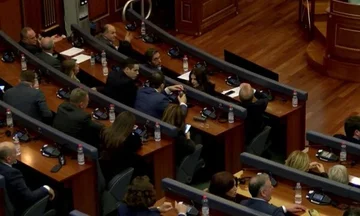
In 2007, Dr. Bukoshi was elected deputy in the Kosovo Republic Assembly. He was a cosigner of the Declaration of Independence of the Republic of Kosovo. In 2009, he was appointed Minister of Health in the Government of Kosovo and initiated important reforms. From March 2011 to October 2014, he served as Deputy Prime Minister, and in this capacity he supervised the work of the Ministry of Health, the Ministry of Environment and the Ministry of Labour and Social Management. As adviser, he continued to participate in Kosovo political life.
After a long battle of serious illness, he passed away on June 10, 2025. Leave your wife behind, Dr. Zana Bukoshi, the girls Ora, Shota, Nita and the Dardan and Taulant grandchildren.