8 hours ago
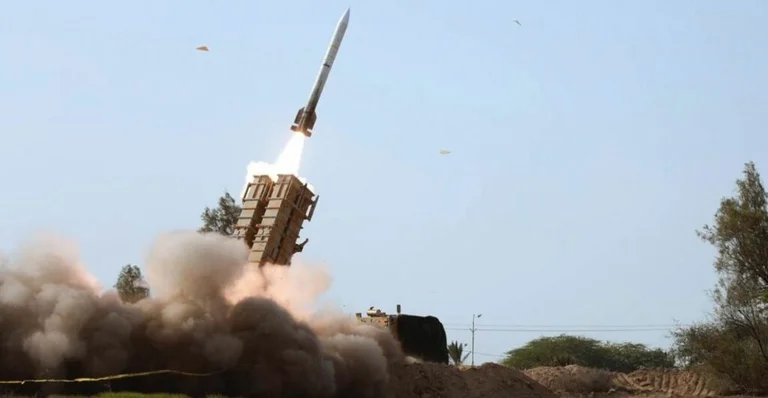
What are the ballistic missiles that Iran attacked the American base in Qatar?
Periskopi(a year ago)
(a year ago)Ballistic missiles are designed to track a nearly paraboltic trajectory called ballistics, which allows them to strike targets thousands of miles away. The rocket is fired at very high altitudes, passing through the atmosphere and entering space. Once in space, the missile travels thousands of miles without needing [...]
Ballistic missiles are designed to track a nearly paraboltic trajectory called ballistics, which allows them to strike targets thousands of miles away.
The rocket is fired at very high altitudes, passing through the atmosphere and entering space. Once in space, the missile travels thousands of miles without having to push until it falls back to Earth.
At that point, the rocket, thanks to gravity, has gained extraordinary speed and becomes very difficult to hit. High speed also increases its destructive capacity.
Ballistic missiles are usually launched by warships, sylos underground, or mobile structures.
They are large missiles and are designed, among other things, to plant nuclear heads.
However, they are extremely inaccurate missiles, because their trajectory is located at the moment of launch and cannot be changed.
Ballistic missiles are pushed only when they are launched, then engines are shut down and the impact occurs exclusively because of gravity.
That means they can lose their target by several hundred meters.
Other kinds of rockets are floating missiles, which tend to be smaller and very precise: instead of following a parabolt trajector, they move parallel to land and can be maneuvered at all stages of flight.
But they are slower and have a radius of hundreds rather than thousands of miles.
Finally, there are hypersonic missiles, which are relatively new and owned only by several armies, which combine the speed of ballistic missiles with the maneuverability of floating missiles./Periscopi/