6 hours ago
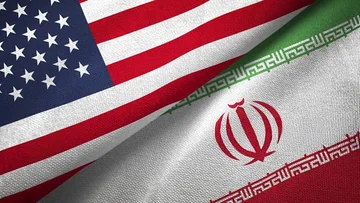
What after the US attacks on Iran?
Periskopi(a year ago)
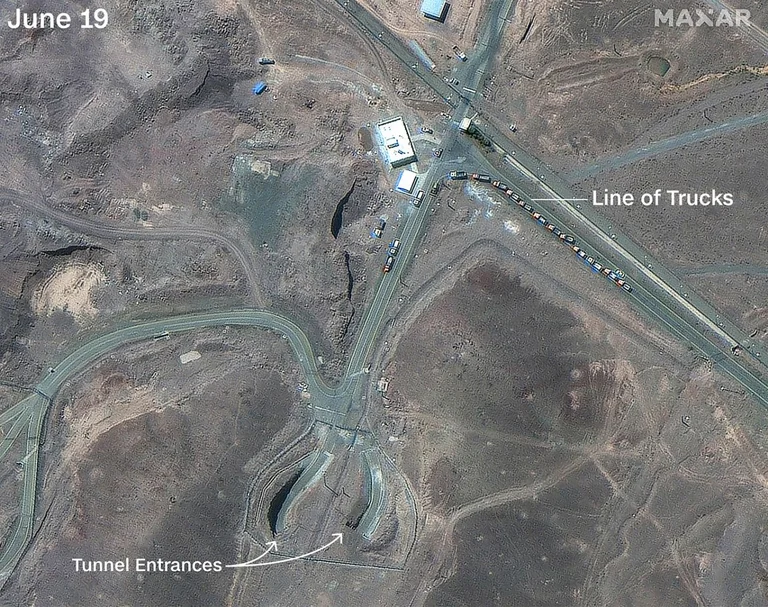
(a year ago)A few hours after midnight on June 22, a small mountain range about 200 miles [200 km] southwest of the Iranian capital was rocked by a series of powerful explosions. It was about the Fordo mountain range, where Iran has been building a vast underground complex for the enrichment of uranium officially used for [...]
It was the Ford mountain range, where Iran has been building a vast underground complex for the enrichment of uranium officially used for civilian purposes or, as Israel insists, for the construction of a nuclear weapon, Periscope.
The blast was caused by dozens of conventional powerful bombs from the American arsenal GBU-57, each weighing 1,000 pounds [13,000 kg] of one of the most sophisticated American Air Force aircraft, B-2 bomber.
As dust lands on Fordo and two other objects hit by the United States, the next few days will show what exactly this event means: Will a complete war erupt? Will Iran retaliate by hitting American bases in the region? Will Tehran try to block global oil supplies through the Strait of Hormuz? Will Israel continue with unprecedented bombings on Iranian targets? And is the United States entering another major war in the Middle East?
For now, here's what you need to know:
What happened?
About 2:30 a.m. at local time (00:30 local time in Kosovo), a team of seven B-2 bombers reached high above the Fordo complex after traveling thousands of miles from their bases in the central United States. American officials said the planes dropped 14 GBU-57 bombs, also known as bunker destruction, due to their ability to penetrate deep into the ground and detonate the explosive a little later, which could theoretically destroy fortified objects like Fordo.
At the same time, dozens of Tomahawk missiles were launched by an American submarine in the Persian Gulf towards another Iranian nuclear facility: Ishan. Two GBU-57 bombs were also dropped over the third target hit by American attacks, Nataz.
In total, 125 American planes, including escort fighter planes and jets for air fuel supplies, US officials said.
What's wrong?
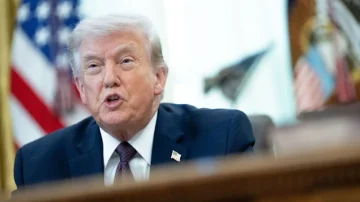
Iranian authorities have confirmed the targets have been hit. US President Donald Trump stated that objects in Fordo, Nathanz and Isfahan are “completely destroyed”.
However, it remains very unclear what has been exactly damaged and to what extent.
Nathanz and Isfahan had already been targeted by Israeli air strikes over the past ten days.
According to the Nuclear Threat Initiative, a research institute in Washington, fuel bars for nuclear plants had been produced in Isfahan, though this effort had slowed due to Western sanctions.
Meanwhile, Natanzi, according to the same institute, housed at least 50,000 centrifuges located in underground structures. However, these are not as deep underground as Fordo.
Fordon was particularly interested in Israeli intelligence and American agencies because of its deep location on the mountainside. The facility, monitored by the International Atomic Energy Agency (IAEA), housed thousands of accurately built centrifuges used for enriching uranium.

Satellite images show power plant Fordo before and after attacks
Rich uranium can be used as fuel for power plants to a certain level. On that level, it is named as the “suitable for weapons”.
According to an IAEA report last month, more than 400kg of heczafluorid uranium gas had enriched up to 60 percent. This level is considered too high, but not the level required for nuclear weapons. Meanwhile, a confidential report of the year 2023, which he saw CNN, said that IAEA had discovered uranium at an almost appropriate level for weapons in Fordo.
Iran has repeatedly insisted that its nuclear activities are exclusively for civilian purposes.
What about the war?
Israel hailed the attack, calling it a crucial “step to halt the aggression of the Iranian regime and its ability to pose a threat to the region and the world”.
Iranian officials reacted by sharply condemning the attack and warning of dangerous <x0) consequences and profound influence by [the aggressive act] U.S. ”. Iran's Foreign Minister Abbas Aracchi announced he will travel straight Russia A close ally, though cautious of Iran, for talks with President Vladimir Putin.
At a news conference several hours after the bombings, Aracchi hinted that there is still a possibility of compromise, claiming that “der for diplomacy must always remain open”. However, he added, “is not this case now”.
Before the attacks, Washington had exerted great pressure on Tehran in negotiations on the future of the Iranian nuclear programme. While the public stand and behind scenes of the Trump administration hardened days before the attacks, European diplomats committed more to preventing a military intervention.
Whether Iran is willing to enter into full war or directly retaliate against American forces in the Middle East, it remains a question.
The Islamic Revolutionary Guard Corps ʹ the main Iranian military branch stated that the country reserves the right to respond to self-defense and warned that the United States “would face painful consequences”, according to a statement published by the state agency IRNA.
In January 2020, after an American threat killed a senior Iranian general, Iran reacted with a hail of ballistic missiles to American bases in Iraq, including Al Assad Air Base. There were no casualties, but about 100 American military personnel reported having suffered traumatic brain damage from the blasts.
The US has bases in Qatar, Kuwait, Saudi Arabia and the United Arab Emirates; while Bahrain is home to the 5th American Navy Fleet.
However, it is not clear whether Iran still has the capacity to retaliate effectively.
During the last ten days of Israeli shelling, many of the missile facilities, air bases, air defense systems and Iranian weapons factories have been damaged or destroyed, significantly limiting Tehran's options.
But Iran has other tools available.
For example, its cyber capabilities are known, and hackers linked to Revolutionary Guard have been charged in the past with attacks on Israeli systems.
On June 22nd, the Iranian Parliament called for the closure of the Hormuz Strait a key maritime point linking the Persian Gulf to the Indian Ocean, through which the tanks carrying a large portion of oil to world markets pass.
Its closure would cause a shock as far as global oil prices are concerned.
What about politics?
The attack represents a turning point for President Trump, whose political establishment was partly prompted by his fatigue and many Americans towards the consequences of US military interventions in Afghanistan, Iraq and Syria, which are often referred to as America's “endless war wars”.
Many of Trump's top advisers, including Vice President JD Vance, have expressed opposition to further US involvement in conflicts abroad. In the days before June 22nd, there were open clashes in American political circles over the possibility that the US would be involved in another war in the Middle East.
After the attack, codenamed the midnight Cheekani, Trump and other administration officials tried to justify the intervention carefully, stressing that the goal was not to change the regime so the collapse of the Iranian government and that Washington does not plan to be deeply involved in the conflict between Israel and Iran, which is expected to continue.
“This is not an indefinitely-term intervention”, Defence Secretary Pete Hegseth told reporters on 22 June.
In Congress, the Democrats condemned the attack; most republics supported it. However, some Republicans, including the contractive member of the House of Representatives, Marjorie Taylor Greene, wrote on social networks: “This is not our fight”.
“We are not at war with Iran”, Vance told television NBC after the attack. “We are at war with Iran's” nuclear program. /REL/