8 minutes ago
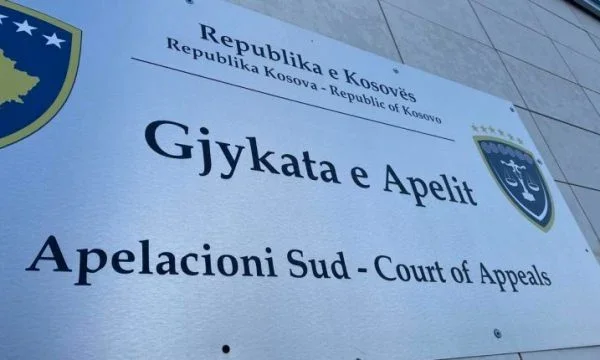
Apel returns to retrial the murder case in downtown Pristina: The Element of Willing - A Conflict With Reason
Periskopi(a year ago)
(a year ago)The Court of Appeals has retrialed the N.S. assassination case in downtown Pristina in November 2017, where the accused are Arlind Ahmeti and Agron Vlasaliu. “With approval of the Constitutional Prosecutor's complaint in Pristina and according to official duty, the Constitutional Court Act in Pristina, the Crime Department [...]
The Court of Appeals has retrialed the N.S. assassination case in downtown Pristina in November 2017, where the accused are Arlind Ahmeti and Agron Vlasaliu.
“With the approval of the Constitutional Prosecutor's complaint in Pristina and according to official duty, the Constitutional Court Act in Pristina, the Randa Crime Department,..., of the date, 25.10,2024, and the case returns to the same court in retrial and re-animation”, states the Apel verdict, which has provided “The Battle for Justice<3>, followed. Periscope.
The Constitutional Court in Pristina in the second retrial on 11 October 2024 had sentenced accused Ahmeti and Vladaliu to 16 years in prison for “Cause of total risk” and “illegal possession”. Meanwhile, at the Court of Appeals on February 28th, 2025 was held hearings for elaboration of the parties' complaints in the procedure.
Against the foundation decision, a complaint within the legal deadline has prompted the Constitutional Prosecutorship in Pristina, proposing that the foundation decision be annulled and the case be turned into retrial.
On the other hand, the defender of accused Ahmeti, lawyer Asdren Hoxha, has filed complaints about the height of the sentence, demanding a milder sentence on Ahmeti.
Meanwhile, Vlasaliu's defender, attorney Florent Latifaj, has filed complaints demanding that the case be turned into retrial because of violations of the Criminal Law.
The Appeals Prosecutor, on the other hand, has proposed to the Court of Appeals that the Pristina Constitutional Prosecutor's complaint be approved, yet defence complaints are rejected as groundless.
Finding the Court of Appeals:
According to Appeals, the first degree has not provided sufficient, clear, and convincing reasons related to the criminal responsibility of the accused for acts for which he was convicted.
The appeal finds that the Foundation has not particularly assessed the accuracy of the evidence and that there are considerable contradictions between what is presented in the reasoning of the act, with the content of the evidence administered in judicial consideration.
The second rate has estimated that the first degree has not fully and thoroughly analysed the actions taken by the accused and the eventual conclusions that would emerge from the manner of indictees related to the consequence.
The appeal has specified that when the Foundation has confirmed the existence of the intention to commit criminal acts by the accused and the intention of ending them, according to Apel, this conspiracy conflicts with the rest of the reasoning associated with the intent as a key element.
This reasoning, given by the court in the first degree as a key element, is completely contradictory with the rest of the reasoning”, is said to be in the Apel's decision.
Similarly, Apeli has stressed that statements of damaged parties and witnesses that have had a key role in determining the purpose of the accused and that the purpose, the foundation, has been set out only by material evidence.
It says that from the Foundation's reasoning, it turns out it has created conviction by the ballistic expert's consisting of what the missile found in the victim was recohered, which according to Apel, not necessarily the recoupled missile rules out the purpose of the accused.
Appeal recommendations:
The Court of Appeals has demanded that the first instance during the retrial administer each separate and precise evidence, in particular considering the resolution of the fact that is supposed to be proven and the impact of the same on the full and precise confirmation of the actual situation.
According to Apel, the foundation after managing the evidence released, the purpose of the accused in the concrete case depending on the conclusions that will arise after the outcome of the case, all at the end of making the respective decision.
Random history:
Initially, the Constitutional Court in Pristina on April 16th 2019, after having re-qualified criminal acts, accused Arlind Ahmeti had found him guilty of inciting serious murder, declaring a unique sentence of 17 years in prison. whereas Vlasalus was on the run.
However, the Court of Appeals, in November 2019, had decided that this case would be again tried by the court in the first instance, arguing that the act of April 16, 2019, is contrary to legal provisions.
However, on December 13, 2022, the Constitutional Court in Pristina had again pronounced the condemnation of indictees Agron Vlasaliu and Arlind Ahmeti, condemning them to 21 years in prison for serious murder in now co-ordination of the late N.S, in 2017 in Pristina.
While, the Court of Appeals on March 23rd 2023, in the case of complaints by the representative of the damaged parties, lawyer Neceddin Sejdiu, defenders of accused Arlind Ahmeti, lawyer Asdren Hoxha and lawyer Fitim Malocaj, as well as defenders of accused Agron Vlasaliu, lawyer Florent Latifaj, has reversed the Constitutional Court's conviction in Pristina and the case has returned to the first instance in the retrial.
Then, the Foundation on October 11, 2024, after respelling the criminal work to “Cause of general danger”, Ahmeti and Vlasali were sentenced to 16 years in prison.
According to the indictment filed on July 13th 2021, Agron Vlasaliu is charged with being charged on November 24, 2017, under preliminary agreement with defendant Arlind Ahmeti, they have deprived life now of the deceased N.S. and have now risked the lives of those injured, Behar Sahiti, Lumbardh Kukaj, Freshim Fariz, R. K. And exile Kqiku.