9 hours ago
Worried fish don't bother businesses, their price remains at risk of their image.
Periskopi(a year ago)
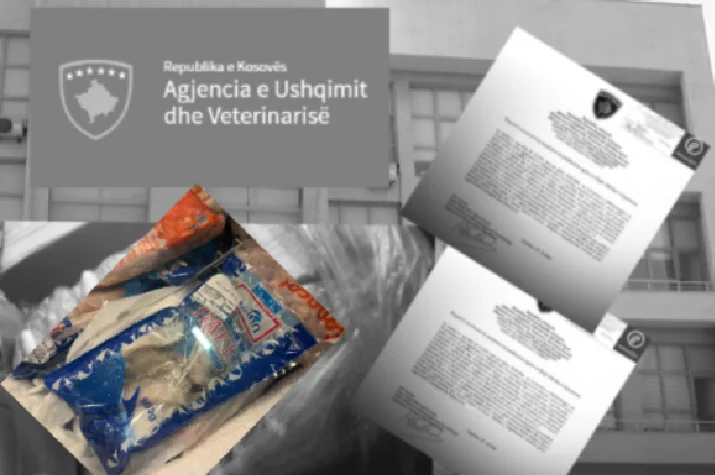
(a year ago)Companies have continued to import fish with worms and sell it on brands. Analysis conducted by the Food and Veterinary Agency finds that the fish is a parasite of Anisakis, but the authority of food safety is silent in the face of this scandal. AUV has even provided advice on how worms should be killed but not [...]
From: Blerta Agoshi
A 20-ton load of fish imported to Kosovo by the Delfini L company. T.D. has resulted in the presence of the Anisakis parasite, a harmful human health microorganisms, which in European Union countries automatically leads to the annihilation of food products when discovered, according to the EFSA when it is in the third stage, as the AWV findings result.
But not only 20 tons, but most of this company's cargo has resulted in worms, which Periscope has provided analysis conducted by the Food and Veterinary Agency. But that amount has become a battle between the company and the AUV through judicial processes.
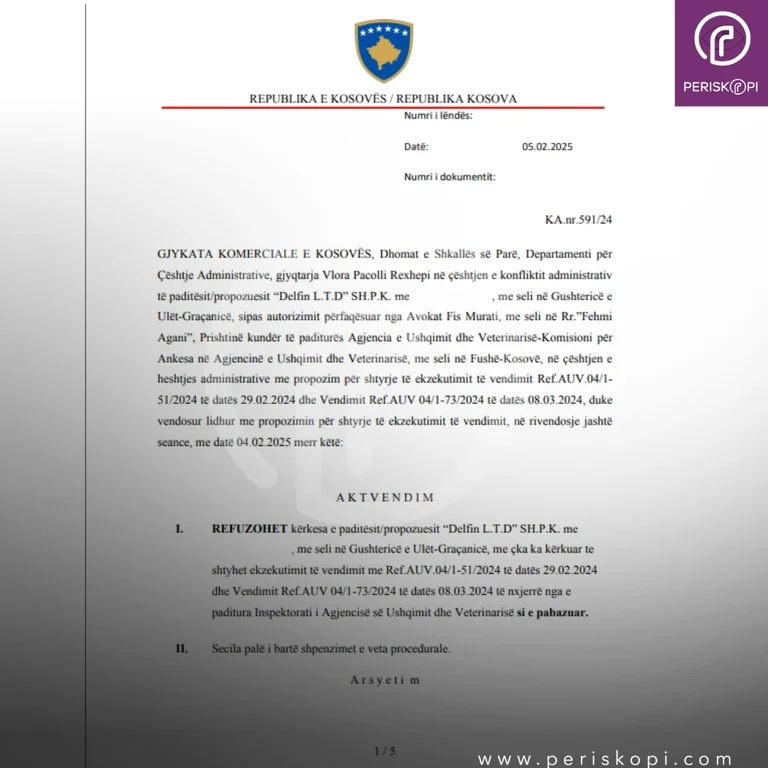
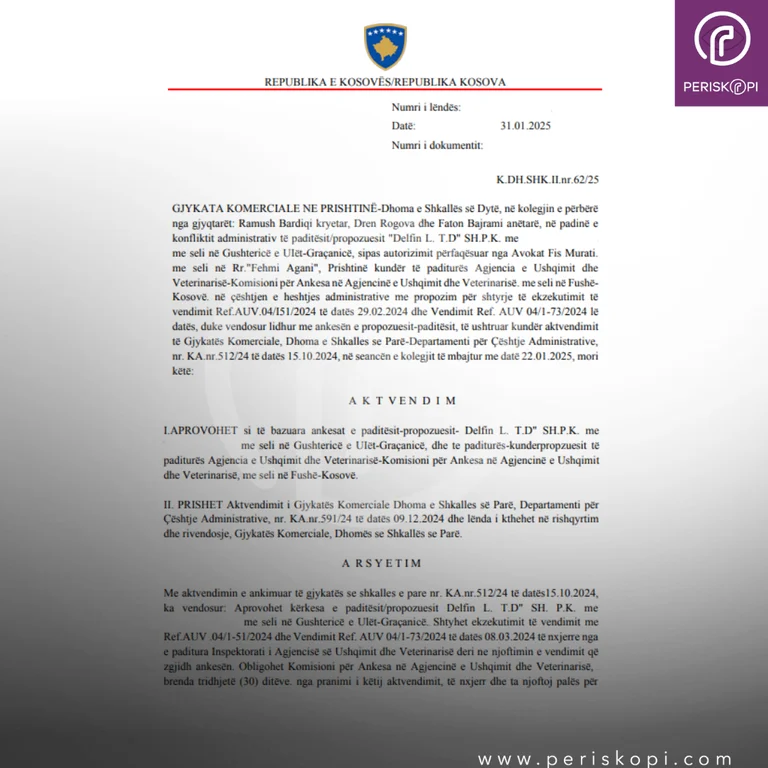
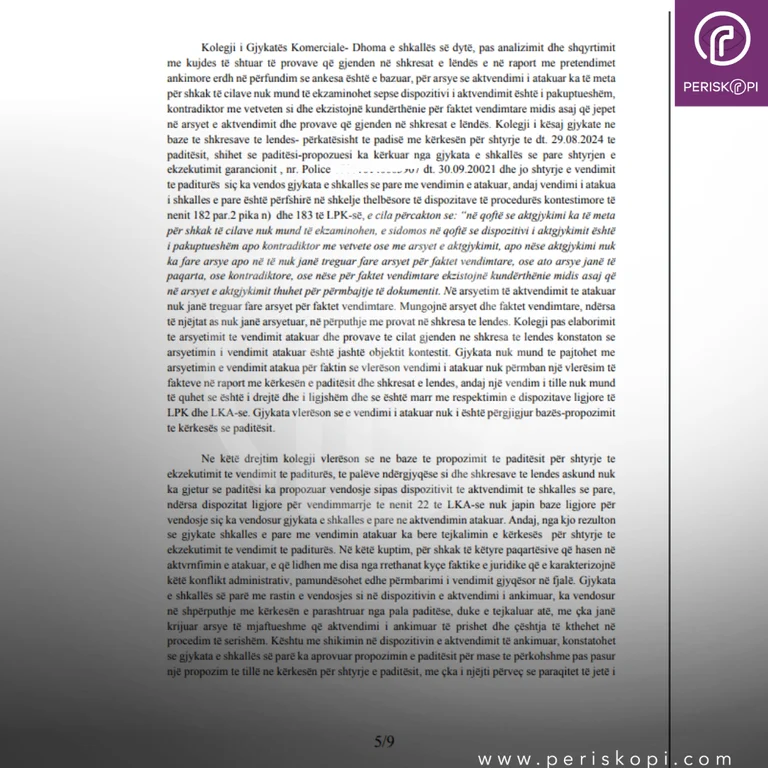
Despite potential public health risks, the analysis found, the Delfini L company. T.D. has not sought consumer protection, but has filed a complaint with the Commercial Court to challenge the decision to block and eliminate fish, citing it as damage to image and finance.
According to documents Periscopi has secured, the company has not disputed the fact that the loads are contaminated with the Anisakis parasite, but has demanded that the product not be destroyed and allowed for market sale.
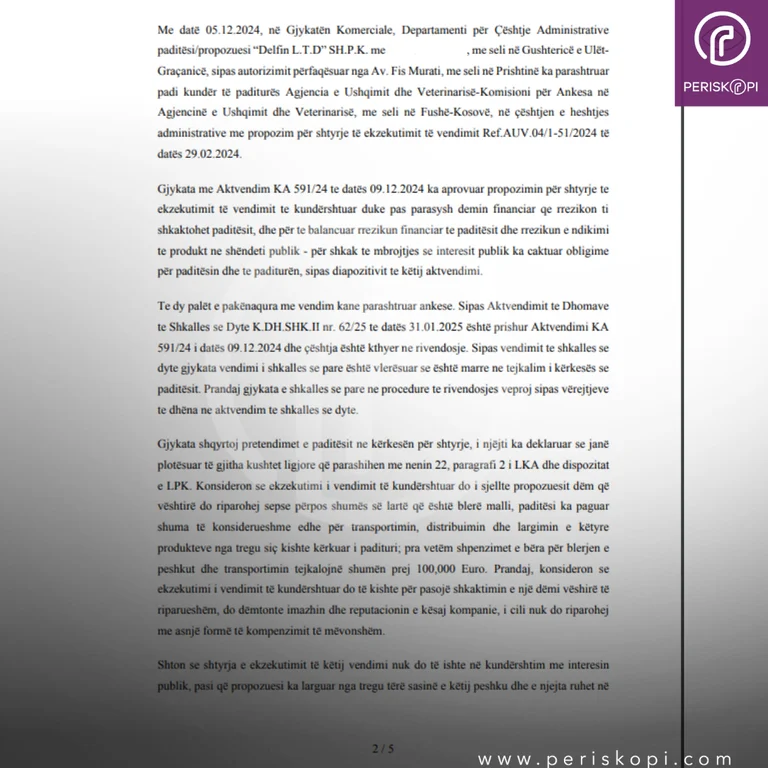
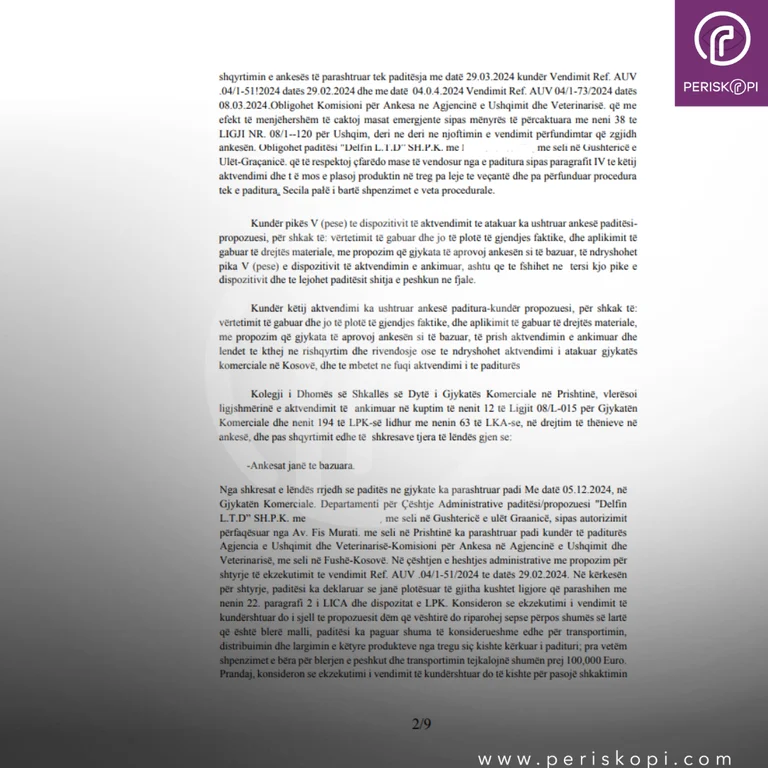
Delphini in the complaint he made at the Commercial Court demands that fish sale with Anisakis be allowed, worrying about image and financial losses, but not worrying about the health of citizens.
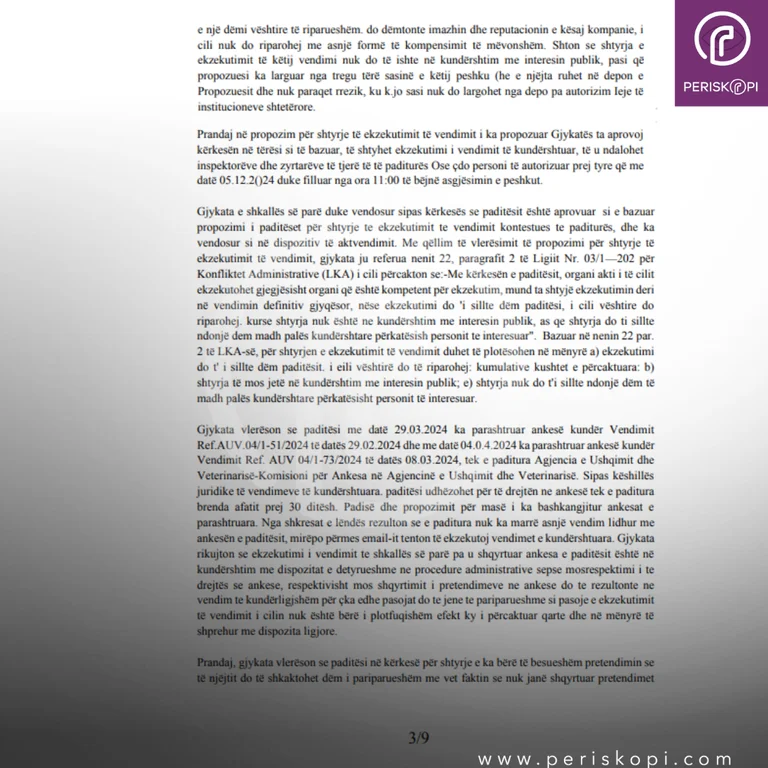
So only the expenses made to buy fish and transport exceed 100,000 euros. Therefore, it considers that the execution of the controversial ruling would result in a difficult repair damage, would damage the image and reputation of this company, which would not be repaired in any form of later compensation”, the company's lawyer's request handed over to the court said.
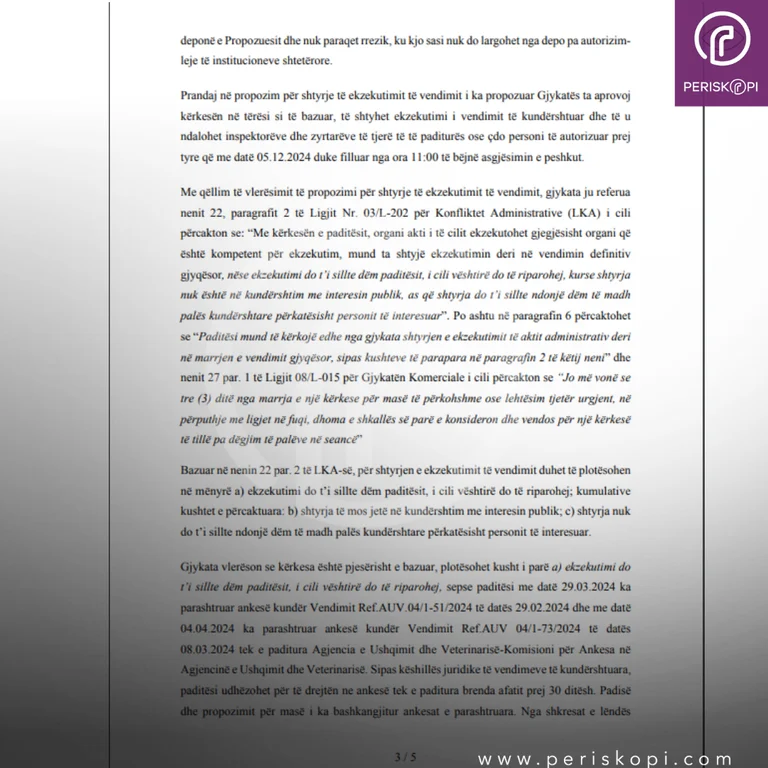
In the indictment that Delphi L. T.D. has been meant to delay the execution of worm-fish annihilation and recognise that the product is with Anisakis, but it is argued that it can be sold, being called to European Union directives. For the company, there is no concern of wormfish, but it gives instructions on how to drown and then wear out viewing parasites as perfectly normal. The reasoning of the company is in sync with the AUV that issued public notice when Periscop discovered the scandal, advising citizens how to drown worms in fish before they are consumed.
The fact that fish products which the first degree of decision has required to leave the market (which inspectors now want to bring to nothing) are products that pose no threat to consumption and that the presence of parasites on these products is normal. These products are safe to use for food, as well as in line with the (EC) Rule. European Parliament's No. 853/2004,”, says the company's request to delay the destruction of worms.
Consumer Protection Law 06/L-034 header Three, Article 16, you expect that the goods that are traded should have all the components in declaration. As a result, the L.T.D. by law in packing should write “Peshk with worms” to be the law to inform consumers, to decide if they want parasitic fish.
“The data for the items should be clear, visible, understood, readable, inevitable and should not be covered with any other text”.
<x0)
And the Food Law NR. 08/L-120, Article 28 is behind the Consumer Protection Law, which in the label should describe any compound in the product.
“2. Food information, including labelation, declared health records and other issues related to food declaration that regulates the Consumer Protection Law for its enforcement, and other relevant legislation to be applied to”.
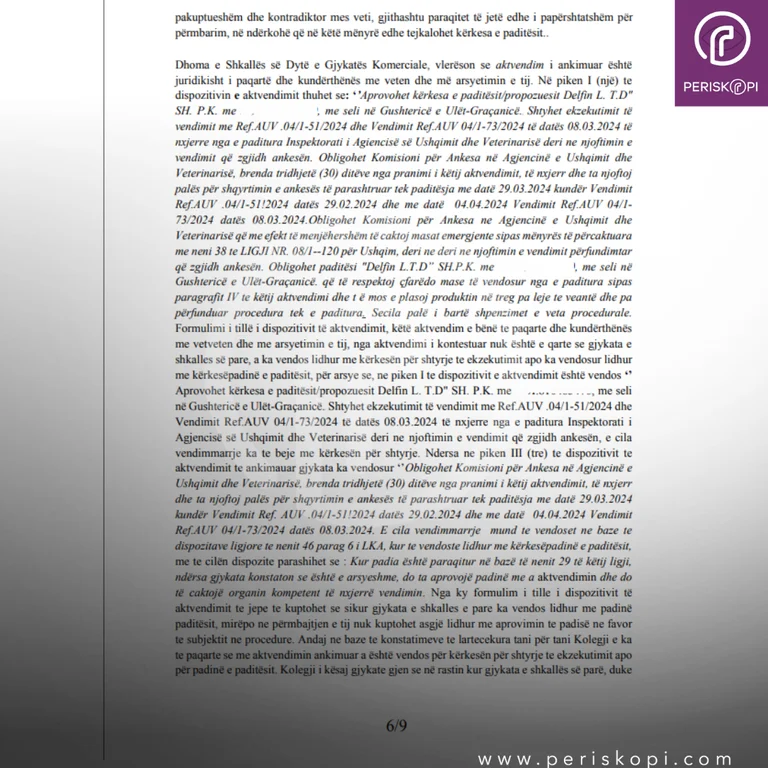
Following official checks, the Food and Veterinary Agency (AUV) had demanded that cargo contaminated with the Anisakis parasite be destroyed or returned to the country of origin, in line with food safety laws. But it was blocked by a decision by the Supreme Court, which approved Delphi's request for postponement of execution, temporarily suspending AUV's decision to eliminate the fish.
The court, however, did not give the company the right to crack the product in the market, but its decision made neither annihilation possible, leaving the product “pending”, though contaminated.
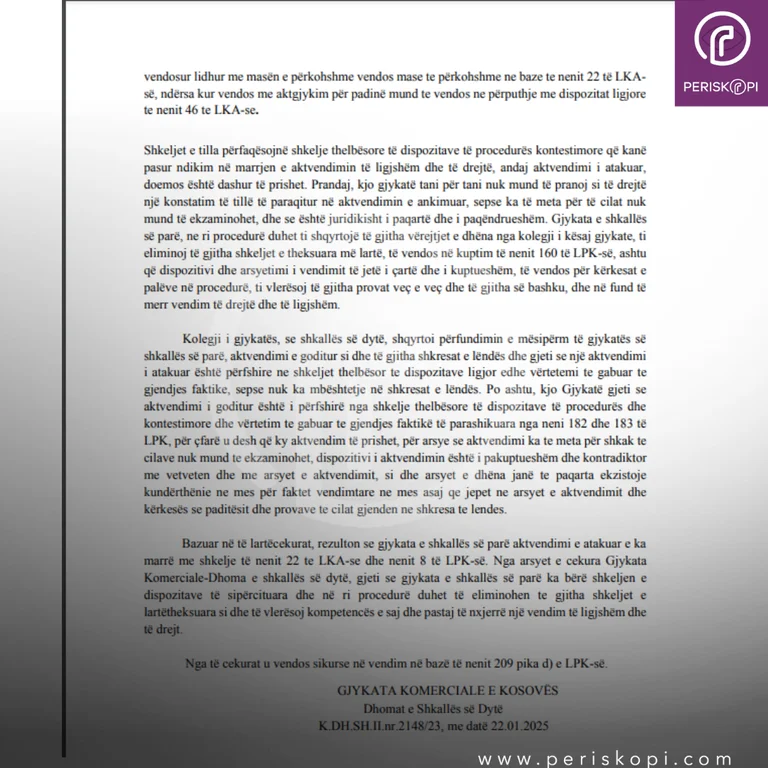
With the First Stair decision, neither party was satisfied. The AUV filed complaints to undermine this decision and allow the destruction of the product, while the Delfin company went further demanding that fish be allowed for sale, despite the confirmed risk.
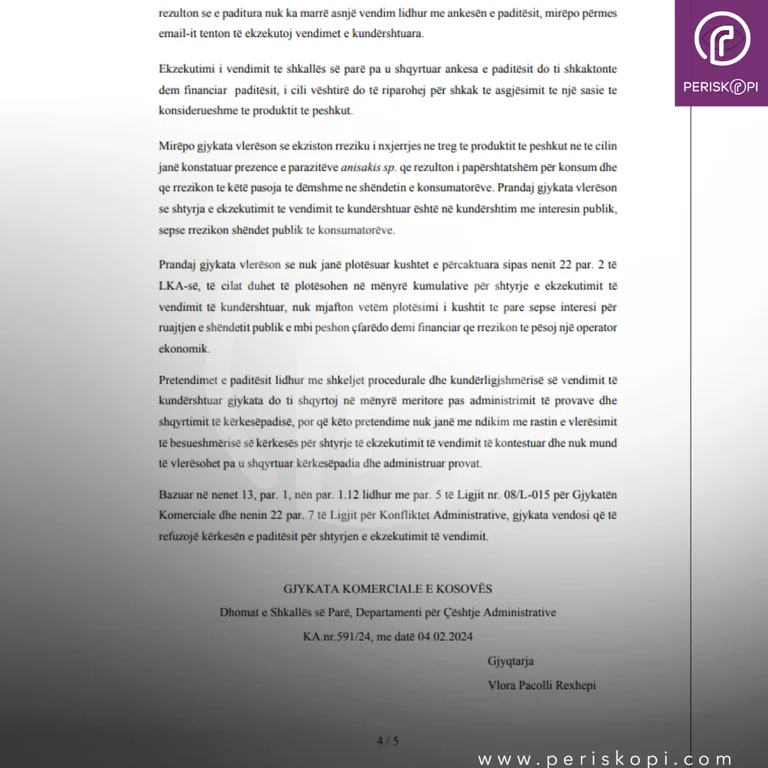
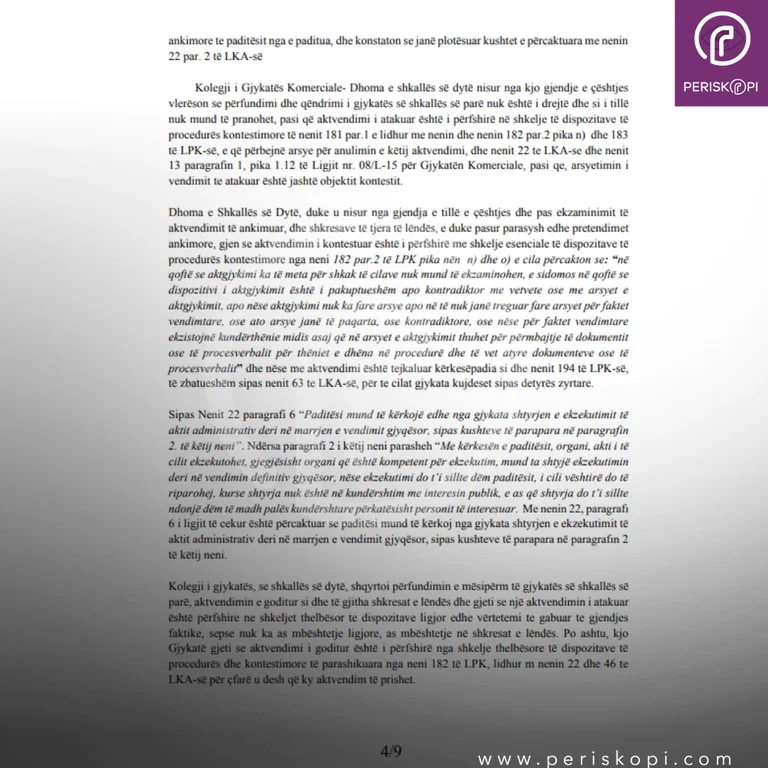
The Second Stairway Court then made a decision to completely break the First Stair Act and turn the case into a review. Until a new decision, neither the sale nor the annihilation of the fish is allowed.
In its decision, however, the Second Stairs Court clearly underlines that the break-up of fish in the market is not allowed until administrative procedures are completed and without special permission. This remains a temporary victory for public health protection.
The company “Delfin LTD KPK” sells wormfish
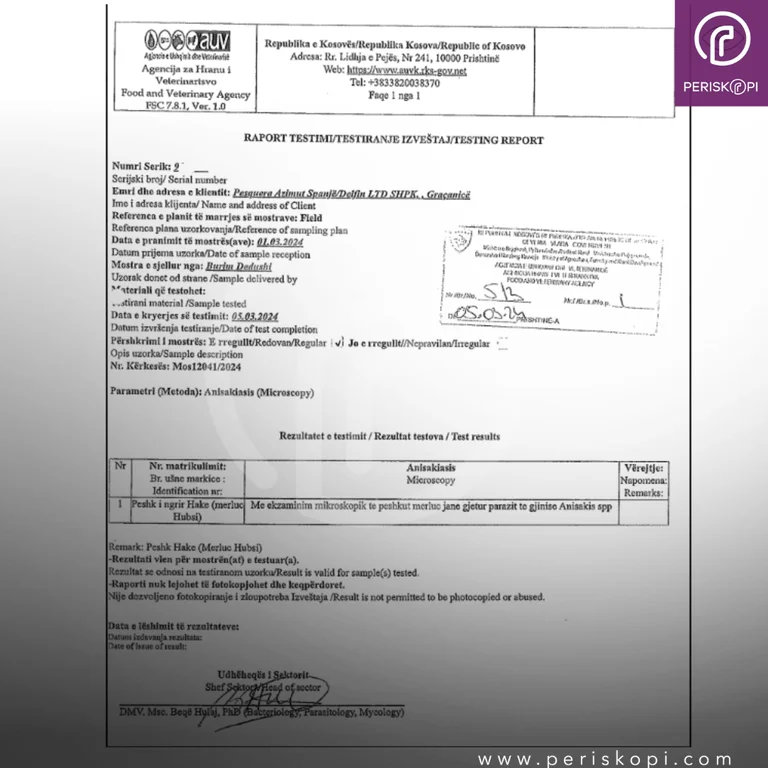
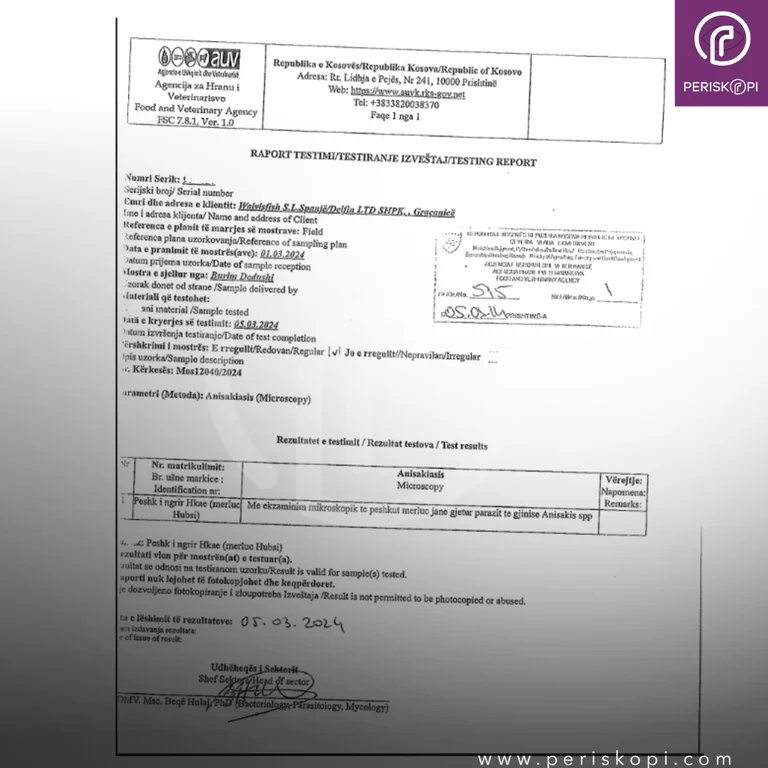
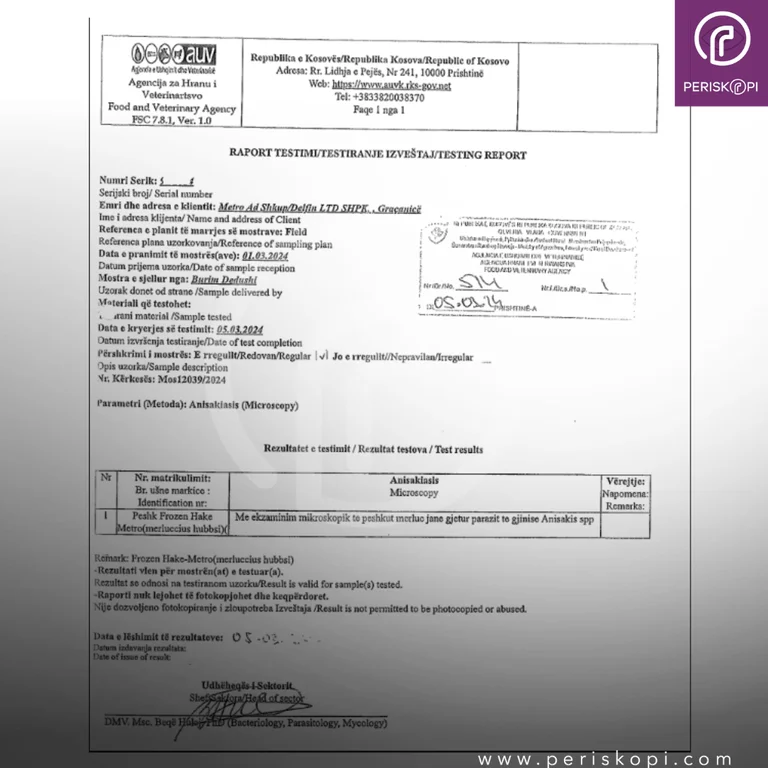
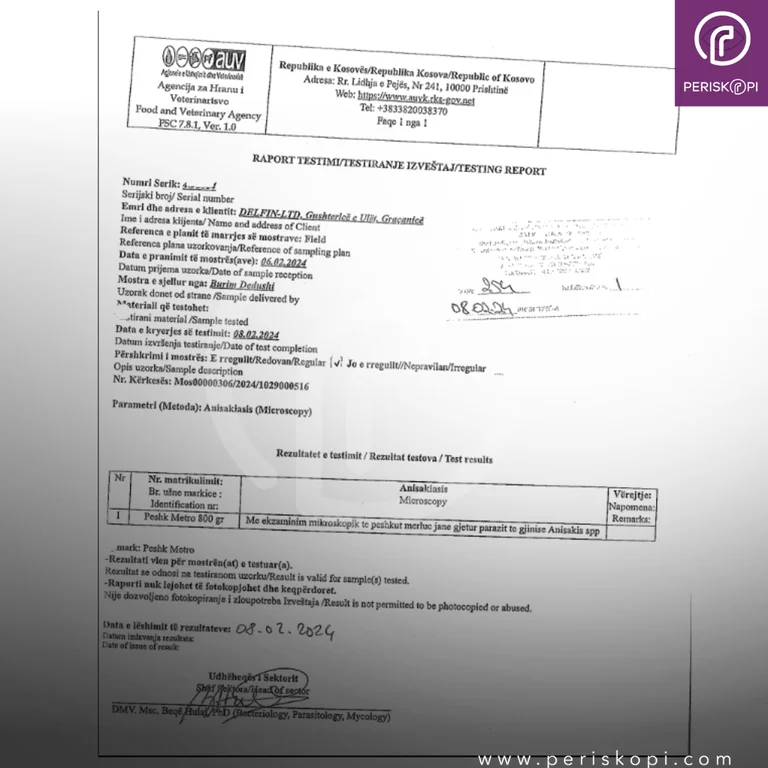
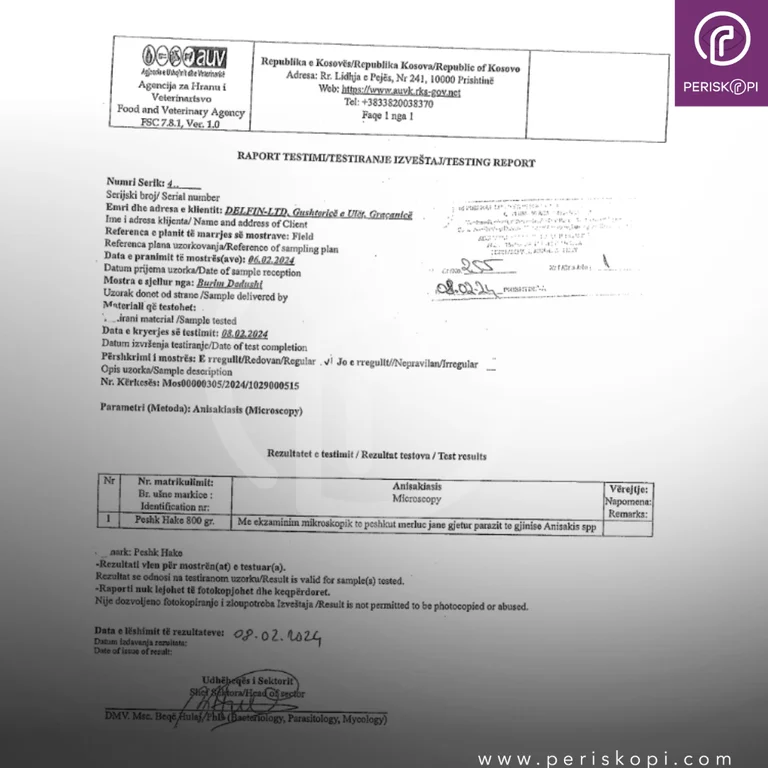
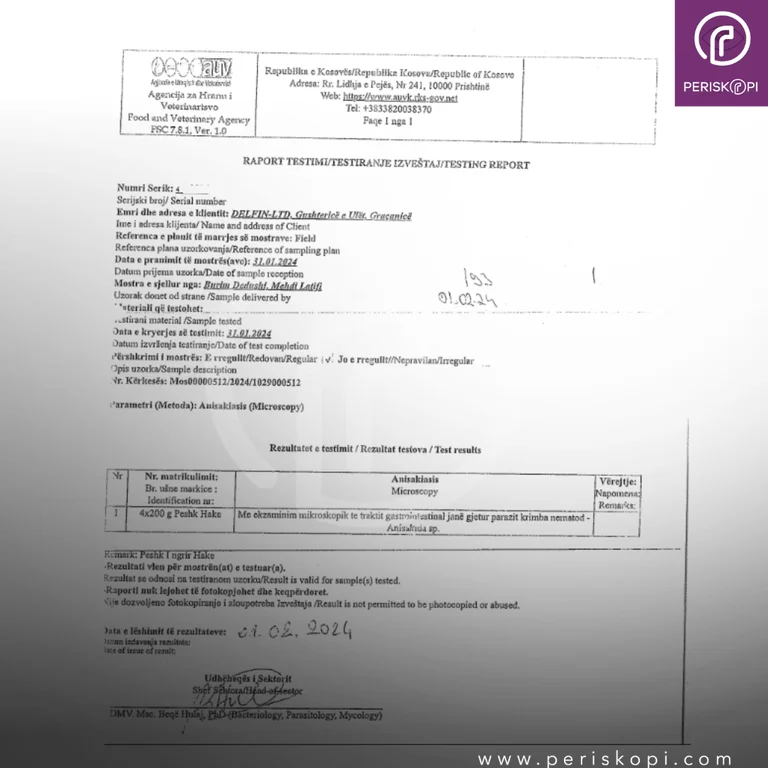
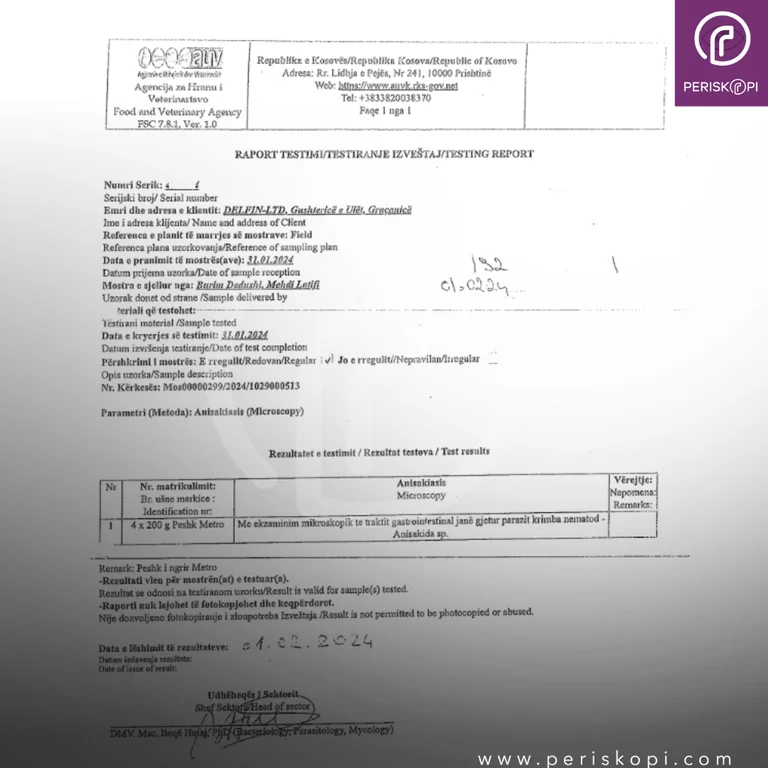
From analysis with various serial numbers 40/2024; 41/2024; 46/2024, up to 94/2024, all of the company's burdens “Dph LTDPK” have resulted in parasites Anisakis spas. There are nine tests that have been done to this fish import company, and all have resulted from Anisakis.
This company continues to trade in Kosovo, while the Food and Veterinary Agency continues to remain silent, providing instructions to citizens on how to kill worms through a public announcement.
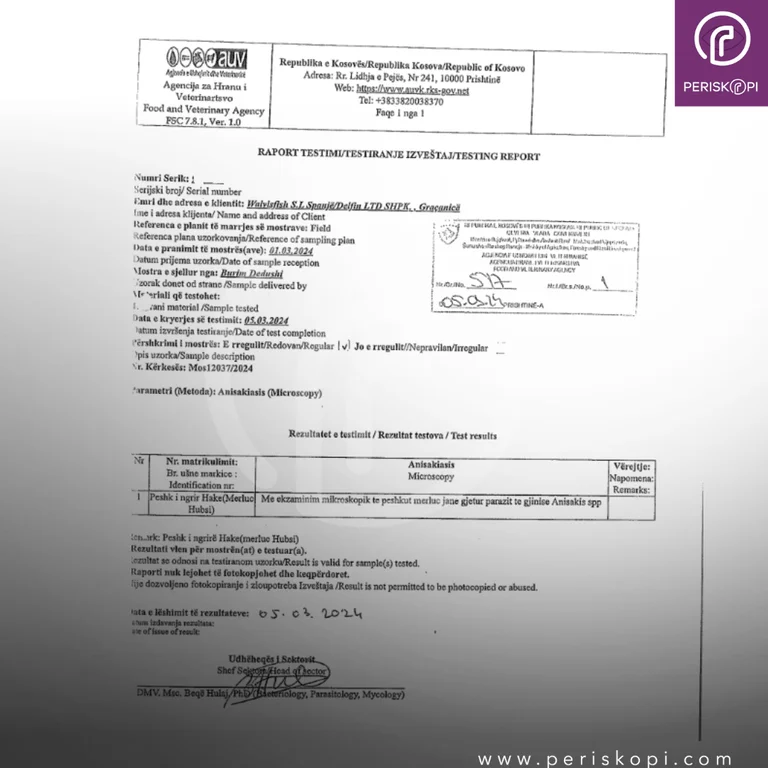
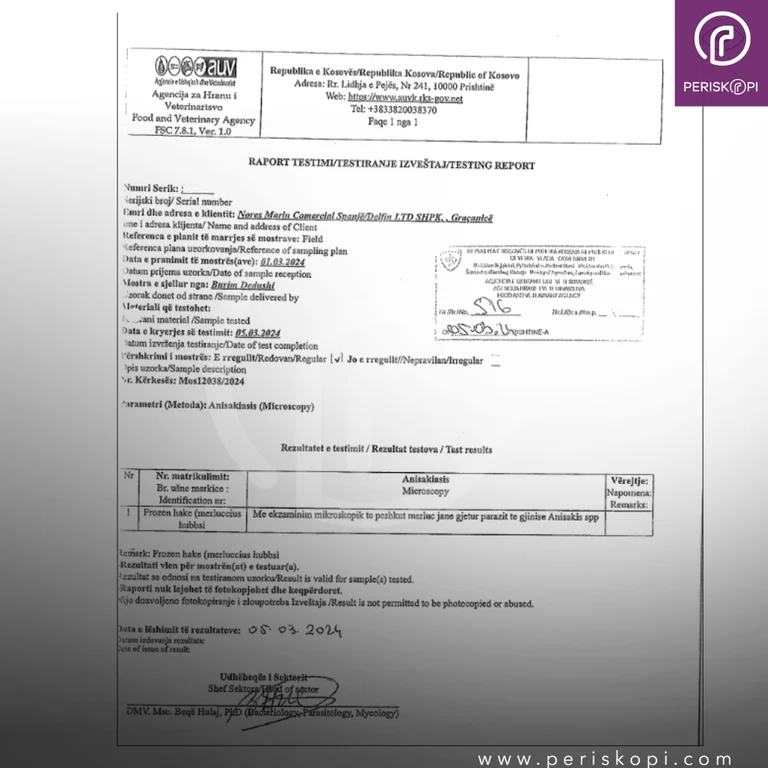
On March 1st, 2024 samples have been taken for analysis, while on March 5th the results have been confirmed, frozen Merluc fish has been contaminated with larvae Anisakis spap. The result is signed by Beqe Hulaj, leader of the AUV sector.
Even serial analysis 93/2024 for the fish “Frozen Hake” of the same company has confirmed the presence of worms.
These are all the tests that were conducted by AUV and which resulted in parasites/Crimba Anisakis:
What's Anisakis?
The L3 Laveries of Anisakis spp are potentially harmful to man, according to institutions such as EFSA (European Food Safety Authority) and CDC (Centrals for Disease Control). They can cause anasachiasis, a parasitic infection that occurs when the caterpillar is not eliminated with sufficient heat or is not killed with deep freezing. Symptoms range from light (nause, pain) to severe (an allergic reactions, stomach infection, or intestines).
In 2022, the European Food Safety Authority (EFSA) released a detailed report on the dangers posed by the Anisakis parasite in fish products. This report focused on the risk assessment of allergic infections and reactions on consumers who consume fish infected with Anisakis larvae.