8 hours ago
Tomorrow's fifteenth attempt at the constitution will the QUINT visit to Kurti influence?
Periskopi(a year ago)
(a year ago)Even though Vetevendosje's request for secret voting has already gone to the Constitution, the Assembly has officially announced that Constitutive sessions will continue tomorrow at 10:00. Thus, MPs will make the fifteenth attempt at the institution. But environmental connoisseurs are considering that political clashes and constitutional efforts have brought discussion [...]
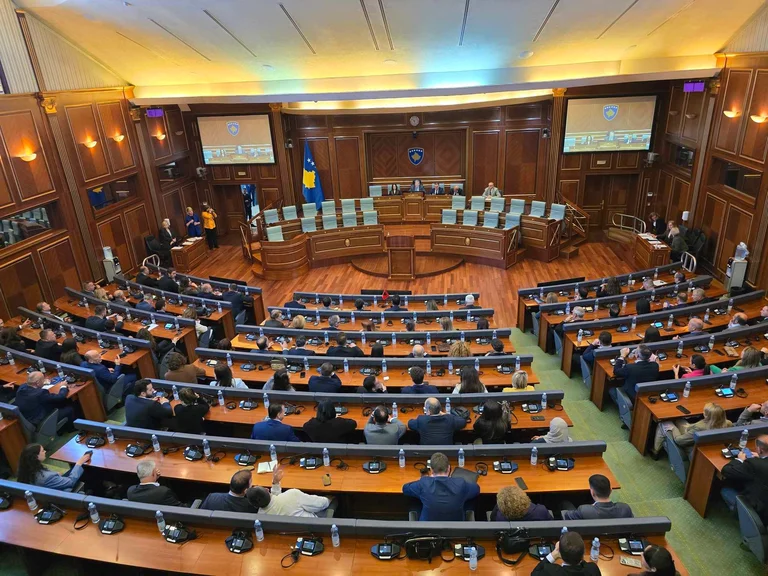
Even though Vetevendosje's request for secret voting has already gone to the Constitution, the Assembly has officially announced that Constitutive sessions will continue tomorrow at 10:00.
Thus, MPs will make the fifteenth attempt at the institution. But constitutional connoisseurs are considering that political clashes and constitutional efforts have brought numerous legal discussions, especially about Article 113 of the Constitution and recent actions to parliamentary sessions.
Article 113 of the Kosovo Constitution gives the right to at least ten MPs, who within 8 days after taking a decision in the Parliament, whether it be law, other judicial act or procedure, send for consideration to the Constitutional Court.
This court today has gone to such a request, that of the secret vote for the chief parliament being in voting procedure.
From the Kosovo Democratic Institute say that according to previous interpretations of the court itself, the term “decision” does not mean only a written or formally adopted act, but also any action of the Parliament that produces legal consequences.
The Constitutional Court has a 60-day deadline to decide whether the demand is acceptable and based, and whether there were violations of the Constitution or not,” says Volnet Bugakku, senior researcher in KDI.
Meanwhile, Naim Jakaj from the Kosovo Institute for Justice says that without a ruling adopted by the Parliament, there can be no talk of formal violations of the Constitution and therefore, there is no predictable damage that would justify immediate intervention by the court.
The decision for an ad-hoc commission has not yet been adopted, so there is no basis for intervention of the interim-scale Constitutional Court,” said Naim Jakaj, senior researcher in the IDK.
On the other hand, political analysts estimate that unblocking the Assembly cannot be achieved not only with judicial interpretations, but through the will of political parties for compromise and agreement.
“The Assembly cannot be unblocked without a clear political will. The winner of the election has the right to propose, but other parties have the right to vote according to their conviction,” said Dorajet Imer, analyst.
“The solution is political. But there seems to be no willingness to compromise from the former ruling party. This could lead the country towards new elections,” says Blerim Canay, political analyst.
Recognisors of constitutional and political issues stress that the Parliament often ends up in a blockade situation where political solutions are missing, leaving the Constitutional Court as the last instance for interpretation and exit from the crisis. /Periscopi/