7 hours ago
“retirement and lack of funds”, WHO in trouble facing health challenges
Periskopi(a year ago)
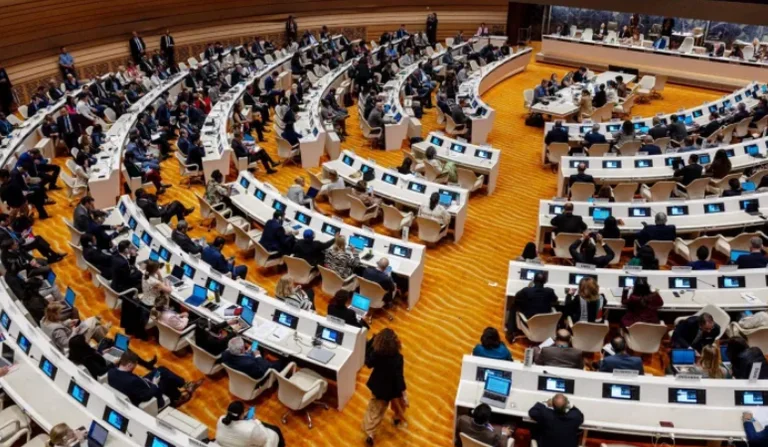
(a year ago)Massive budget cuts and an agreement to combat health threats at the level of COVID-19 are the focus of the spotlight this week in Geneva, where representatives from almost every country in the world have gathered for the World Health Assembly. The assembly, held every May, defines the policies and budgets of the World Organization [...]
The assembly, held every May, defines the World Health Organisation's policies and budget (OBSH) for next year. This year's theme is “A World for Health”, but in the face of a challenging financial climate, the atmosphere in Geneva remains tense.
In 2025, WHO faces a lack of $600 million, while a budget cut of $4.2 billion has been proposed for the period 20262027, up from $5.3 billion previously planned.
Many global programmes are undergoing reductions due to lack of funds from leading donors such as the United Kingdom, France and the Netherlands.
O The BSH has asked states for a 20% increase in annual contributions to reduce dependence on voluntary financing.
Due to the cuts, various structures of regional staff and offices have been affected, while the agency is focusing solely on the most urgent global health needs.
One of the main issues is the adoption of a treaty for pandemics to improve readiness and response to future pandemics. The treaty is aimed at strengthening disease monitoring, faster data sharing and benefits, as well as equal access to vaccines and medicines.
A still unfinished part is system PACE (excesses and sharing of the pathogens' benefits), for which negotiations will continue another year after the treaty is approved.
There are other challenges on the agenda, such as non-stick diseases and mental health. These topics are expected to be discussed further at the UN summit in September, but the Assembly is an opportunity to push forward political commitments in this direction.
The states will consider resolutions for kidney disease, cervical cancer, blindness and hearing damage.
Climate change is another key point. The assembly is expected to vote on a plan linking health and climate commitments under the Paris Agreement, but environmental organisations have expressed dissatisfaction with the weak measures addressing the role of fossil fuels.
Another issue requiring attention is the global strategy for terrorism. WHO proposes extending the plan until 2031, while currently only 26% of member states have adopted national plans to cope with this disease.
Experts say the results of this assembly will largely depend on concrete implementation of decisions, at a time when lack of funds poses the main obstacle to real progress. /Periscope/