7 hours ago
Reforms, migration, Berlin Process,... What the new coalition agreement contains in Germany
Periskopi(a year ago)
(a year ago)At a moment of major challenges for Europe and the world economy, leaders of the three future ruling coalition parties in Germany, the Christian Democratic Union (CDU), Germany's Social Democrat Party (SPD), as well as the Christian-Social Union (CSU) presented their agreement for co-governance on Wednesday, April 9, 2025, in Berlin. CDU chairman and Chancellor [...]
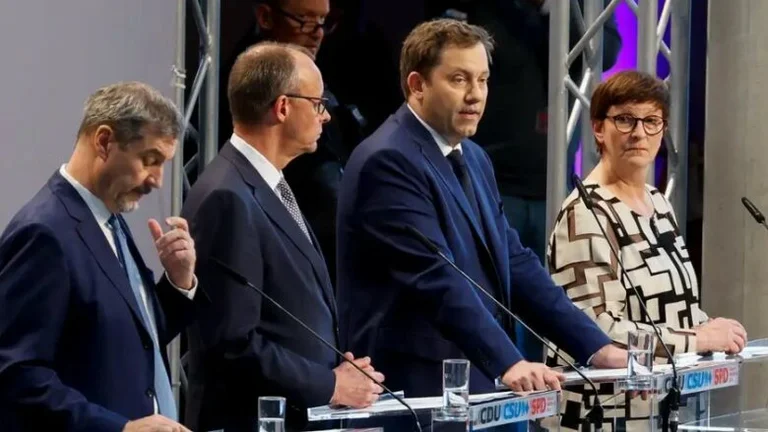
At a moment of major challenges for Europe and the world economy, leaders of the three future ruling coalition parties in Germany, the Christian Democratic Union (CDU), Germany's Social Democrat Party (SPD), as well as the Christian-Social Union (CSU) presented their agreement for co-governance on Wednesday, April 9, 2025, in Berlin.
CDU chairman and future possible Chancellor Friedrich Merz named the document a clear signal to Europe and a guarantee that <x0 Europe can rely on Germany”.
Deep Economic and Social Reform
To light the German economy engine that has already entered the third year of recession, the German Parliament had previously adopted a package of hundreds of millions of measures.
But US president's tariffs force the next possible coalition to take additional measures to facilitate industry: For example, by lowering taxes on enterprises, reducing energy taxes, and exclusion from additional working hours tax. Likewise, the next government aims to facilitate the so-called “active operation”, which also allows pensioners to work without taxes.
Another major objective is the drastic reduction of bureaucracy in order for Germany to become more attractive both to investors and to professionals seeking a place to live.
For this reason, the coalition aims to establish a Ministry of Digitalisation, which will focus on the very issue.
The old “Pajs, like the fax, should be out of use”, SPD co-chairman Lars Klingbeil said symbolically, and added: “International Tribes should receive clear signal that it can be invested here.
Migration Policy Extinctioned
A visible turn in migration policy is also seen in the coalition agreement.
The conservative chairman Merz announced new measures such as border controls and returns, the completion of voluntary accession programmes, such as refugees from Afghanistan, and the suspension of the family union for war refugees. The Ukrainians who will come from now on to Germany will not automatically benefit social aid. The new government also wants to change the citizenship law: “will no longer have accelerated citizenship after just three years of stay in Germany”, Merz stressed.
Number of labour migrants from the Western Balkans halved
The coalition also aims to limit the Western Balkans' regulation, which so far allowed the arrival of about 50,000 unqualified workers annually. The number will be halved to 25 thousand.
Migration policy was among the main topics of the campaign, due to the financial burden on municipalities. As a indicator of toughness, the Interior Ministry will pass the ruling Christian-Social Union (CSU) party.
Berlin Process Remains Important
Under the deal, the integration of six Western Balkan countries, as well as Ukraine and Moldova, into the European Union (BE) is considered mutual strategic interest. Therefore, the Berlin Process ʹ an initiative by former cancerares Angela Merkel will remain active as a platform to offer countries in the region clear and stable prospects for EU membership. /DW/