13 minutes ago
What prompted numerous reactions to the incident in northern Mitrovica?
Periskopi(a year ago)
(a year ago)An incident in northern Mitrovica on May 23rd, which a close Kosovo Police member reacted to has triggered numerous reactions. While some claim that the policeman reacted by “selective” and used excessive “ “ ”, others say the policeman took action of “odox5> for them [...]
An incident in northern Mitrovica on May 23rd, which a close Kosovo Police member reacted to has triggered numerous reactions. While some claim the policeman reacted by “selective” and used excessive “ “ ”, others say the policeman took action of “odox5> to avoid further escalation of the situation.
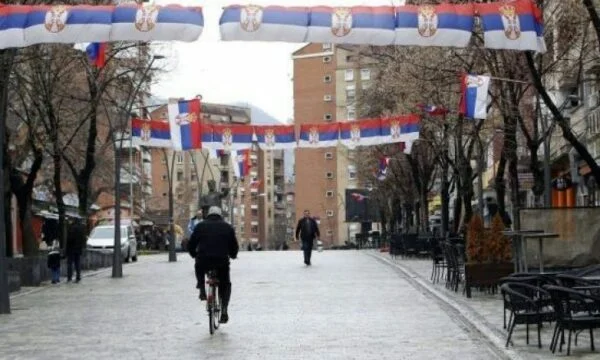
According to videos that are circulated on social networks, a group of seniors from the Serbian community was celebrating the end of the school year with a parade across the city centre, when a policeman stopped one of them because, reportedly, had provoked people at a nearby local cafe.
Since September last year, several businesses owned by Kosovo Albanians have been opened in the centre of northern Mitrovica, which are largely boycotted by local Serb residents.
The chief of the EU's mission to rule of law (EULEX), Giovanni Pietro Barbano, reacted to the incident, saying he felt “was deeply shocked” and condemned the excessive use of force by Kosovo police towards the young man in North Mitrovica”.
On the other hand, Kosovo Minister of Internal Affairs Jedal Svecla stressed that police had acted in a non-professional approach “and that intervention was intended to stop escalation following provocations by some seniors, who, according to him, used nationalist symbols and hailed chauvinist like “Kosovo is the heart of Serbia”.
What caused the incident?
Kosovo police for the northern region reported on May 23rd that Serbian seniors had presented the announcement of the parade in central northern Mitrovica, which ended “coolly and without any problem”.
However, the statement reportedly said police should intervene during celebrations due to some provocations, but that the situation calmed down and that the holiday continued.
The police statement does not specify who was provoking and how.
In the social networking footage, you see a senior during the parade pointing to the middle finger in the direction of a café, while from there a customer, reportedly was handing the symbol of the bicreative eagle, which is a symbol on the Albanian national flag.
Minister Svechla published a video on Facebook where seniors are heard singing the song “Vidovdan” and shouting “Kosovo is the heart of Serbia” near the main bridge over the Iber River in North Mitrovica.
It has not yet been able to verify the authenticity of the videos, video time, or who caused the incident first.
When did the police react?
Of the images that circulate on social networks, it is evident that Kosovo Police ban one of the seniors showing the middle finger. One of the cops tells him he was provoking. During the conversation, the policeman keeps a hand on the young man's neck, while nearby residents say that he had done nothing and sought to be released.
It is this gesture, putting the hand of the policeman to the young man's neck, has caused numerous reactions, on charges of excessive use of force.
EULEX chief Barbano condemned the act and said he is convinced the police will be held responsible.
“I expressed my concern before the leadership of the Kosovo Police and believe that those responsible for this unacceptable act will be held accountable in accordance with rule of law”, he wrote.
Political Reactions
The Serbian list ʹ the largest party of Kosovo Serbs, which enjoys the support of official Belgrade ʹ called the incident “totally unacceptable” and claimed that institutions that must ensure peace “are being used to spread fear and pressure with ethnic motives”.
“We seek the immediate investigation of this case, the definition of responsibility and punishment of policemen who have misused their competencies”, the statement said.
The Serbian People's Movement and Serbian Democracy also called the event “institutional violence against Serbian children from Kosovo Police”.
Meanwhile, Minister Svecla said Kosovo guarantees equal rights for all, but cannot allow democratic values to be damaged by actions stemming from Serbia's president, Aleksandar Vuciq” autocratic pro-regime.
I call on all citizens indiscriminately not to fall into similar provocations, as well as appeal not to be instrumentalised by official Belgrade and chief criminal [Millan] Radoicicic, who want the transition and destabilisation of the situation in Kosovo”, Svechla wrote.
Who else reacted?
Serb civil society organisations in Kosovo, the Serbian Orthodox Church and the Office for Kosovo in the Government of Serbia also reacted.
In a joint statement, organisations like the New Social Initiative, CASA, the Institute for Territorial Economic Development, Active and the Centre for the Avocacy of Democratic Culture expressed concern for “the police's selective response, which was exclusively directed towards a Serbian student”, as well as for the “excessive use of force”.
These organisations called for disciplinary procedure against police for excessive use of force, suspension until the end of the investigation, mandatory training for professional behavior, human rights and work in multiethnic environment, public forgiveness for family and students and citizens, and urgent dialogue for police reintegration.
Serbian police collectively abandoned the Kosovo Police in November 2022, as part of the Serb departure from institutions in northern Kosovo. Initially they were replaced by Albanian policemen, but later around 100 new police officers from the Serb community and other minorities were recruited.
Even the Eparkia of Raska and Prizren of the Serbian Orthodox Church reacted, saying police have acted in a “selective” and have not reacted to “Kosovo Albanians' approvals”.
It demanded that international representatives intervene to prevent escalation and deterioration of security.
The Office for Kosovo in the Government of Serbia called the incident a testimony of “incompatibility, oppression and terror against Serbs in Kosovo”. / REL