7 hours ago
Pristina faces garbage collection IKKPK warns of health consequences
Periskopi(a year ago)
(a year ago)Kosovo's National Institute of Public Health has indicated that proper management of urban waste is essential to maintaining a clean environment and protecting citizens' health. According to a post on IKSC's Facebook social network, uncontrolled waste disposal reportedly directly affects pollution [...]
According to a post on IKBPK's Facebook social network, uncontrolled waste disposal reportedly directly affects land, water and air pollution.
This situation creates favourable conditions for the development of bacteria, parasites, and insects, increasing the risk of spreading infectious diseases such as dysentery, hepatitis A, cholera, and respiratory lesions. Environmentally, waste contributes to soil, water, and air pollution, damaging ecosystems and biodiversity. Their uncontrolled burning releases smoke and harmful gases, such as dioxins and furnaces, which can cause chronic respiratory diseases, allergies, and, in certain cases, even carcinogenic diseases”, the report says.
And according to social announcement, the lack of proper waste management negatively affects the quality of citizens' lives, creating concerns in their environment.
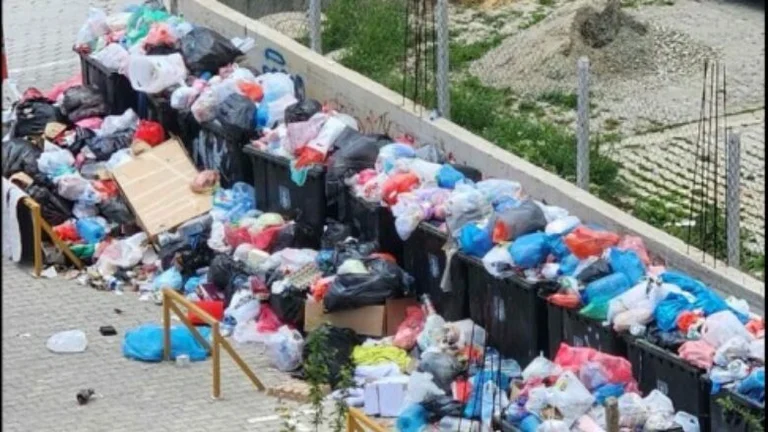
“This situation was particularly evident last week in Pristina, where containers were overloaded and waste had been scattered even outside, due to no timely annihilation by responsible companies. This presented a serious public health hazard”.
Additional risk according to the IKSC also presents stray dogs and cats, who distribute waste, increasing the possibility of spreading infectious diseases and creating noises in the city's neighbourhoods.
“The cables of open containers and climate conditions with rainfall have favoured the spread of unpleasant aromas, negatively affecting air quality”.
So the IKSHPK recommends that there be regular waste evacuation in every neighborhood in town.
<x0) Clean regularly spaces around containers; To fix management of inert waste that doesn't leave the company “Cleaning”; Banning construction and similar materials at the collection stations of urban waste, placing clear stop signs at each collection point. In order to protect public health, I The KSHPK requires that such situations not be repeated again, says the post. /Periscopi/