7 hours ago
First prisoners from Denmark expected to arrive in Kosovo in April 2027
Periskopi(a year ago)
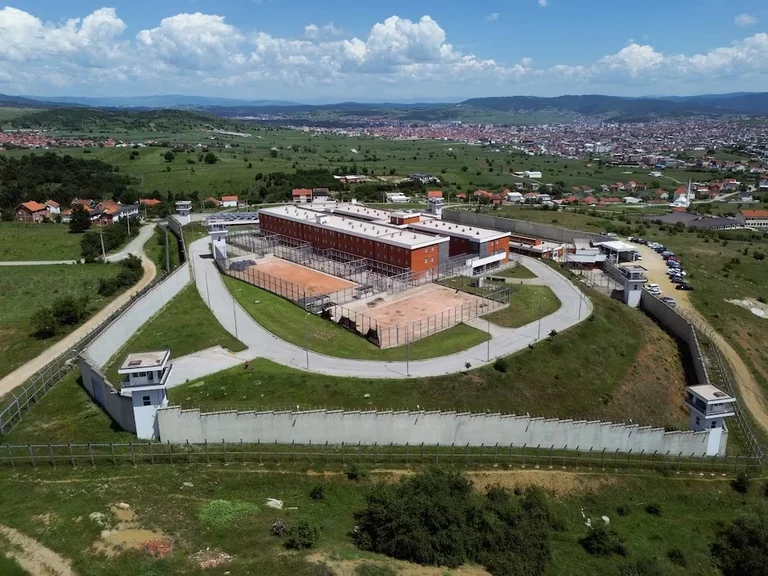
(a year ago)The first group of prisoners from Denmark is expected to arrive in Kosovo after two years. Kosovo Correcting Service General Director (SHKK), Ismail Dibran, says they are expected to be placed in the Gjilan city prison in April 2027. This transfer is part of a ten-year agreement between Kosovo and Denmark, [...]
Kosovo Correcting Service General Director (SHKK), Ismail Dibran, says they are expected to be placed in the Gjilan city prison in April 2027.
This transfer is part of a ten-year agreement between Kosovo and Denmark, which envisions the exploitation of the Correcting Institute in Gjilan for sending 300 prisoners from the Danish state.
In exchange, Kosovo will get over 200m euros.
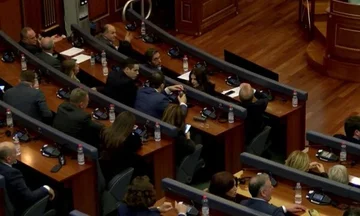
The Kosovo Assembly ratified the agreement on May 23rd, 2024, two years after it was signed.
Infrastructural and administrative preparations
The USKK director, Debrani, stresses that, under the agreement, Kosovo must meet Danish standards, both in terms of infrastructure and in training of corrective staff.
However, the renovation process has not yet begun.
We, like Kosovo, can announce the tender since today, but we have new demands from the Danish side. Their promises are to send us final requirements by the end of June, and then we will open the tender during July”, Debrani says of REL-in, broadcast. Periscope.
The tender is expected to include renewing existing and working cells, creating new space for visitors, as well as training staff to meet European standards.
Next month, 20 Kosovo correctional officers will travel to Denmark to attend basic training and practical work in Danish institutions.
Currently, Gjilan prison serves as detention centre for more than 200 people from Kosovo. After the renovations are completed, prisoners will be placed at the institution in order to execute Danish sentences.
There must be new workers built for this to provide employment for prisoners to come”, Debran explains.
The USKK director, Debrani, stresses that, under the agreement, Kosovo must meet Danish standards, both in terms of infrastructure and in training of corrective staff.
However, the renovation process has not yet begun.
We, like Kosovo, can announce the tender since today, but we have new demands from the Danish side. Their promises are to send us final requirements by the end of June, and then we will open the tender during July”, Debrani says of the REL.
The tender is expected to include renewing existing and working cells, creating new space for visitors, as well as training staff to meet European standards.
Next month, 20 Kosovo correctional officers will travel to Denmark to attend basic training and practical work in Danish institutions.
Currently, Gjilan prison serves as detention centre for more than 200 people from Kosovo. After the renovations are completed, prisoners will be placed at the institution in order to execute Danish sentences.
There must be new workers built for this to provide employment for prisoners to come”, Debran explains.
Under the agreement, those who will be transferred will not be citizens of Denmark.
Denmark has pledged that it will not bring high-risk prisoners.
They will not be condemned for war crimes or terrorism, or people with serious mental disorders.
Denmark's Justice Ministry has not answered questions about starting cell use.
Earlier, this minister had declared that the prisoners he sent to the Gjilan prison are persons sentenced to expulsion from Denmark.
“According to the treaty, prisoners must certainly carry out their sentences in the same terms as they would have carried out in a Danish prison, including physical conditions in line with conditions in a Danish 911 prison, the Danish ministry has said.
Concerns for Transparency and Human Rights
The Kosovar Centre for the rehabilitation of Torture Survivors (QKRMT) has raised concerns about transparency and implementation of the agreement.
“A year after the agreement's entry into force, it is still not clear where the Kosovo detainees currently located at the Gjilan prison”, says Mehmet Musaj from the QKRMT, the organisation that monitors the correctional system in Kosovo.
According to the PKK, current detainees will gradually shift to other institutions, as the correctional system has sufficient capacities.
Musa also raises concern about respecting the human rights of prisoners from Denmark who are not Danish.
What will be the communication model ) a language known to all English, whether they know English or our officers, how the files and medical services will be managed”, he says of the REL.
Human rights activists in Denmark also expressed concern about the agreement between Denmark and Kosovo.
What do you see?
Kosovo will make available capacity for 300 prisoners for a 10-year period.
Cells will be individual or common (maxum 2 persons), no less than six square metres for individual cells, and no less than eight square metres for joint cells.
The work language in prison will be English, while official documents, as necessary, can also be translated into Danish.
Money payments and financial transparency
Of the 200m euros expected to benefit Kosovo, a portion will be invested in the Correcting Service, while the rest in renewable energy.
Under the deal, Denmark has promised an initial fivem-euro fee to cover the transition period, from the agreement's entry into force to full functioning of the prison.
After that, the payments will be paid on a three - month basis, depending on the number of inmates present at the institution.
According to the PKK, about 1,800 prisoners are currently located in all Kosovo prisons, while 1,000 countries are free what, according to authorities, creates sufficient space for the reshuffle of current detainees.
SHKK Director Debrani indicated that several other European states have expressed interest in sending their prisoners to Kosovo, but those demands have not been accepted.