7 hours ago
How does it work and when will the new Pope be elected?
Periskopi(a year ago)
(a year ago)The process of selecting a new pope will be launched Wednesday by cardinals at the Sistine Hat. But how does the agreement work and who participate? Senior members of the Catholic clergy known as the “princesses of the church”, cardinals, will enter the hat. Only those under the age of 80 have participation rights, [...]
But how does the agreement work and who participate?
Senior members of the Catholic clergy known as the “princesses of the church”, cardinals, will enter the hat. Only those under 80 are eligible to attend, and it has already been announced by the Vatican that 133 have already arrived in Rome.
More than 50 of the cardinal electors are Europeans, with dominated Italy. Ten of them are from the United States, 23 from Asia, 21 from Central and South America and 18 from Africa.
What they do at the start of the deal?
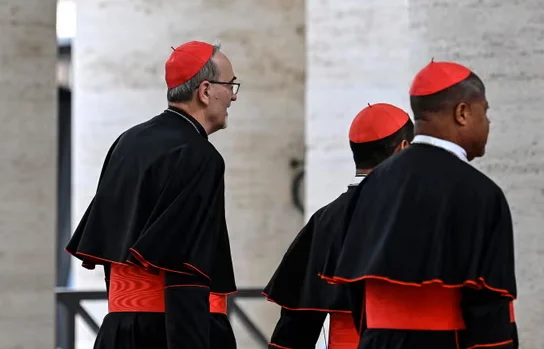
Dressed in scarlet, the cardinals set off from their residence to Casa Santa Marta to the Sistine Hat. They will deliver their phones, while it is known that the hat has already been checked for wiretaps and installed deadlock devices. Each of the participants will make a secret oath.
Afterwards, the master of the Pontificial Liturgic Celebrations calls for “extra omnes” everyone out, so all in attendance except cardinal electors and a small number of officials and doctors leave and doors close. Then the cardinals will start voting to choose the new pope.
How does the voting system work?
Each cardinal will be assigned a table on which there is a pen and a collection of ballot papers with the words Eligo in summum pontificem (I choose as the supreme pope) printed at the top. They write their favorite name, fold the paper in half, and place it in a bronze container.
Then every day, three inspectors are chosen by lots and three nurses collecting paper from cardinals who may be too sick to appear in the Sistine Hat, and three return visits are also resolved.
On the other hand, the ballot sheets are counted and recounted before they are pierced by needles over the word "Eligo" and attached to the herd. These sheets are then burned in a stove if there are no results in adding chemicals to make black smoke, and if there is a successful candidate, chemicals turn this smoke into white.
This smoke flows through a chimney leading to another chimney installed on the roof. Vatican Firemen are known to be on alert.
When white smoke comes out of this chimney, the bells fall and the crowd is told that there is already a pope, with the words "habemus papamí"
What happens to the new pope?
On the other hand, the dean of the College of Cardinals asks the Special: “Do you accept your canonical choice as the supreme pope? If he accepts, he must establish his papal name and the cardinals will pledge obedience to the new pope.
Then he is sent to the neighboring Tear Room, where he will change his cardinal red clothing in a white papaly garment. Usually small, medium, and large clothes are prepared in advance. This time it is thought that the Vatican is recycling clothes made for previous elections.
Finally, the new pope appears on the main balcony of St. Peter's Basilica to greet the crowds.
How long does the deal last?
This process could take from a few hours to a week. It is known that the longest consensus in history, in the 13th century, has lasted two years and nine months. Meanwhile, since the beginning of the 20th century, most of the conventions have lasted two or three days.
If no candidate can secure a two-thirds majority after 13 days of voting, a runoff is held between the two main candidates, but two-thirds of the cardinals' votes are needed to be done again.
Translated by The Guardian