9 hours ago
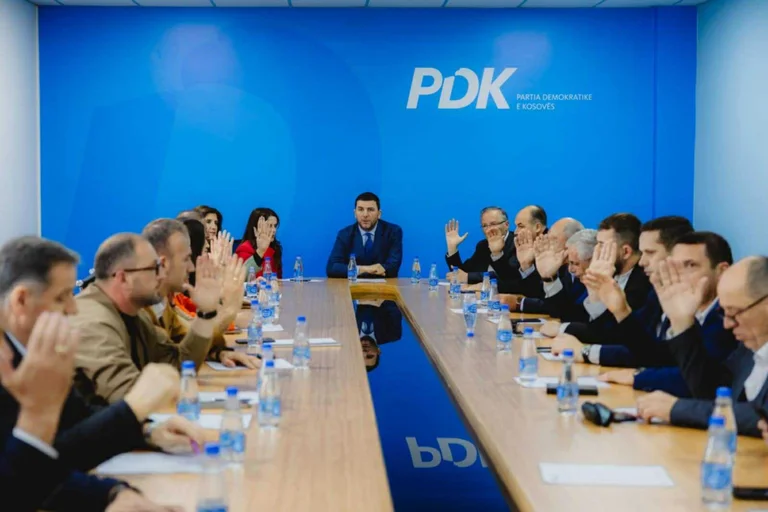
PDK holds the regular chairmanship meeting: institutional crisis and preparations for local elections discussed
Periskopi(a year ago)
(a year ago)The Democratic Party of Kosovo has held today the regular Co-ordination Meeting, where it has discussed the political crisis created after the February 9th elections and preparations for local elections. The PDK estimates that Kosovo is facing a dangerous institutional blockade, which the coalition of parties that have first emerged on [...]
The Democratic Party of Kosovo has held today the regular Co-ordination Meeting, where it has discussed the political crisis created after the February 9th elections and preparations for local elections.
The PDK estimates that Kosovo is facing a dangerous institutional blockade, which the party's responsibility has been to hold first in the elections -- LVV, Gux and Alternatives -- which, in the absence of a parliamentary majority -- have taken the foundation of new, legitimate and democratic institutions.
Chairman The PDK, Memli Krasniqi, has reaffirmed at the meeting with the president on 15 May that the best solution for the country is the formation of a new government by parties that have been in opposition to restore Kosovo's stability and Euro-Atlantic path. He has announced that he has asked the President to address constitutional questions to the Constitutional Court on the issue of candidate for Parliament's president, in order to clarify institutional and judicial positions in this situation.
Chairman Krasniqi also informed the chairmanship of the meeting that he has held with PDK Branch Speakers, in order to prepare for local elections. He has praised their engagement and work in the function of organising as efficient and successful party structures across the country.
In conclusion to the meeting, the PDK's leadership has expressed concern and indignation over the recent decision by Specialised Chambers in The Hague for refusing to ask for Mr. Kadri Vessel, Mr. Jakup Krasniqi and Mr. Rexhep Selimi.
The PDK estimates that, after the end of the prosecution phase and in the absence of the risk for influence in the process, parole has been an expected and reasonable right, while its refusal constitutes denial of a fundamental right, contrary to international justice standards./Periscopi/